
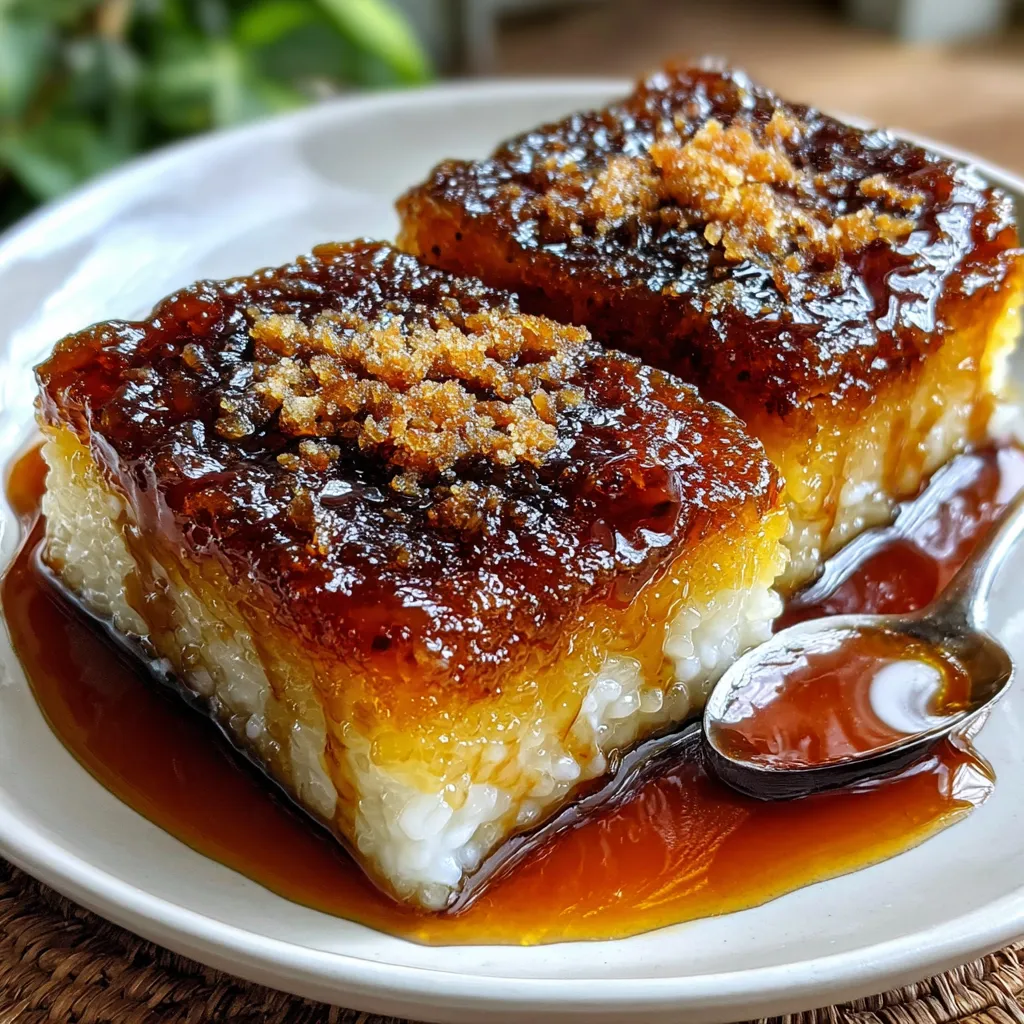
Biko Filipino Sticky Rice Cake brings together chewy coconut-infused sticky rice, warm brown sugar, and a glossy coconut cream topping to create rich, melt-in-your-mouth squares. This classic Filipino dessert is surprisingly easy to make, using simple pantry staples like glutinous rice and coconut milk. Each bite feels like a little tropical vacation, and once you try it, you’ll understand why it’s a beloved treat. Ready to dive in? Let’s get cooking!
Before we dive into the kitchen, let’s gather our must-have ingredients for Biko Filipino Sticky Rice Cake:
Creating Biko is all about layering flavors and textures—first cooking the rice perfectly, then infusing it with sweet coconut milk, and finally crowning it with a sticky-sweet glaze. These steps walk you through turning humble glutinous rice into a dessert that feels special enough for any celebration.
1. Rinse the glutinous rice under cold water until the water runs clear, then soak for 30 minutes and drain. This helps hydrate the grains for even cooking.
2. Combine the soaked rice and 2 cups of water in a pot, bring to a rolling boil, then reduce heat to low, cover, and cook until the water is absorbed, about 15–20 minutes. The rice should be tender with no excess liquid.
3. In a separate saucepan, heat 3 cups of coconut milk with brown sugar, white sugar, and salt over medium heat; stir until the sugar dissolves completely and the mixture turns smooth and fragrant.
4. Add the cooked rice into the coconut milk mixture and stir constantly over low heat until the rice absorbs the coconut milk and becomes thick and sticky, about 10 minutes. This slow stirring ensures every grain is coated.
5. Transfer the sticky rice mixture into a greased 8×8-inch baking dish, pressing firmly to create an even layer and remove any air pockets.
6. In another small pan, combine 1/2 cup coconut cream and 2 tablespoons brown sugar; cook over medium heat, stirring frequently until the mixture thickens and darkens slightly, about 5–7 minutes.
7. Drizzle the coconut cream topping over the rice layer, spread evenly, then let the cake cool at room temperature for at least 1 hour before slicing into squares.
Once your Biko is set and sliced, there are so many fun ways to serve it that highlight its sweetness and texture. Whether you’re hosting a dinner party or enjoying a solo treat, these ideas will take your presentation up a notch:
Getting Biko just right is all about technique and ingredient quality. Follow these friendly tips to ensure your sticky rice cake turns out exactly as you dreamed:
Biko stays delicious even after it cools down, and proper storage will keep it fresh for days or weeks. Here’s how to maintain its flavor and texture:
Here are quick answers to the most common Biko questions:
You should soak the rice for 30 minutes after rinsing it until the water runs clear. Soaking hydrates the grains, ensuring even cooking and a tender, sticky texture. Without soaking, the rice may cook unevenly, resulting in hard centers or a gummy exterior.
Yes, you can use full-fat canned coconut milk. While freshly squeezed coconut milk offers a brighter, more natural flavor and creaminess, a high-quality canned variety will still yield a rich, satisfying result. Just shake the can well to recombine any separated coconut cream before measuring.
Cook the rice mixture over low heat and stir constantly with a heat-proof spatula or wooden spoon. This even stirring helps distribute heat, prevents hot spots, and ensures the rice absorbs the coconut milk evenly. If you notice the bottom browning too quickly, lower the heat further or briefly remove the pan from heat and stir.
To make latik, simmer pure coconut cream in a small saucepan over medium heat. As the cream reduces, coconut solids will separate and begin to brown. Continue cooking and stirring gently until golden brown curds form and the whey evaporates. Skim the browned curds with a slotted spoon and spread them evenly over the cooled rice cake.
If the rice is too wet, cook the rice a few minutes longer uncovered after adding the coconut milk mixture, stirring until excess liquid evaporates and the mixture thickens. You can also reduce the coconut milk by 1/4 cup in the sauce step. Make sure to press the rice firmly into the pan, which helps expel any trapped moisture.
You can use light brown sugar or replace half the brown sugar with white sugar and add 1–2 tablespoons of molasses for depth of flavor. The molasses will mimic the rich, caramel notes of dark brown sugar, enhancing the coconut flavors without altering the consistency of the cake.
Once cooled completely, cover the biko tightly with plastic wrap or transfer slices to an airtight container. Store at room temperature for up to 2 days or refrigerate for up to 4 days. Before serving chilled leftovers, gently reheat slices in a microwave for 15–20 seconds or steam them briefly to restore softness and warmth.
Biko Filipino Sticky Rice Cake truly shines because it marries simple ingredients—glutinous rice, sweet coconut milk, and brown sugar—into a dessert that feels both indulgent and comforting. Its chewy texture, caramelized flavors, and that ultra-glossy coconut cream topping make every square irresistibly good. Whether you’re new to Filipino cooking or a seasoned home chef, this recipe works every time. Don’t forget to print this article or bookmark it for later, and let me know how your Biko turns out in the comments below!
Sticky rice soaks up rich coconut milk and brown sugar until luxuriously thick, then presses into a cake and gets a glossy coconut cream and sugar glaze that adds deep caramel notes and a silky finish.

I’m Sophia Montgomery, your guide and fellow food enthusiast on this delicious journey. As a home cook with a deep love for creating meals that bring people together, I started this blog to share my passion for simple, flavorful, and heartwarming dishes