
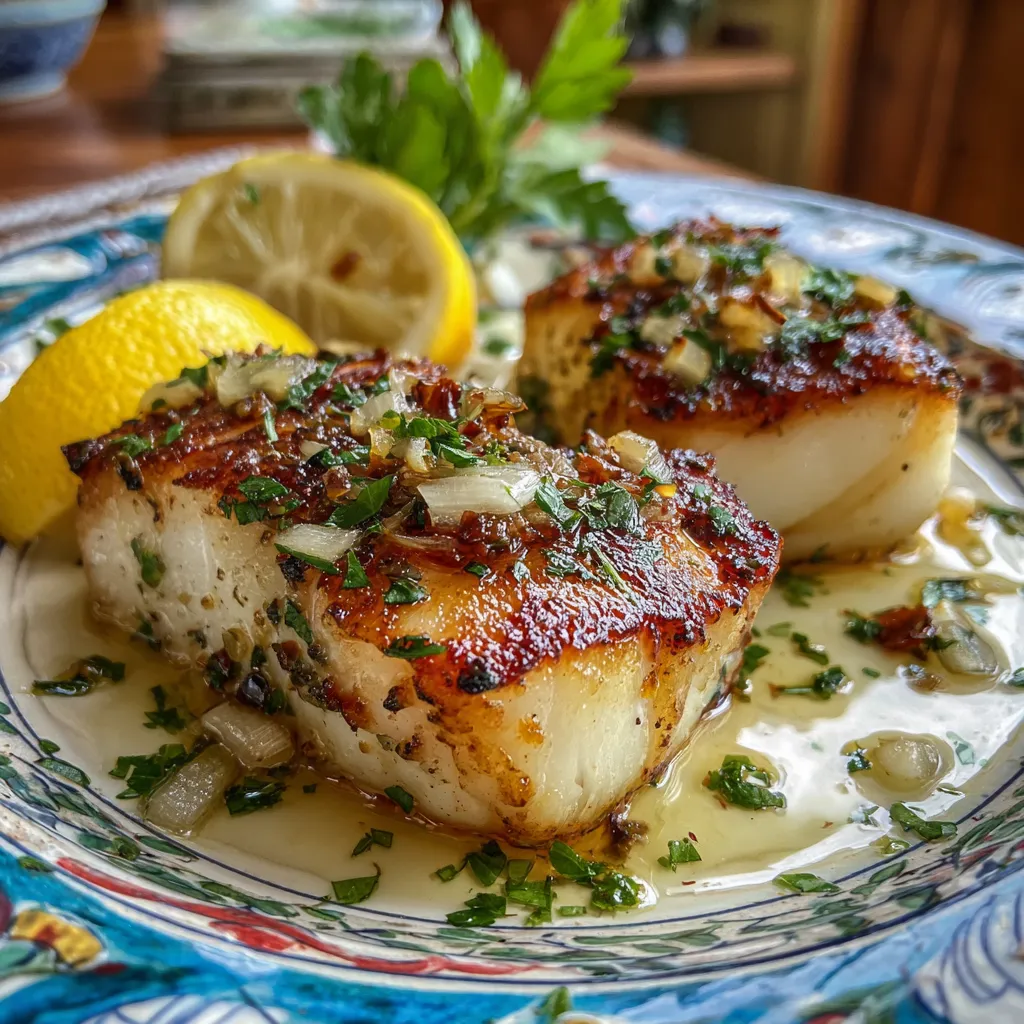
Chilean Sea Bass delivers buttery-skinned fillets seared to golden perfection and bathed in a zesty lemon-wine sauce that sings with garlic and parsley. This elegant yet approachable seafood dinner comes together quickly, making it a standout for weeknight feasts or special celebrations. Dive into this mouthwatering recipe and discover how a handful of simple ingredients can shine with restaurant-quality flair.
Here’s a quick rundown of what you’ll need to create this memorable Chilean Sea Bass:
Transforming these simple ingredients into a restaurant-worthy dish is easier than you think. From mastering the perfect sear to whipping up a silky lemon-wine sauce, each step builds layers of flavor in your skillet. Keep your tools close and your heat steady—let’s turn those fillets into a showstopper.
1. Pat the sea bass fillets dry with paper towels to remove excess moisture, then season both sides generously with salt and black pepper to lock in flavor.
2. Heat olive oil and butter in a large skillet over medium-high heat until the butter is melted and sizzling, creating a hot surface for a golden crust.
3. Place the fillets in the skillet and sear undisturbed for 4–5 minutes on each side, using a thin spatula to gently flip when the edges turn opaque and golden brown.
4. Transfer the cooked fillets to a warm plate and tent with foil to keep warm without steaming the fish, preserving that crisp exterior.
5. In the same skillet, add the chopped shallot and minced garlic and sauté for 1 minute until fragrant, stirring to prevent burning.
6. Pour in the white wine and fresh lemon juice, scraping up any browned bits from the bottom of the pan to infuse the sauce with deep flavor.
7. Let the sauce simmer for 2–3 minutes until slightly reduced, then whisk in the remaining butter piece by piece off heat to create a smooth, emulsified sauce.
8. Return the fillets to the skillet and spoon the sauce over them for about 1 minute to heat through, ensuring every bite is coated.
9. Garnish with chopped parsley and serve immediately with lemon wedges for an extra pop of citrus.
This Chilean Sea Bass shines on its own, but pairing it with the right sides transforms it into a full culinary experience. Whether you want something light and fresh or warm and comforting, the following ideas will help you plate up like a pro.
Cooking Chilean Sea Bass may feel indulgent, but a few key tricks ensure flawless results every time. Focus on quality ingredients, precise timing, and a hot pan to showcase the delicate texture and sweet flavor of this prized fish.
If you find yourself with leftovers or want to prep ahead, proper storage is crucial to maintain the delicate texture and bright flavors of this dish. Follow these methods to keep your Chilean Sea Bass tasting freshly cooked.
Got a few more questions? I’ve got you covered:
A: Pat each fillet dry with paper towels to remove excess moisture, then season both sides generously with salt and freshly ground black pepper. Dry fillets sear better, locking in moisture and creating a crisp golden-brown crust.
A: After searing for 4–5 minutes per side over medium-high heat, the fillet should flake easily when tested with a fork. For precise doneness, an instant-read thermometer inserted into the thickest part should register 130°F to 135°F. Carryover heat will bring it to an ideal 140°F as it rests.
A: A dry white wine such as Sauvignon Blanc or Pinot Grigio provides bright acidity that complements the lemon juice and balances the butter. If you prefer not to use wine, substitute with low-sodium chicken or vegetable broth plus a teaspoon of white wine vinegar for a similar tang.
A: After searing, transfer cooked fillets to a warmed plate and loosely tent with aluminum foil. This traps gentle heat without steaming the fish. Maintain a warm oven at 175°F to 200°F and place the tented plate inside until all fillets are ready to serve.
A: After reducing the white wine and lemon juice for 2–3 minutes, remove the skillet from heat and whisk in cold butter pieces one at a time. This method, known as monter au beurre, emulsifies the sauce, giving it a velvety sheen. Return briefly to very low heat if needed, but avoid boiling once the butter is added.
A: You can mince the garlic, chop the shallot, and measure the wine and lemon juice up to a day in advance. Store them separately in airtight containers in the refrigerator. For maximum freshness, sear the fish and make the sauce just before serving.
A: Steamed asparagus or green beans with a squeeze of lemon complement the richness of the sauce. Lightly buttered rice pilaf or herbed quinoa also make a balanced accompaniment, soaking up the buttery garlic-lemon sauce for a complete meal.
Why does this Chilean Sea Bass recipe always steal the show? It’s all in that golden sear, the luscious lemon-wine sauce, and the way garlic and parsley team up for flavor fireworks. Whether you’re treating yourself on a Tuesday night or impressing dinner guests, it hits every note—mild fish, zesty tang, and a buttery finish. Feel free to print this article and tuck it into your recipe binder for quick reference. If you whip it up, let me know how it turned out or drop a question below—I love hearing your kitchen triumphs and troubleshooting your seafood adventures.
Crispy-skinned Chilean sea bass glides into a sizzling skillet, then meets a tangy white-wine and lemon sauce flecked with garlic and parsley, delivering rich, buttery flavor in every bite.

I’m Sophia Montgomery, your guide and fellow food enthusiast on this delicious journey. As a home cook with a deep love for creating meals that bring people together, I started this blog to share my passion for simple, flavorful, and heartwarming dishes