
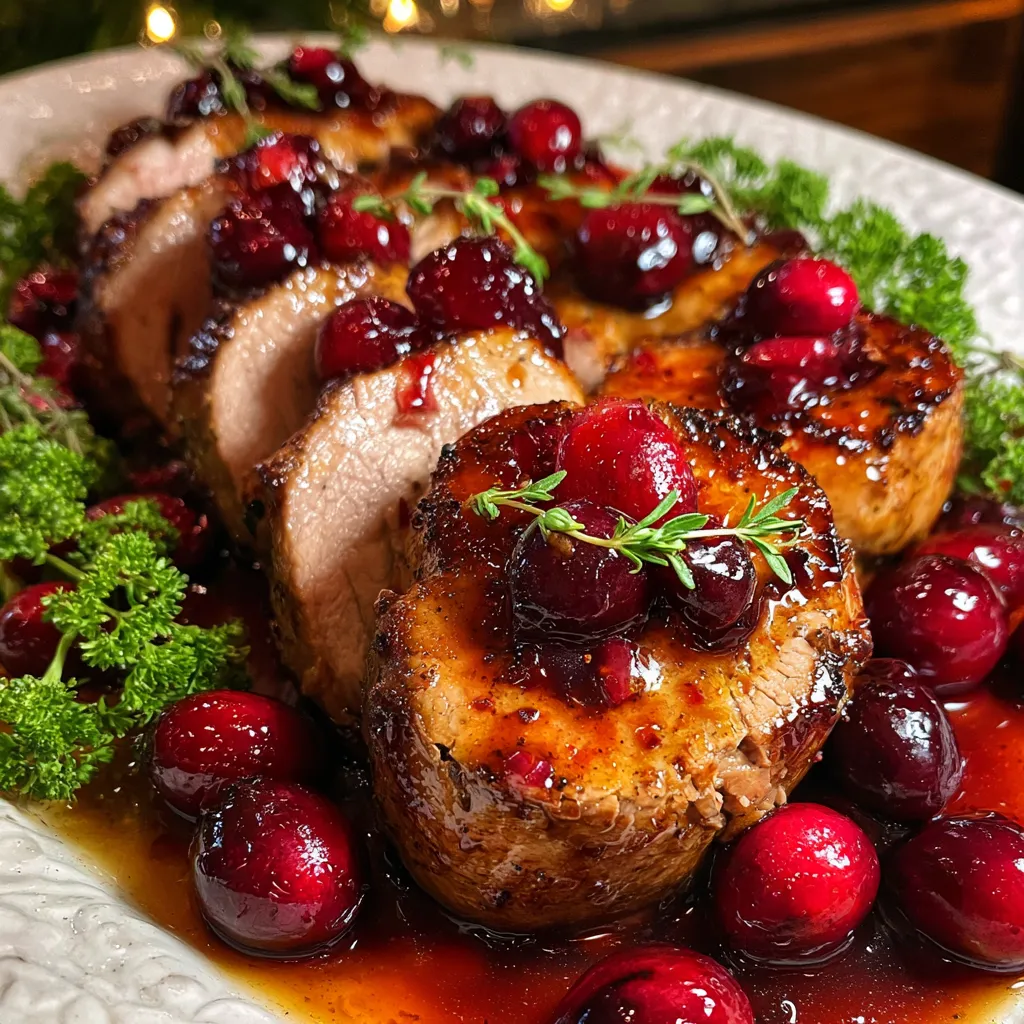
Bright, glossy cranberry glaze meets golden-seared pork tenderloin in a playful yet elegant dinner perfect for weeknights or holiday feasts. Sweet-tart cranberries simmer with balsamic vinegar, sugar, mustard, and garlic until velvety smooth, then coat a tender pork roast that stays juicy from sear to slice. This festive dish comes together with simple ingredients and a friendly process that makes you feel like a kitchen pro. Ready to bring a pop of color and flavor to your table? Let’s dive in and make dinner something to talk about!
Gather these flavorful essentials to create your Cranberry Glazed Pork Tenderloin:
In just a few simple steps, you’ll develop a luscious cranberry glaze, get a perfect sear on the tenderloin, and finish everything in the oven for juicy, evenly cooked pork. Follow the detailed instructions below to nail each technique and turn pantry staples into a show-stopping dinner.
1. Preheat your oven to 400°F (200°C) to ensure it’s hot and ready when the pork goes in.
2. In a medium saucepan over medium heat, combine the cranberries, sugar, chicken broth, balsamic vinegar, Dijon mustard, and minced garlic. Bring the mixture to a simmer, stirring occasionally, until the cranberries burst and the sauce thickens slightly, about 10–15 minutes. Remove from heat and set aside.
3. Pat the pork tenderloin dry with paper towels and season it evenly with salt, black pepper, thyme, and cinnamon to create a flavorful crust.
4. In an oven-safe skillet, heat the olive oil over medium-high heat. Once hot, carefully place the pork tenderloin in the skillet and sear it on all sides until golden brown, about 3–4 minutes per side.
5. Once the pork is seared, pour the cranberry glaze over the tenderloin, tilting the pan so it coats every side.
6. Transfer the skillet to the preheated oven and roast until the pork reaches an internal temperature of 145°F (63°C), about 20–25 minutes.
7. Once cooked, remove the skillet from the oven and let the pork rest for about 5–10 minutes before slicing; this helps the juices redistribute.
8. Slice the pork and serve with the cranberry glaze drizzled over the top. Garnish with fresh parsley if desired.
This cranberry glazed pork tenderloin shines on its own but pairing it with complementary sides takes the meal to the next level. Here are four easy ways to round out your plate:
Nailing the balance of sweet, tart, and savory makes this dish a winner every time. Keep your glaze smooth by stirring gently and taking the pan off heat once it thickens. Letting the pork rest is non-negotiable—it seals in juices and ensures each slice is tender. Don’t rush the sear; a properly browned crust traps moisture. Use an instant-read thermometer for precision, and trust that slice will be just right at 145°F. Finally, have fun experimenting with heat or make-ahead steps to fit your schedule.
Proper storage keeps your pork tenderloin juicy and the glaze vibrant, so you can enjoy leftovers without losing flavor. Follow these tips to preserve both texture and taste:
Here are some quick answers to common questions about making this recipe:
A: Yes, you can use frozen cranberries without thawing. Just add them directly to the saucepan and cook a few minutes longer if needed until they burst and the sauce thickens. You may need to stir a bit more to prevent sticking as frozen berries release liquid more slowly.
A: The most reliable method is an instant-read meat thermometer. Insert it into the thickest part of the pork; it should register 145°F (63°C). Once it reaches that temperature, remove the pork from the oven and let it rest for 5–10 minutes to allow juices to redistribute and carryover cooking to finish.
A: Absolutely. Prepare the glaze up to one day in advance, cool it, then transfer it to an airtight container and refrigerate. When you’re ready to cook, gently reheat the glaze over low heat, stirring occasionally, until it’s pourable, then proceed with searing and roasting the pork.
A: This pork pairs beautifully with creamy mashed potatoes to soak up the sauce, roasted root vegetables like carrots and parsnips for earthiness, or steamed green beans tossed in butter and garlic. A simple arugula salad dressed with lemon vinaigrette can also add a fresh, peppery contrast.
A: For heat, stir in a pinch (1⁄8–1⁄4 teaspoon) of red pepper flakes while the cranberry mixture simmers. You can also add a small dash of cayenne pepper or a teaspoon of prepared horseradish for a sharper bite. Taste as you go to ensure the spice level suits your preference.
A: Slice the cooled pork and place it in an airtight container with a little of the glaze to keep it moist. Refrigerate for up to three days. To reheat, warm in a 350°F (175°C) oven on a baking sheet for about 10–12 minutes or microwave on medium power for 1–2 minutes, adding extra glaze as needed.
A: If you don’t have balsamic vinegar, try apple cider vinegar mixed with a teaspoon of honey to mimic sweetness and acidity. For Dijon mustard, whole-grain or spicy brown mustard works well; you may notice a slightly different texture or tang, but the glaze will still balance sweet and savory flavors beautifully.
There’s something downright magical about a dish that balances tart cranberries, warm spices, and a perfectly seared pork tenderloin—this recipe is the dinner guest everyone asks for again and again. It works because the glaze pops with flavor, the pork stays juicy thanks to a solid sear and proper resting, and the hints of cinnamon and thyme give it a cozy twist. Feel free to print this out and tuck it in your recipe box for later—it’s going to be a go-to for holiday gatherings or any night you want to impress. Let me know how it turns out, share your tweaks, or drop a question below if you need any help.
Tart cranberries simmer with balsamic vinegar, sugar, and mustard into a glossy glaze that coats a golden-seared pork tenderloin. Roasted until tender and served with a sprinkle of fresh parsley for a bright finish.

I’m Sophia Montgomery, your guide and fellow food enthusiast on this delicious journey. As a home cook with a deep love for creating meals that bring people together, I started this blog to share my passion for simple, flavorful, and heartwarming dishes