
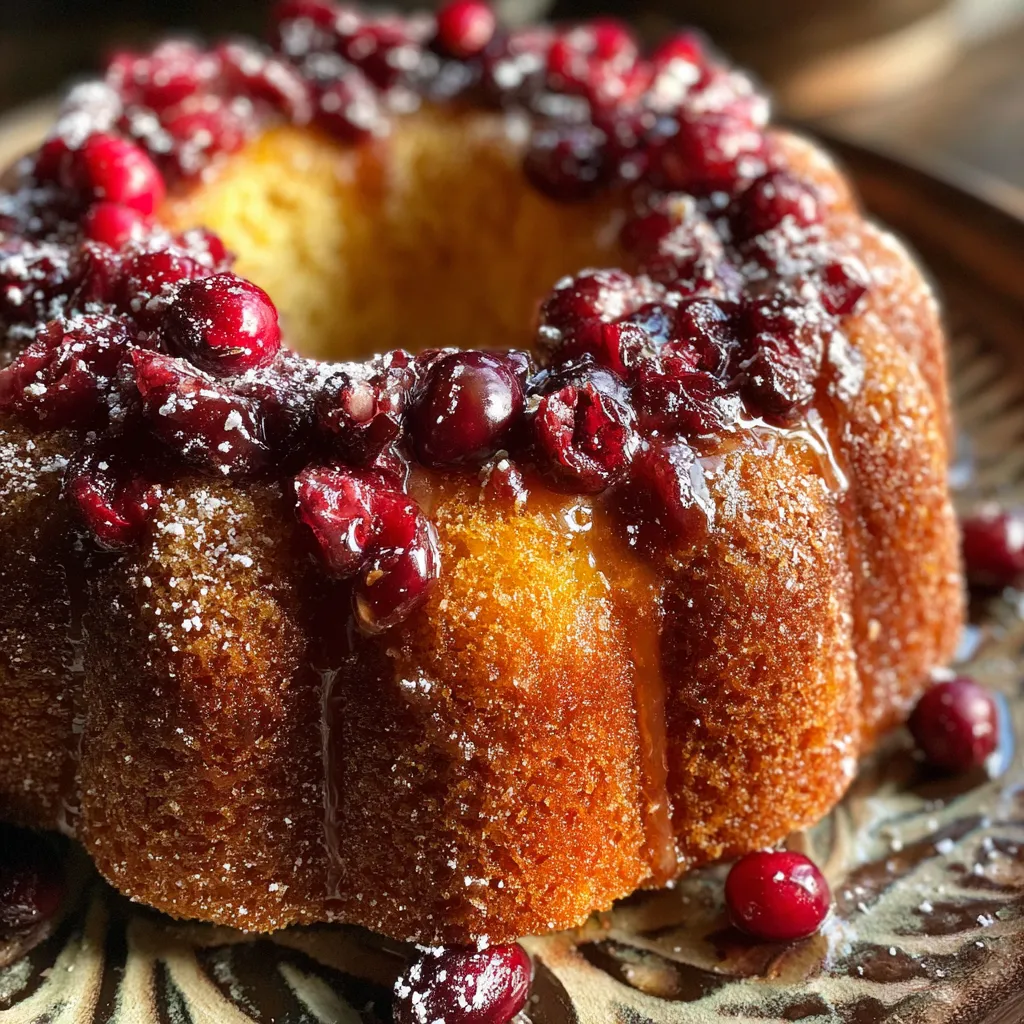
Bright cranberries and zesty orange swirl through every slice of this Bundt cake, creating a moist crumb that feels both festive and comforting. Whether you’re celebrating the holidays or simply craving a bright dessert, this cake delivers bursts of tart fruit and citrusy sweetness in each bite. It’s straightforward enough for a weeknight bake yet special enough to star on any dessert table—give it a whirl and watch friends and family swoon over your oven magic!
Before diving into the mixing bowl, let’s get to know the stars of this cake—each one lends its own flavor, texture, or lift to the batter.
Ready for a fun baking session? You’ll combine dry and wet ingredients in stages, gently folding in cranberries so they stay suspended in the batter. A properly greased Bundt pan ensures that perfect decorative shape emerges effortlessly. Let’s break down each step in detail to guarantee fluffy, fruit-studded slices.
1. Preheat your oven to 350°F (175°C). Thoroughly grease and flour a 10- to 12-cup Bundt pan, making sure every nook is coated for an easy release.
2. In a medium bowl, whisk together the flour, baking powder, baking soda, and salt until evenly distributed. Set this dry mix aside.
3. In a large mixing bowl, cream the softened butter and granulated sugar using an electric mixer on medium speed until the mixture is light and fluffy, about 3–4 minutes.
4. Add the eggs one at a time to the butter-sugar mixture, beating well after each addition. Stir in the vanilla extract until combined.
5. Gradually pour in the orange juice and sprinkle in the orange zest, mixing until the batter is smooth and fragrant.
6. Slowly add the reserved flour mixture to the wet ingredients, beating on low speed just until combined—a few small lumps are okay to keep the cake tender.
7. Gently fold in the fresh or thawed cranberries with a spatula, ensuring even distribution without crushing the berries.
8. Pour the batter into the prepared Bundt pan, smoothing the top with the spatula for an even rise.
9. Bake on the center rack for 50–60 minutes, or until a toothpick inserted into the center comes out clean or with a few moist crumbs.
10. Remove the pan from the oven and let the cake cool in the pan for 10–15 minutes. Carefully invert onto a wire rack and let cool completely.
11. For the glaze, whisk together the powdered sugar and 2 tablespoons of orange juice in a small bowl until smooth. Adjust thickness by adding more sugar or juice as needed.
12. Once the cake is cool, drizzle the glaze over the top, allowing it to drip down the sides for a glossy finish.
This Bundt cake shines on its own but can be dressed up for extra flair. Whether you’re hosting or simply enjoying a slice with afternoon tea, these ideas will make each serving feel intentional and special.
Whether you’re a seasoned baker or a curious newbie, these pointers will help you nail the texture, flavor, and presentation every time. A handful of simple adjustments can elevate your cake from great to unforgettable.
Storing your Bundt cake properly ensures every slice stays soft and flavorful, even if you make it ahead of time. Follow these methods to preserve freshness and texture for days.
Here are quick answers to common queries so you can bake with confidence and ease.
Preparation takes about 15–20 minutes, including zesting the orange, measuring ingredients, and mixing the batter. Baking time is 50–60 minutes at 350°F (175°C), plus 10–15 minutes of cooling in the pan and additional time to cool completely before glazing.
Thoroughly grease the pan with softened butter or nonstick baking spray, making sure to reach all the nooks. Then dust with a light coating of flour, tapping out any excess. This creates a barrier so the cake holds its shape when inverted.
Yes, use thawed and well-drained frozen cranberries. Pat them dry with a paper towel, then toss gently in a teaspoon of flour before folding into the batter. The light flour coating helps them stay suspended rather than sinking to the bottom.
Insert a wooden toothpick or thin skewer into the center of the cake. It should come out with just a few moist crumbs attached, but not wet batter. The cake will also spring back lightly when pressed in the middle and start pulling away from the pan edges.
A few small lumps are normal and help keep the cake tender. Overmixing can develop gluten, resulting in a denser texture. Once the flour is incorporated and you no longer see streaks, stop mixing and fold in the cranberries.
For a thicker glaze, add more powdered sugar a tablespoon at a time until you reach the desired opacity. For a thinner drizzle, stir in additional orange juice one teaspoon at a time. The ideal consistency holds its shape but still flows over the cake’s surface.
Yes. A teaspoon of almond extract complements the orange and cranberry flavors beautifully. For extra crunch, fold in ½ cup chopped pecans or walnuts. Dried cranberries or white chocolate chips can also be swapped in, but adjust sugar levels accordingly.
Once glazed, store the cake in an airtight container at room temperature for up to three days. To freeze, wrap the cooled, unglazed cake tightly in plastic wrap and then foil; it keeps well for up to one month. Thaw at room temperature before glazing and serving.
This Cranberry Orange Bundt Cake is a celebration in every slice—moist, tangy, and studded with jewel-like cranberries. The balance of tart fruit and sweet glaze is practically foolproof, so you’ll look like a pro even on your first bake. It doubles as a holiday centerpiece or a weeknight pick-me-up, and it’s sturdy enough to bake ahead. Feel free to print this recipe and tuck it into your favorites binder! If you give it a whirl, drop a comment below or share your tweaks—I’m always here to chat about cake science and kitchen triumphs.
Tender cake swirls with bursts of tart cranberry and citrusy orange, finished with a glossy glaze. Each slice offers a moist crumb and zesty aroma that brightens any dessert table.

I’m Sophia Montgomery, your guide and fellow food enthusiast on this delicious journey. As a home cook with a deep love for creating meals that bring people together, I started this blog to share my passion for simple, flavorful, and heartwarming dishes