
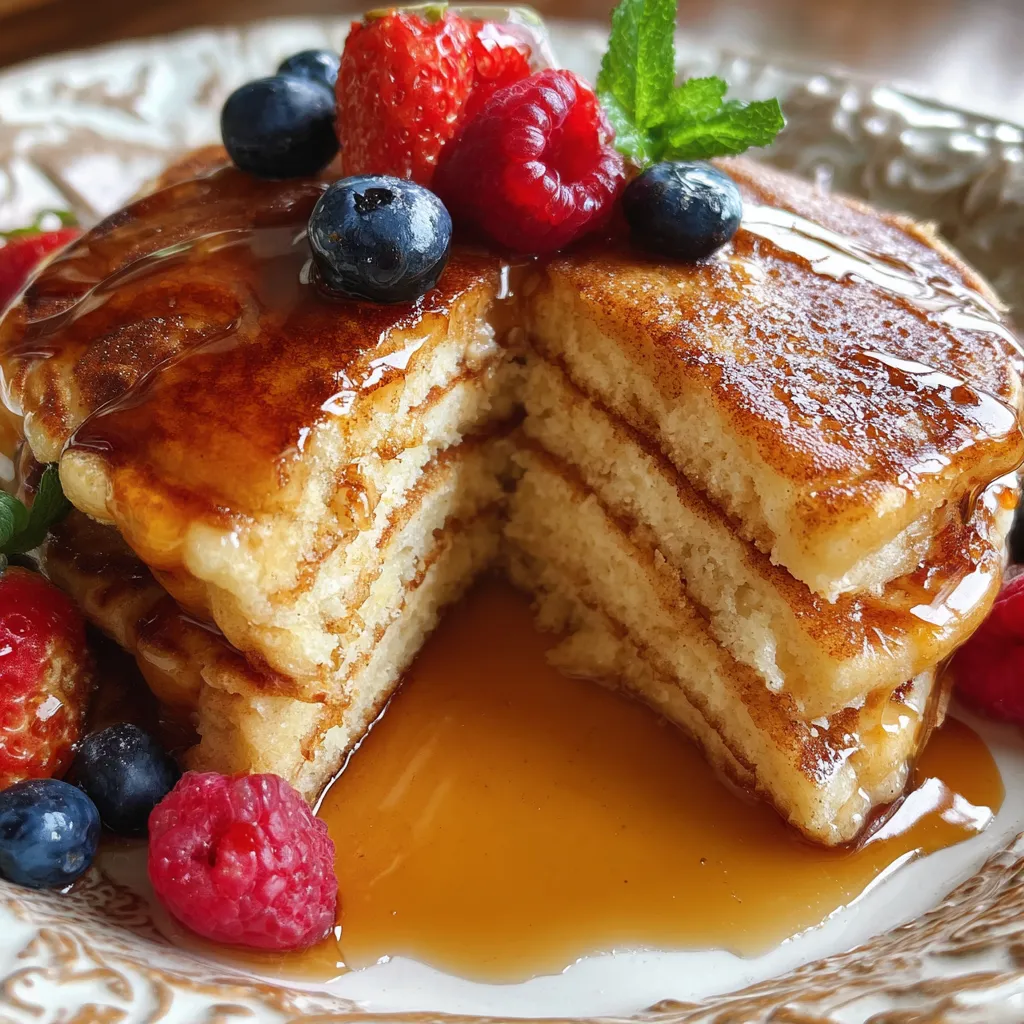
Fluffy Maple Cinnamon Pancakes bring a cozy weekend breakfast straight to your kitchen with their cloud-like texture and a whisper of warm spice. This beginner-friendly recipe combines tender batter flecked with cinnamon and nutmeg, then crowns each stack with melting butter and a generous drizzle of pure maple syrup. Whether you’re cooking for family or indulging in a solo brunch, these pancakes promise a comforting start to the day that’s too good not to share—and even better to savor.
Every component in these pancakes works together to create that signature fluff and sweet-spicy lift.
Let’s walk through these simple steps to achieve pancakes that are tender, fluffy, and packed with cozy cinnamon-maple flavor. From the initial whisking of wet ingredients to keeping your stacks warm, each stage ensures your batter rises properly, your griddle stays at just the right temperature, and your pancakes emerge golden and springy. Follow along for foolproof results every time.
1. Prepare the wet ingredients:
In a medium bowl or large measuring jug, whisk together the milk, eggs, melted butter, maple syrup, and vanilla extract until the mixture is smooth and uniform. Let it rest while you tackle the dry ingredients—this allows flavors to meld and brings cold milk to room temperature.
2. Mix the dry ingredients:
In a large mixing bowl, combine the flour, sugar, baking powder, baking soda, ground cinnamon, ground nutmeg (if using), and salt. Whisk thoroughly to eliminate any clumps of baking powder or cinnamon, ensuring even distribution of leavening and spice.
3. Combine wet and dry:
Create a shallow well in the center of the dry mixture. Pour in the wet ingredients, then gently fold with a spatula or wooden spoon until no visible streaks of flour remain. The batter should be slightly lumpy—resist overmixing to prevent tough pancakes.
4. Adjust the batter consistency:
Check that the batter pours in a thick, ribbon-like stream. If it’s too stiff, add 1–2 tablespoons of milk, folding gently until it’s pourable but not runny. Let the batter rest for 5–10 minutes so the flour fully hydrates and the leavening starts to work.
5. Preheat the cooking surface:
Heat a nonstick skillet or griddle over medium heat. Flick a few drops of water on the surface—if they dance and sizzle, it’s ready. Lightly grease with butter or neutral oil, wiping away any excess to leave a thin, even film.
6. Cook the pancakes:
Using a ¼-cup measure, pour batter onto the hot surface. Cook until small bubbles form on top and edges look set, about 2–3 minutes. Peek underneath; once golden brown, flip gently and cook the second side for 1½–2 minutes until springy and cooked through. Adjust heat as needed to avoid overbrowning.
7. Keep pancakes warm:
Transfer cooked pancakes to a baking sheet or oven-safe plate and keep them in a low oven (90–100°C / 200°F). Avoid stacking too tightly to prevent steam buildup and sogginess.
8. Serve:
Stack 2–3 pancakes per plate, top with a pat of butter, generous maple syrup, and optional fresh berries or toasted nuts. Serve immediately to enjoy that tender, fluffy goodness.
These pancakes shine on their own but can be dressed up for a brunch-worthy presentation. Think of flavor contrast and texture: something sweet, something fresh, something crunchy.
Nailing these pancakes is all about balance between moisture, leavening, and timing. Read through these friendly pointers to tweak the recipe to your taste and kitchen setup—little changes can make a big difference in fluff and flavor!
Whether you have a few pancakes leftover or you’ve made a double batch for freezing, proper storage keeps them just as fluffy and delicious as day one. Follow these steps to maintain moisture, prevent sogginess, and make reheating a breeze.
Here are quick answers to common pancake ponderings!
To maximize fluffiness, stir just until no dry streaks remain, then rest the batter for 5–10 minutes so the leavening activates. Preheat your griddle until water droplets dance, cook over medium heat, and keep finished pancakes warm in a low oven to preserve height.
If too thick, fold in 1–2 tablespoons of milk until it pours in a ribbon; if too thin, add a tablespoon of flour or let the batter rest longer to thicken. Adjust gradually to hit the ideal consistency.
Yes. Swap milk for almond, oat, or soy milk and butter for coconut oil. Replace up to half the flour with whole wheat and add 1–2 tablespoons of milk if needed. For extra maple zing, swap some milk for syrup and cut back on sugar.
Look for consistent bubbles across the surface and edges that appear set. Lift gently with a spatula; when the underside is golden brown, it’s time to flip.
Transfer cooked pancakes to a baking sheet in a 200°F oven, spacing them out or using parchment layers to let steam escape, preserving that fluffy texture.
Cool completely, layer with parchment in a freezer bag, and freeze up to two months. Reheat in a toaster or skillet on medium-low heat with a bit of butter or oil.
Absolutely. After pouring batter, immediately sprinkle chips or chopped nuts on each pancake so they embed as it cooks. Avoid mixing them into the bowl to keep even distribution.
Transfer cooked pancakes to a baking sheet in a 200°F oven, spacing them out or using parchment layers to let steam escape, preserving that fluffy texture.
Fluffy Maple Cinnamon Pancakes stand out thanks to the perfect pairing of cloud-like batter, cozy warm spices, and real maple sweetness. They’re forgiving for beginners yet rewarding for seasoned cooks, making breakfast feel like a small celebration. Plus, these stacks are fully customizable—from chocolate chips to dairy-free swaps—so everyone can join the pancake party. Go ahead and print this recipe or bookmark it for weekends to come, and don’t forget to drop a comment if you try it or have any questions cooking up your own pancake masterpiece!
Fluffy batter flecked with cinnamon and nutmeg puffs up on the griddle, then gets bathed in warm maple syrup and a dab of melting butter. Every bite is tender, spiced, and utterly comforting on a weekend morning.

I’m Sophia Montgomery, your guide and fellow food enthusiast on this delicious journey. As a home cook with a deep love for creating meals that bring people together, I started this blog to share my passion for simple, flavorful, and heartwarming dishes