
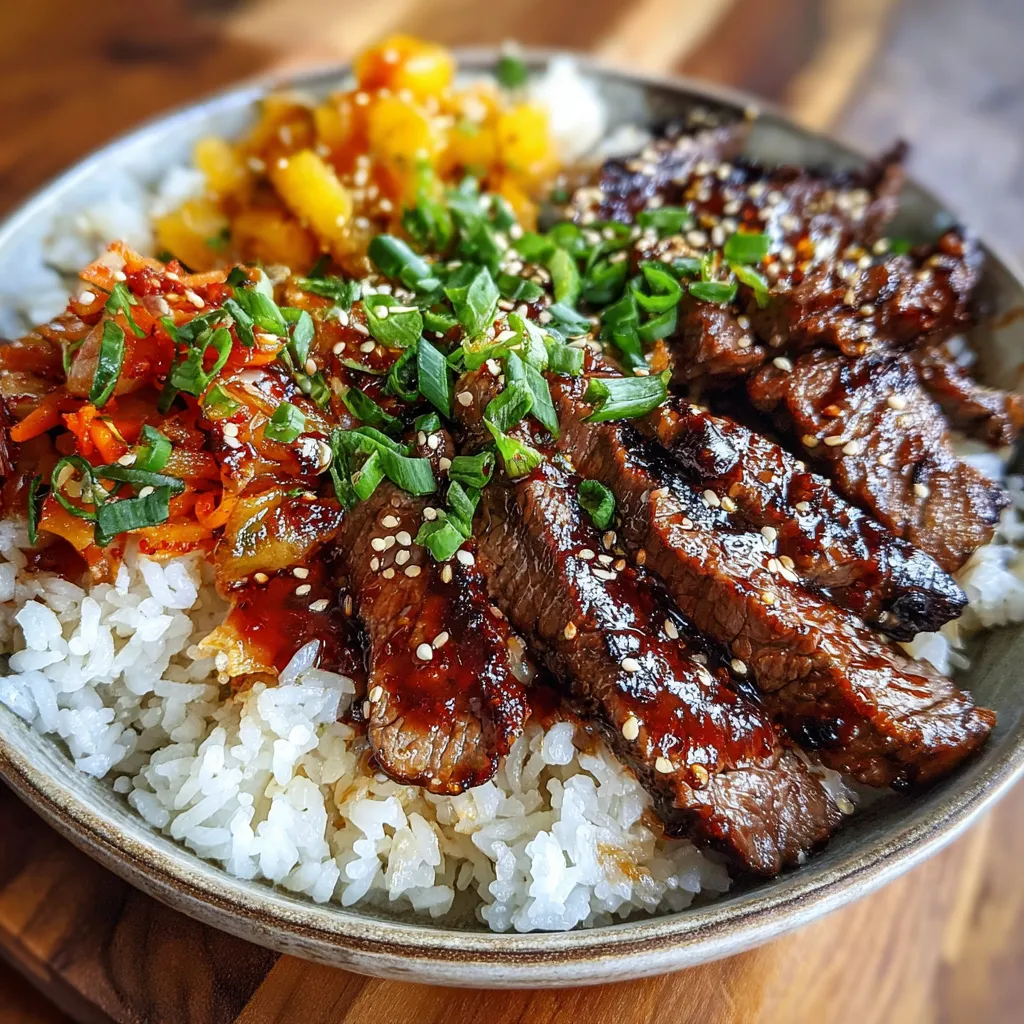
Korean BBQ Steak Rice Bowls bring together savory, sweet, and spicy in every bite—flank steak is marinated with gochujang, Asian pear, and sesame oil, then seared to caramelized perfection. Tucked onto a bed of fluffy short-grain rice, these bowls are crowned with crisp carrots, cool cucumbers, crunchy cabbage, creamy avocado, and a drizzle of fiery gochujang sauce. This vibrant, hands-on meal is perfect for busy weeknights or weekend feasts—dig in, mix it up, and savor each colorful, flavor-packed forkful!
Here’s the lineup of what you’ll need to create these vibrant rice bowls—each brings its own delicious role to the party.
With a little prep and some patience as the steak marinates, this recipe comes together in stages: you’ll marinate and sear the steak, cook perfectly fluffy rice, prep crisp veggies, whip up a zingy gochujang drizzle, and then assemble your bowls into a rainbow of flavors and textures. Follow these steps for a seamless cooking flow and a meal that dazzles on every plate.
1. Marinate the steak: Pat the steak dry with paper towels, then lightly score the surface if thick. In a bowl, whisk soy sauce, brown sugar, honey, rice vinegar, sesame oil, grated pear, garlic, ginger, gochujang, and black pepper until smooth. Place steak in a resealable bag or shallow dish, pour over the marinade, turn to coat, seal, and refrigerate for 30 minutes to 8 hours, turning once or twice.
2. Cook the rice: Rinse rice under cold water until mostly clear, then drain. Combine rice, water, and salt in a pot or rice cooker. Cook according to your appliance’s instructions or bring to a boil, reduce heat to low, cover, and simmer 12–15 minutes. Let rest, covered, for 10 minutes and then fluff with a fork.
3. Prepare the vegetables and toppings: While rice and steak are busy, julienne carrots, slice cucumber, shred cabbage, rinse bean sprouts, chop kimchi, slice green onions, and cut avocado just before serving. Optionally, stir-fry carrots and cabbage with oil, salt, and soy sauce for 2–3 minutes until slightly tender.
4. Make the spicy gochujang drizzle: Whisk gochujang, soy sauce, rice vinegar (or lime juice), honey, sesame oil, and 1 tablespoon warm water. Thin with extra water until pourable. Taste and adjust sweetness, acidity, or heat.
5. Cook the steak: Remove steak from fridge 15 minutes before cooking. Drain excess marinade and pat lightly. Discard marinade. Heat skillet or grill over high heat until smoking, add oil if needed, then lay steak down and cook 3–5 minutes per side for medium-rare, aiming for a deep char. Transfer to a cutting board and let rest 5–10 minutes.
6. Cook the eggs (if using): For fried eggs, heat oil in a nonstick pan over medium, crack eggs, and cook until whites are set, about 3–4 minutes. For soft-boiled, simmer eggs in water for 6–7 minutes, plunge into ice bath, peel, and halve.
7. Slice the steak: Position the rested steak so the grain runs left to right. Using a sharp knife, slice thinly against the grain at a slight angle into bite-size strips.
8. Assemble the bowls: Divide warm rice among 4 bowls. Arrange sliced steak on one side, then section carrots, cucumber, cabbage, bean sprouts, and kimchi around it. Top each bowl with avocado slices and an egg. Drizzle with gochujang sauce and sprinkle sesame seeds and green onions.
9. Serve: Enjoy immediately, mixing thoroughly so rice, sauce, steak, egg yolk, and veggies meld into one harmonious, flavor-packed bite. Offer extra gochujang, soy sauce, and kimchi for those craving more heat.
These bowls shine on their own, but a few thoughtful touches can elevate your meal even further. Whether you’re hosting a casual dinner or meal-prepping for the week, here are some ideas to complement your Korean BBQ Steak Rice Bowls:
Nailing this recipe is all about timing, balance, and a few insider tricks. Keep these notes handy to boost flavor, texture, and ease:
Keeping your bowls fresh and flavorful is easy if you follow these storage tips. Proper separation and airtight containers go a long way in preserving textures and tastes:
Here are answers to some common queries to make your cooking journey smoother:
Marinate the steak for at least 30 minutes, ideally 2–4 hours, and up to 8 hours for maximum flavor. The combination of soy sauce, brown sugar, honey, grated Asian pear, and gochujang infuses savory, sweet, and spicy notes while the pear’s natural enzymes help tenderize the meat. Turning the steak once or twice during marinating ensures even coating.
Yes. Flank or skirt steak work best, but ribeye, sirloin, or thinly sliced chuck can be swapped in for richer, juicier bowls. For a vegetarian version, use firm tofu or sliced king oyster mushrooms, marinate them in the same mixture, and cook until nicely caramelized for similar flavors and texture.
Rinse 2 cups of short-grain rice under cold running water until the water runs mostly clear to remove excess starch. Use 2¼–2½ cups water and ½ teaspoon salt if desired. In a rice cooker, follow manufacturer instructions. On the stovetop, bring to a gentle boil over medium heat, reduce to low, cover tightly, and simmer 12–15 minutes. Then let it rest, covered, off heat for 10 minutes before fluffing with a fork.
Remove excess marinade drip but leave a thin glaze on the steak. Preheat a cast-iron skillet or grill over medium-high to high heat until it just starts to smoke. Add 1 tablespoon vegetable oil if using a skillet, then place the steak down gently. Cook 3–5 minutes per side without moving to develop a deep caramelized crust. Let the steak rest 5–10 minutes before slicing to retain juices.
Slicing against the grain cuts through the muscle fibers, shortening them and resulting in more tender, easier-to-chew pieces. Position the steak so the grain runs left to right, then slice at a slight angle into thin strips for the best texture.
Julienne the carrots, slice the cucumber, shred the cabbage, rinse and dry bean sprouts, and chop the kimchi. Store each vegetable in its own airtight container in the refrigerator to maintain freshness and prevent sogginess. Add avocado slices and eggs just before assembling the bowls to ensure they stay at peak quality.
Whisk together 2 tablespoons gochujang, 1 tablespoon soy sauce, 1 tablespoon rice vinegar or lime juice, 1 tablespoon honey or sugar, 1 teaspoon sesame oil, and enough warm water (1–2 tablespoons) to reach a drizzling consistency. Increase gochujang for more heat, add extra honey for sweetness, or adjust vinegar for more tang until it perfectly matches your taste.
Korean BBQ Steak Rice Bowls work because they balance bold flavors—sweet pear, smoky sear, spicy gochujang—with a variety of textures in every spoonful. They’re fun to assemble, endlessly customizable, and perfect for sharing around the table. Go ahead, print this recipe, save it for later, and let me know in the comments if you have any questions or hilarious rice bowl stories to share—your feedback might just inspire the next delicious twist!
Marinated flank steak sizzles to a glossy char, then rests on soft short-grain rice. A ring of crunchy carrots, cabbage, and cucumber meets silky avocado and a fiery gochujang drizzle for a symphony of textures and flavors.

I’m Sophia Montgomery, your guide and fellow food enthusiast on this delicious journey. As a home cook with a deep love for creating meals that bring people together, I started this blog to share my passion for simple, flavorful, and heartwarming dishes