
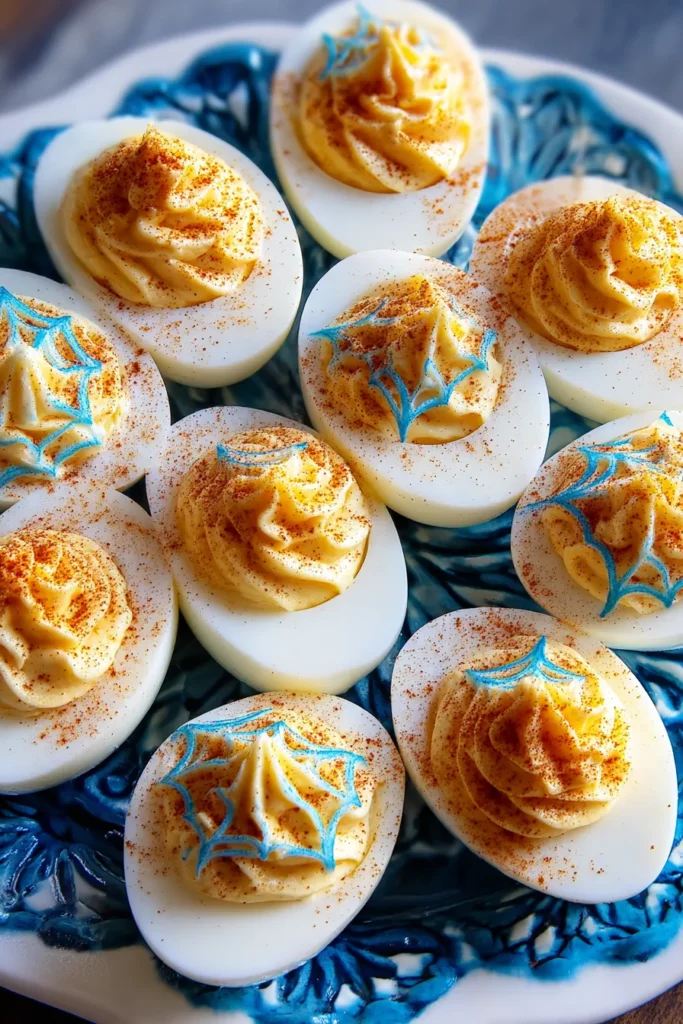
If you’re ready to take your appetizer game to the next level this Halloween season, these Spider Web Deviled Eggs are here to steal the spotlight. This intermediate-level, party-ready recipe—aptly described as Create a Spooktacular Treat with These Spider Web Deviled Eggs—takes the humble deviled egg and transforms it into an eerie delight that’s almost too fun to eat. With about 15 minutes of active prep, a brief 12-minute boil, and a mysterious 2-hour chill time, you’ll end up with stunning, vivid blue spider web patterns dancing across tender egg whites. Underneath that spooky exterior lies a creamy, tangy filling laced with Dijon mustard and mayonnaise, all finished with a light dusting of paprika. Each bite delivers a perfect balance of silky richness and zesty bite, making these deviled eggs a must-have for any Halloween gathering, potluck, or themed party night.
As we dive into the recipe, I’ll share tips I learned the first time I tried this at my own October bash—like how covering the cold eggs quickly after boiling helps lock in moisture, or how piping the yolk mixture in tight spirals makes them look extra professional. These spider web deviled eggs clock in at about 240 calories apiece, so you can indulge without regret while handing them out to delighted guests. Whether you’re a seasoned home cook or a holiday-cooking newbie, this recipe is approachable and entertaining. Let’s blend traditional deviled egg techniques with a dash of Halloween magic and whip up an appetizer that’s sure to spark conversation and curious smiles.
Before we summon our spider web design, let’s gather the ingredients that make this recipe sing. Each component plays a vital role, from creating that ghostly blue pattern to delivering the creamy, tangy filling you’ll spoon back into the egg whites. These star players ensure your deviled eggs are not just visually spooktacular but also bursting with balanced flavors.
The backbone of deviled eggs, they provide a smooth, protein-rich canvas for both the web design and the creamy yolk filling.
Used twice: first to boil and gently cook the eggs, then as the base for the dye bath that produces the spider web effect.
A splash in the boiling water helps the shells peel away more cleanly, while a bit in the filling adds a bright, tangy lift.
When dissolved in the boiling water, it seasons the eggs from the inside out and helps prevent cracking during cooking.
Drops of this vibrant dye create the eerie, marbled spider web patterns along the cracked shells.
The creamy foundation of the yolk filling, lending richness and a silky texture that balances the tang of the mustard.
Adds a subtly sharp note to cut through the richness of the mayo and deepen the overall flavor profile.
Adjusted to taste in the yolk mixture, these seasonings ensure every bite is perfectly balanced.
A final dusting brings color contrast and a hint of sweet, smoky warmth to the finished deviled eggs.
Now that you’ve got your ingredients lined up, it’s time for the fun part: bringing your spider web deviled eggs to life. Follow these steps for a perfectly executed, visually stunning appetizer that will have guests buzzing with delight.
1. Place the eggs in a large pot and cover them completely with water. Sprinkle in the salt and pour in the white vinegar. This simple mixture not only seasons the eggs but also helps the shells slip off with minimal fuss later on.
2. Bring the water to a vigorous boil over medium-high heat. Once it’s bubbling, cover the pot, remove it from the heat, and let the eggs rest in the hot water for a full 12 minutes. The residual heat cooks the eggs gently, preventing rubbery whites.
3. While the eggs rest, prepare an ice bath by filling a large bowl with ice cubes and cold water. After 12 minutes, transfer the eggs into the ice bath and let them chill for at least 5 minutes. This stops the cooking process and firms up the whites for easier handling.
4. Remove the eggs from the ice bath and, on a hard surface, gently roll each egg under your palm to create a network of cracks. Don’t peel them yet—these fractures will guide the dye into spider web-like lines.
5. In a clean bowl, stir together water, several drops of blue food coloring, and a tablespoon of white vinegar. Submerge the cracked eggs in this dye bath and refrigerate for at least 2 hours. The longer they soak, the more pronounced and dramatic your web patterns will be.
6. After dyeing, peel off the shells to reveal the intricate spider web design on the egg whites. Rinse each egg under cool running water to remove any loose dye or shell fragments.
7. Carefully slice the eggs in half lengthwise and use a small spoon to scoop out the yolks. Transfer the yolks to a bowl and set the hollowed whites on a platter.
8. Mash the yolks with a fork until fluffy. Stir in mayonnaise, Dijon mustard, and the teaspoon of vinegar, then season with salt and pepper until the mixture sings with flavor.
9. Pipe or spoon the creamy yolk filling back into the egg white halves, creating neat little mounds of deviled goodness.
10. Finish by sprinkling paprika over the filled eggs, adding a final dash of color and a whisper of smoky warmth.
To make these deviled eggs the star of your Halloween spread—or any gathering where you want to wow your guests—presentation is key. Set the mood by choosing the right platter, garnish, and accompanying décor. Imagine your spider web eggs nestled amidst faux cobwebs, twinkling fairy lights, or carved mini pumpkins. The contrast between the vivid blue-patterned eggs and dark serving ware will really make them pop. Don’t be afraid to add playful accents, like plastic spiders or a smattering of fresh herbs for extra color. Below are a few creative ways to serve these spooky bites:
After the party winds down, you’ll want to keep any leftovers looking and tasting just as fantastic as when they first hit the table. Proper storage preserves the delicate spider web designs and maintains that creamy filling texture. Always handle your deviled eggs with clean hands or utensils to avoid unwanted moisture, which can cause the shells or egg whites to deteriorate. If you anticipate making these ahead of time, consider storing components separately—boiled, dyed whites in one container and the seasoned yolk filling in another—assembling them just before serving for peak freshness. Follow these tips to keep every egg perfect for days:
From the moment those plain boiled eggs slip into their electric blue dye bath, you’re on a journey toward a show-stopping appetizer that seamlessly blends creepy-cool visuals with classic deviled egg flavors. We’ve covered everything from gathering your ingredients—like eggs, vinegar, blue food coloring, and a dollop of Dijon mustard—to mastering the two-hour chill that conjures up the perfect spider web effect. With simple techniques like cracking shells for marbling and piping a silky smooth yolk filling, you’ll impress family and friends at your next Halloween party—or any event that calls for a playful twist on a beloved hors d’oeuvre. Remember, it’s the little details—seasoning with salt and pepper, dusting with paprika, and selecting the right serving vessel—that elevate these bites from basic to spookishly spectacular.
Feel free to print out this recipe and tuck it into your Halloween binder or save it for easy reference next October. You can also jot down any personal tweaks or variations you’d like to try—maybe swap out classic mayo for avocado, or experiment with different colors for an otherworldly look. A FAQ section follows below for quick answers to common questions about dye times, flavor adjustments, and more. If you give these Spider Web Deviled Eggs a whirl, I’d love to hear how they turn out! Drop a comment, ask a question, or share your own ghastly-good plating ideas. Happy haunting—and happy cooking!
Transform traditional deviled eggs into a creepy delight with vivid blue spider web designs and a creamy, tangy filling that’s perfect for Halloween gatherings.

I’m Sophia Montgomery, your guide and fellow food enthusiast on this delicious journey. As a home cook with a deep love for creating meals that bring people together, I started this blog to share my passion for simple, flavorful, and heartwarming dishes