
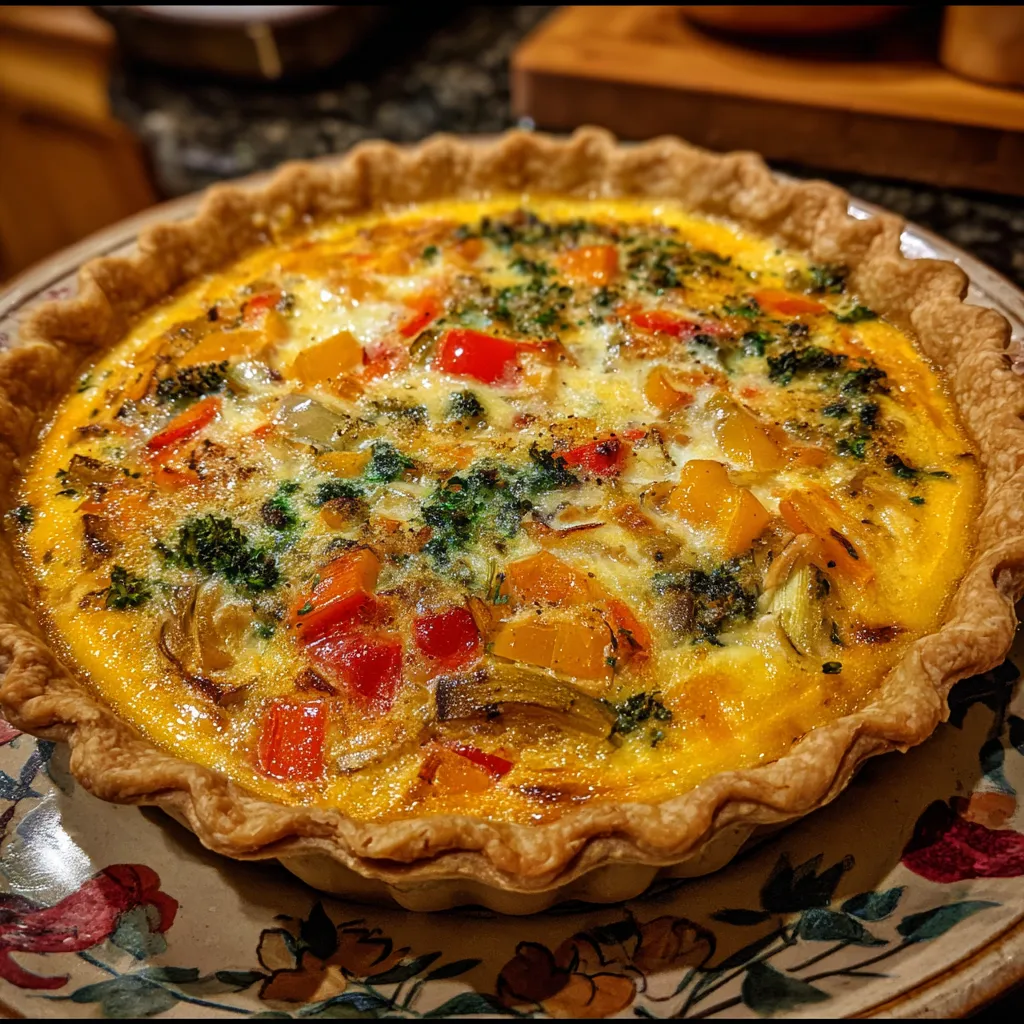
Sink your fork into a golden custardy quiche brimming with roasted winter squash, kale, and Brussels sprouts, all nestled in a flaky pie crust. Warm notes of thyme and paprika mingle with creamy custard, making each bite a cozy nod to winter’s best flavors. Whether you’re gathering friends for brunch or craving a satisfying solo dinner, this winter vegetable quiche is ready to steal the spotlight—and your heart.
To make this quiche shine, gather fresh winter produce, a sturdy crust, and creamy custard staples. Here’s what you’ll need:
Get ready to transform humble winter veggies into a show-stopping quiche! You’ll start by preheating your oven and preparing the crust, then move on to sautéing a colorful medley of onions, garlic, kale, Brussels sprouts, squash, and peppers, seasoned with thyme, paprika, salt, and pepper. After whisking eggs and cream with cheese, the vibrant veggies join the custard before everything gets baked to golden perfection. Follow these detailed steps to ensure your quiche is tender, flavorful, and set just right.
1. Preheat your oven to 375°F (190°C) to ensure an even, golden bake.
2. Prepare your pie crust: if homemade, roll and fit into a 9-inch pie dish, crimping the edges; if store-bought, unroll and press into the dish so it conforms smoothly.
3. In a skillet, heat the olive oil over medium heat until shimmering, then add the chopped onion and sauté for 3–4 minutes until it’s translucent and fragrant.
4. Add the minced garlic and continue to sauté for 1 more minute, stirring constantly so it softens without burning.
5. Stir in kale, Brussels sprouts, butternut squash, and bell peppers. Season with salt, pepper, thyme, and paprika, then cook for 8–10 minutes until the vegetables are tender but still vibrant.
6. In a large bowl, whisk together the eggs and heavy cream until fully combined, then stir in the shredded cheese for an extra creamy texture.
7. Fold the sautéed vegetables into the egg mixture, stirring gently to distribute everything evenly. Taste and adjust seasoning if needed.
8. Pour the filling into the prepared pie crust, using a spatula to spread it into an even layer.
9. Bake the quiche on the middle rack for 35–45 minutes, or until the top is golden brown and a knife inserted in the center comes out clean.
10. Once baked, cool the quiche in the pan for about 10 minutes before slicing so the custard firms up slightly.
A slice of this winter vegetable quiche is wonderful on its own, but pairing it thoughtfully can elevate your meal even more. Here are a few ideas to make each serving shine:
This quiche is incredibly adaptable, and a few simple tricks will make it shine every time. From picking the freshest veggies at the market to balancing your custard ratio, these notes will keep your filling creamy, your crust crisp, and your kitchen full of cheering taste-testers.
Once you’ve enjoyed the first round, storing leftovers properly keeps flavors bright and textures just right for days to come. Follow these simple methods to preserve your quiche’s freshness and enjoy it again later:
Here are answers to common questions that help ensure your quiche turns out amazing every time.
You’ll spend about 15–20 minutes chopping and sautéing the vegetables, whisking together the eggs and cream, and fitting the crust into the pie dish. The quiche then bakes for 35–45 minutes. In total, allow roughly 1 hour to 1 hour and 10 minutes from start to finish, including a brief 10-minute rest before slicing.
Yes. If using frozen kale, Brussels sprouts, or butternut squash, thaw them completely and pat dry to remove excess moisture. Sauté as directed, but reduce cooking time by a few minutes since the vegetables are already partially cooked. Adjust seasoning and proceed with the recipe.
For a crispier bottom crust, blind-bake it for 8–10 minutes at 375°F before adding the filling. Prick the crust all over with a fork, line it with parchment paper, and weigh it down with pie weights or dried beans. Remove the weights and paper halfway through blind-baking so the crust firms up nicely. Then pour in your filling and bake as instructed.
Cool the quiche completely, wrap it tightly in plastic wrap or store in an airtight container, and keep it in the refrigerator for up to 3 days. To reheat, preheat the oven to 350°F, place quiche slices on a baking sheet, and bake for 10–15 minutes until warmed through. You can also reheat individual slices in a toaster oven or microwave, though the oven method preserves crust crispness.
Yes. Assemble the quiche in the crust, cover it, and refrigerate for up to 24 hours before baking; you may need to add a few extra minutes to the bake time. To freeze, bake the quiche fully, let it cool, then wrap tightly in foil and freeze for up to 2 months. Thaw overnight in the refrigerator and reheat in a 350°F oven for 20–25 minutes.
Feel free to swap in or add leeks, parsnips, carrots, turnips, or radicchio for extra flavor and color. If you don’t have Brussels sprouts, shredded cabbage works well. You can also replace up to half the butternut squash with sweet potatoes or pumpkin. Adjust cooking times if you use denser vegetables.
To reduce fat, substitute half the heavy cream with whole milk or evaporated milk and use a lighter cheese such as part-skim mozzarella. For a vegetarian version, simply omit any meat additions—you can boost protein by stirring in cooked lentils or crumbled firm tofu seasoned with a pinch of turmeric and nutritional yeast. For a gluten-free crust, use a store-bought gluten-free pie crust or make one from almond flour.
This winter vegetable quiche hits all the right notes: a flaky crust, a creamy custard spiked with thyme and paprika, and a colorful ensemble of kale, Brussels sprouts, squash, and peppers. It’s cozy enough for a lazy weekend brunch but impressive enough to share with friends. Print this article, tuck it into your favorite recipe binder, and give it a whirl—then let me know in the comments how it turned out or if you have any twists of your own!
Warm notes of thyme and paprika mingle with creamy custard as tender kale, butternut squash, and crisp Brussels sprouts nestle in a flaky crust—each bite is a cozy nod to winter’s best flavors.

I’m Sophia Montgomery, your guide and fellow food enthusiast on this delicious journey. As a home cook with a deep love for creating meals that bring people together, I started this blog to share my passion for simple, flavorful, and heartwarming dishes