

Asian Noodle Salad with Ginger-Lime Dressing brings a rainbow of crisp cabbage, julienned veggies, and tender rice noodles tossed in a bright ginger-lime dressing with a touch of heat and crunchy toasted nuts. This intermediate-level lunch is perfect for those craving a fresh herb salad with vivid crunch and gentle kick. Thin rice noodles soak up a tangy lime-ginger dressing studded with fragrant mint and cilantro, while cabbage, snap peas, and toasted nuts add color and texture. Ready in under an hour, this vibrant salad will elevate any midday meal—give it a try!
Key Ingredients
To make this salad shine, you’ll need a mix of colorful veggies, chewy noodles, nutty garnishes, and a zingy dressing.
- 10 oz (280 g) dried rice noodles or thin spaghetti: Tender base that soaks up the bright ginger-lime dressing.
- 1 cup red cabbage, very thinly shredded: Brilliant purple crunch that adds color and texture.
- 1 cup green cabbage, very thinly shredded (or Napa cabbage): Crisp, mild foundation that balances the rainbow of veggies.
- 1 medium carrot, julienned or grated: Sweet, crunchy ribbons that lend a pop of orange.
- 1 red bell pepper, thinly sliced into strips: Juicy sweetness and vibrant red hue.
- 1 small cucumber, seeded and cut into thin matchsticks: Cool, refreshing crunch that lightens the salad.
- 3 green onions, thinly sliced (white and green parts): Subtle scallion bite and green freshness.
- 1 cup sugar snap peas or snow peas, thinly sliced on the bias: Bright green snap that adds crispness.
- 1/2 cup fresh cilantro leaves, roughly chopped: Citrusy, herbaceous boost.
- 1/3 cup fresh mint leaves, roughly chopped (optional but recommended): Cool, aromatic lift.
- 1/4 cup roasted peanuts or cashews, roughly chopped, plus more for garnish: Crunchy, nutty topping that elevates texture.
- 1 tbsp toasted sesame seeds (white or black), plus more for garnish: Tiny nutty gems that add flavor and visual appeal.
- 1/4 cup fresh lime juice (about 2–3 limes): Zesty acidity that brightens the entire dish.
- 3 tbsp low-sodium soy sauce or tamari: Umami-rich saltiness for depth.
- 2 tbsp rice vinegar (unseasoned): Mild tang that balances sweetness.
- 1–2 tbsp honey or maple syrup (to taste): Natural sweetness to mellow the sharp tang.
- 1 1/2 tbsp finely grated fresh ginger (about a 1-inch piece): Warm, spicy punch.
- 2 cloves garlic, finely minced or grated: Pungent garlic depth.
- 1–2 tsp toasted sesame oil (to taste): Intense nutty aroma.
- 1/4 cup neutral oil (canola, grapeseed, avocado, or light olive oil): Smooth base that emulsifies the dressing.
- 1–2 tsp sriracha or other chili sauce (optional, to taste): Optional heat that gives a gentle kick.
- 1/4 tsp kosher salt, or to taste: Fine-tunes seasoning.
- Freshly ground black pepper, to taste: Adds subtle warmth and complexity.
- 2 cups cooked shredded chicken, grilled shrimp, sliced steak, or baked tofu: Optional hearty protein to transform this salad into a full meal.
- Extra soy sauce and lime for seasoning the protein, if desired: Simple seasoning to tie added proteins into the dressing.
How To Make Asian Noodle Salad with Ginger-Lime Dressing
Making Asian Noodle Salad with Ginger-Lime Dressing is straightforward—once you’ve prepped your noodles, veggies, and zesty dressing, it’s all about layering flavors and tossing everything together. From cooking noodles al dente to whisking an emulsified ginger-lime dressing, each step builds toward a vibrant, textural salad perfect for lunch or dinner. Follow these detailed instructions to bring out the bright, tangy, and crunchy elements in every bite.
1. Cook the noodles:
Bring a large pot of water to a rolling boil, then add the rice noodles or thin spaghetti. Cook according to package directions until just tender (al dente)—rice noodles usually take 4–6 minutes; wheat noodles may take longer. Drain immediately and rinse under cold running water to halt cooking and wash away excess starch. Shake off any water, toss with a drizzle of neutral oil to prevent sticking, and set aside to cool completely.
2. Prep the vegetables:
While the noodles cool, finely shred the red and green cabbage using a sharp knife or mandoline, julienne or grate the carrot, slice the bell pepper into strips, seed and matchstick the cucumber, trim and slice the green onions on a bias, slice the snap peas, and roughly chop the cilantro, mint, and nuts. Arrange everything in bowls.
3. Make the ginger-lime dressing:
In a medium bowl or jar, whisk together fresh lime juice, soy sauce or tamari, and rice vinegar. Stir in honey or maple syrup until dissolved, then add grated ginger, minced garlic, sesame oil, and neutral oil. Whisk until the dressing is smooth and emulsified, then stir in sriracha if using. Season with salt and pepper, taste, and adjust for the perfect balance of sweet, salty, tangy, and spicy.
4. Combine noodles and dressing:
Ensure cooled noodles are loose; rinse again if needed. Pour about two-thirds of the dressing over the noodles and use tongs or clean hands to gently toss until all strands are coated. Let sit for 5–10 minutes so the noodles absorb the flavors.
5. Add vegetables and herbs:
Add the shredded cabbage, carrot, bell pepper, cucumber, snap peas, green onions, cilantro, mint, chopped nuts, and sesame seeds to the dressed noodles. Gently toss from the bottom to distribute ingredients evenly. Add more dressing, a little at a time, until the salad is well coated but not soupy.
6. Adjust seasoning:
Taste the salad and squeeze in extra lime for brightness, add soy sauce for salt, or stir in more sriracha for heat. Toss in extra chopped herbs for an extra burst of freshness.
7. Optional: Add protein:
If you’d like to beef up this salad, toss in cooked, cooled shredded chicken, grilled shrimp, sliced steak, or baked tofu. Lightly season your protein with a bit of dressing, a splash of soy sauce, and lime juice before folding it in or arranging on top.
8. Chill and serve:
Cover the bowl and chill in the refrigerator for at least 20–30 minutes to allow flavors to meld. Before serving, toss again, taste for seasoning, and transfer to a platter or individual bowls. Garnish with extra nuts, sesame seeds, and fresh herbs.
9. Storage:
Store any leftovers in an airtight container in the fridge for up to 3 days. If the salad seems dry after chilling, refresh it with a quick splash of lime juice, soy sauce, or sesame oil, and toss well before enjoying again.
Serving Suggestions
When it’s time to serve this Asian Noodle Salad with Ginger-Lime Dressing, think about complementary flavors and textures to make each bite memorable. Whether you’re plating it as a side, a light main, or pairing it with proteins, these ideas will help your salad shine on the table.
- Serve chilled in individual bowls: Ensure the salad is well chilled for at least 30 minutes before serving so flavors settle and noodles stay firm.
- Garnish generously with extra peanuts or cashews: Sprinkle additional nuts on top for an eye-catching crunch and nutty aroma.
- Add fresh herbs just before plating: Scatter extra cilantro and mint leaves to maintain bright herbal fragrance.
- Pair with a protein platter: Arrange grilled shrimp, chicken, or tofu on the side or directly on top for a composed, restaurant-style presentation.
Tips For Perfect Asian Noodle Salad with Ginger-Lime Dressing
Mastering this salad is all about balancing textures, tastes, and timing. Keep your veggies crisp, noodles loose, and dressing bright for a standout dish that’s both refreshing and satisfying. Prep work makes the process smooth—once everything’s ready, it’s just a matter of gentle tossing and thoughtful seasoning.
- For gluten-free, use rice noodles and tamari instead of regular soy sauce.
- For a lighter salad, increase the vegetables and herbs and slightly decrease the noodles.
- For meal prep, keep the dressing separate and toss with the noodles and vegetables just before eating.
- Add a crunchy topping like fried shallots or crispy baked wonton strips for extra texture.
- This salad pairs well with grilled meats, tofu, or as a stand-alone main dish with added protein.
How To Store It
Proper storage keeps your Asian Noodle Salad with Ginger-Lime Dressing tasting fresh and crunchy long after you first make it. Follow these tips to preserve the bright flavors and crisp textures that make this dish so irresistible.
- Refrigerate in an airtight container: Transfer leftovers promptly and seal tightly to keep noodles moist and veggies crisp.
- Keep dressing separate if possible: Store extra dressing in a small jar to avoid soggy noodles, then toss just before serving.
- Refresh before serving: If the salad appears dry, add a splash of fresh lime juice, a drizzle of sesame oil, or a dash of soy sauce, then toss gently.
- Consume within 3 days: For best taste and food safety, enjoy refrigerated leftovers within three days, stirring before plating.
Frequently Asked Questions
Want to know more about making this colorful salad a keeper? Here are answers to the most common questions.
- How long does it take to prepare and serve this Asian noodle salad?
From start to finish, plan on about 20 minutes to cook and cool the noodles, 10 minutes to shred and slice the vegetables, another 10 minutes to whisk together and adjust the ginger-lime dressing, 5–10 minutes to toss everything and 20–30 minutes of chilling time. In total, you’ll need roughly 1 hour to have the salad fully flavored and ready to serve.
- Can I use different types of noodles and prevent them from sticking?
Yes. You can use dried rice noodles for a gluten-free version or thin spaghetti if you’re not avoiding gluten. Cook them al dente according to the package directions, then immediately rinse under cold running water to stop cooking and wash away excess starch. Shake off as much water as possible, transfer to a bowl, and toss with a light drizzle of neutral oil so they don’t clump as they cool.
- How can I customize the dressing to suit my taste preferences?
The ginger-lime dressing is highly adaptable. For more sweetness, add a little extra honey or maple syrup. To boost acidity, squeeze in more fresh lime juice or a splash of rice vinegar. Increase saltiness with an extra tablespoon of soy sauce or tamari. For heat, stir in more sriracha or a pinch of chili flakes. Taste as you go until it’s bold and balanced, knowing the noodles and vegetables will absorb some of the flavor.
- What’s the best way to add protein, and how should it be seasoned?
Cook and cool your chosen protein—shredded chicken, grilled shrimp, sliced steak, or baked tofu—then toss it with a spoonful of the prepared dressing, a splash of soy sauce, and a squeeze of lime to infuse flavor. Gently fold the protein into the noodle salad just before serving, or arrange it on top for an attractive presentation.
- Can I make this salad ahead of time or prepare it for meal prep?
Absolutely. For best texture, keep the dressing separate and store it in a sealed container. Cook and cool the noodles, prep the vegetables, and layer everything in an airtight container in the fridge. When you’re ready to eat, pour on the dressing, toss thoroughly, and let it sit 5–10 minutes before serving. Veggies stay crisp, and the flavors meld beautifully.
- How should I store leftovers, and how can I refresh them?
Store any leftovers in an airtight container in the refrigerator for up to 3 days. If the salad looks dry when you dig in, brighten it with a quick splash of lime juice, soy sauce, and a drizzle of sesame oil, then toss well. You can also add a few fresh herbs or extra chopped nuts to revive crunch and aroma.
- How can I make this recipe gluten-free and suit other dietary needs?
To keep it gluten-free, use rice noodles and substitute tamari for soy sauce. Ensure your rice vinegar is unseasoned and check any chili sauces for hidden wheat. For a lighter option, increase the vegetable-to-noodle ratio. Vegans can use maple syrup instead of honey and choose tofu for protein. To add extra crunch, top with fried shallots or crispy baked wonton strips just before serving.
- Are there any ingredient substitutions or additions you recommend?
You can swap Napa cabbage or even thinly sliced kale for the green cabbage. If you don’t have mint, Thai basil works well. Feel free to add shredded purple kale, bean sprouts, or sliced snow peas for extra texture. If you like a creamy touch, swirl in a spoonful of natural peanut or almond butter to the dressing for a richer flavor.
What Makes This Special
This salad works because it balances crisp veggies, tender noodles, and a bright, zingy dressing that’s both bold and nuanced. You get sweet, salty, sour, and spicy notes all in one bowl, plus heaps of fresh herbs and crunchy nuts for contrast. It’s easy to customize—whether you want it gluten-free, vegan, or protein-packed—and it’s just as delightful straight from the fridge the next day. Feel free to print or save this recipe for later, and don’t hesitate to drop a comment or question if you give it a spin or need any extra tips!
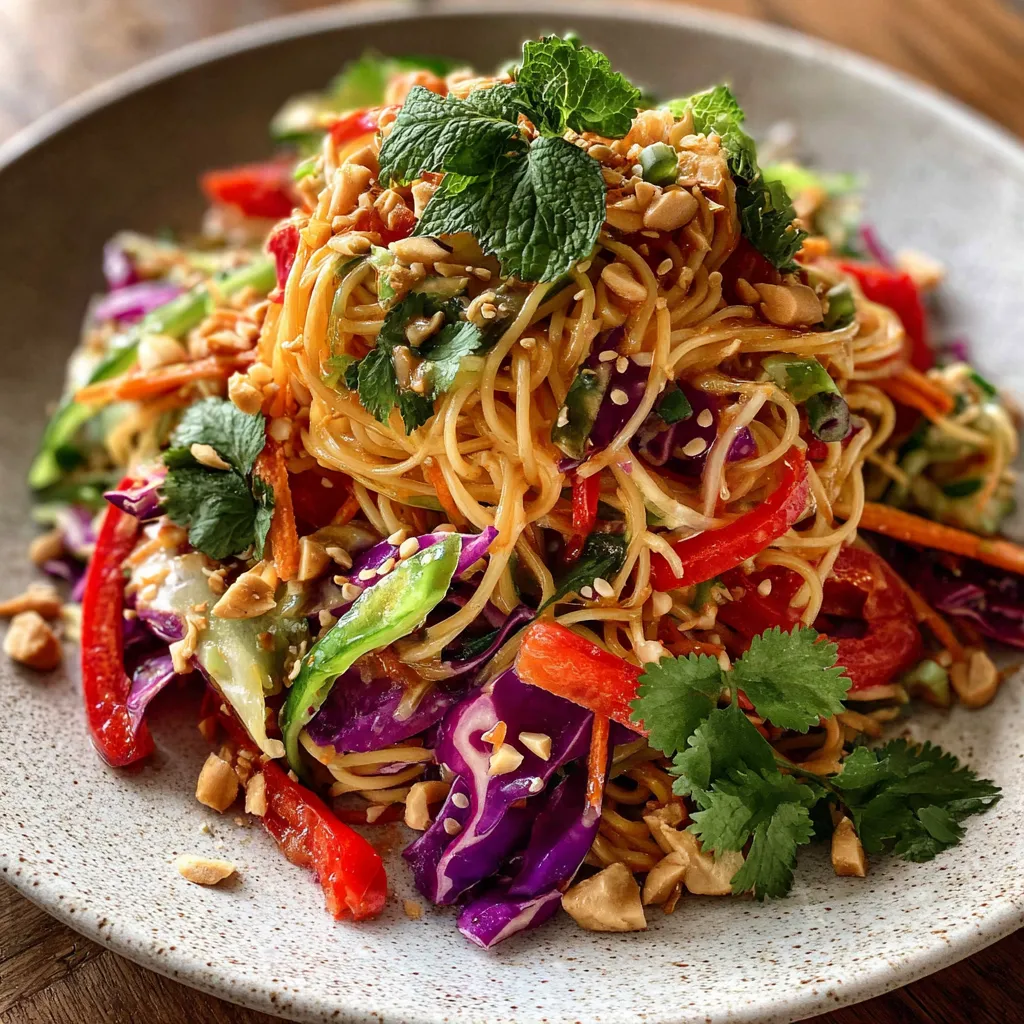

Asian Noodle Salad with Ginger-Lime Dressing
Description
Thin rice noodles soak up a tangy lime-ginger dressing studded with fragrant mint and cilantro. Crisp red cabbage, snap peas, and toasted nuts add vivid crunch, while a hint of sriracha brings a gentle kick.
Ingredients
Instructions
-
Cook the noodles:
-
- Bring a large pot of water to a boil.
-
- Add the rice noodles or thin spaghetti and cook according to package directions until just tender (al dente). Rice noodles usually take 4–6 minutes; wheat noodles may take longer.
-
- Once cooked, drain immediately and rinse under cold running water to stop the cooking and remove excess starch.
-
- Shake off as much water as possible, then transfer the noodles to a large bowl. Toss with a small drizzle of neutral oil to prevent sticking. Set aside to cool completely.
-
Prep the vegetables:
-
- While the noodles cook and cool, shred the red and green cabbage as finely as possible using a sharp knife or mandoline.
-
- Julienne or grate the carrot.
-
- Thinly slice the red bell pepper into strips.
-
- Seed the cucumber if it is very watery, then cut into thin matchsticks.
-
- Trim and thinly slice the green onions on a slight diagonal.
-
- Thinly slice the snap peas or snow peas on the bias.
-
- Roughly chop the cilantro and mint leaves.
-
- Roughly chop the roasted peanuts or cashews.
-
- Set all the vegetables and herbs aside.
-
Make the ginger-lime dressing:
-
- In a medium bowl or a jar with a lid, combine the fresh lime juice, soy sauce or tamari, and rice vinegar.
-
- Add the honey or maple syrup and whisk until dissolved.
-
- Add the finely grated ginger and minced garlic.
-
- Whisk in the toasted sesame oil and neutral oil until the dressing is emulsified and looks slightly thickened.
-
- Stir in the sriracha or chili sauce, if using.
-
- Season with the salt and several grinds of black pepper.
-
- Taste and adjust: add more lime for brightness, honey for sweetness, soy for saltiness, or sriracha for heat. The dressing should taste bold and slightly salty, as it will season all the noodles and vegetables.
-
Combine noodles and dressing:
-
- Ensure the noodles are cool and not clumped. If they are sticking, briefly rinse again with cold water, drain very well, and return to the bowl.
-
- Pour about two-thirds of the dressing over the noodles.
-
- Use clean hands or tongs to gently toss and separate the strands so the dressing coats all the noodles.
-
- Let the dressed noodles sit for 5–10 minutes to absorb flavors.
-
Add vegetables and herbs:
-
- To the bowl with the dressed noodles, add the shredded red and green cabbage, carrot, red bell pepper, cucumber, snap peas, green onions, cilantro, and mint.
-
- Sprinkle in the chopped peanuts or cashews and the sesame seeds.
-
- Toss everything together gently but thoroughly, lifting from the bottom so the vegetables are evenly distributed through the noodles.
-
- Add more dressing as needed, a little at a time, until the salad is well-coated but not soupy. You may or may not use all the dressing depending on how absorbent your noodles are.
-
Adjust seasoning:
-
- Taste the salad.
-
- If it needs more brightness, squeeze in extra lime juice.
-
- If it needs more salt, add a splash of soy sauce.
-
- For more heat, add additional sriracha or a pinch of chili flakes.
-
- Add more chopped herbs if you want extra freshness.
-
Optional: Add protein:
-
- If using chicken, shrimp, steak, or tofu, make sure it is cooked, cooled to at least room temperature, and sliced or shredded into bite-size pieces.
-
- Lightly season the protein with a spoonful or two of the dressing, a splash of soy sauce, and a squeeze of lime.
-
- Gently fold the protein into the salad, or arrange it on top for a composed look.
-
Chill and serve:
-
- For best flavor, cover the bowl and chill the salad in the refrigerator for at least 20–30 minutes to let the flavors meld.
-
- Before serving, toss again and check the seasoning; the noodles may have absorbed some dressing, so you may wish to add a touch more lime juice, soy sauce, or sesame oil.
-
- Transfer to a serving platter or individual bowls.
-
- Garnish with extra chopped peanuts or cashews, more sesame seeds, and a few fresh cilantro or mint leaves on top.
-
Storage:
-
- Store leftovers in an airtight container in the refrigerator for up to 3 days.
-
- If the salad seems dry after chilling, refresh with a small splash of lime juice, soy sauce, and a drizzle of sesame oil, then toss well before serving.
Note
- For gluten-free, use rice noodles and tamari instead of regular soy sauce.
- For a lighter salad, increase the vegetables and herbs and slightly decrease the noodles.
- For meal prep, keep the dressing separate and toss with the noodles and vegetables just before eating.
- Add a crunchy topping like fried shallots or crispy baked wonton strips for extra texture.
- This salad pairs well with grilled meats, tofu, or as a stand-alone main dish with added protein.

