

Beef Chow Mein is one of the ultimate weeknight heroes that transforms simple ingredients into a sensational stir-fry feast. With tender strips of sirloin dancing alongside crisp snow peas, vibrant red bell peppers, and crunchy bean sprouts, every forkful bursts with savory, umami-packed flavor. Get ready to toss those golden noodles in a sizzling wok, as they soak up a luscious combination of soy and oyster sauces, mellowed by the sweet warmth of fresh ginger and garlic. This dish comes together in under 30 minutes—with just 15 minutes of active cooking—making it perfect for busy evenings when you crave something delicious but don’t want to spend hours in the kitchen. As someone who adores Asian-inspired fare, I love how Beef Chow Mein strikes the perfect balance between tender meat, snappy veggies, and springy noodles, all coated in a glossy sauce that begs to be savored. It’s a midweek masterpiece that manages to feel both comforting and exciting, like a tasty escape to your favorite noodle bar without leaving home.
When I first created this recipe, I was juggling work emails, after-school activities, and the usual dinner rush—and honestly, it felt like a circus. But as soon as that steak hit the wok and the kitchen filled with the bold scents of garlic, ginger, and scallions, everything seemed to slow down. I could almost hear the gentle sizzle as the beef seared to a perfect caramelized finish. Stir-frying is such a joyous cooking technique—you get to fling ingredients around, hear them crackle, and literally wake up your taste buds. Plus, this Beef Chow Mein doubles as a wonderful canvas for creativity: swap the sirloin for tofu or add mushrooms if you’re feeling extra veggie-forward. Whether you’re hosting friends, feeding a hungry family, or simply treating yourself to a bit of comfort, this recipe checks all the boxes. So roll up your sleeves, clear a spot on the counter, and let’s get that wok smokin’—your next craving is one stir-fry away!
KEY INGREDIENTS IN BEEF CHOW MEIN
Every vibrant stir-fry lives or dies by its ingredients, and this Beef Chow Mein is no exception. We’ll chat through each component so you know exactly why it matters, how it contributes to that irresistible texture and flavor, and why you should seek out the freshest options.
- Beef Sirloin
This lean, tender cut brings rich, meaty depth to the dish. Thin slices ensure quick searing, creating lovely caramelization without drying out, so you get juicy bites of beef in every mouthful.
- Soy Sauce
A foundation of salty, savory umami that infuses the beef and noodles with complexity. It helps deepen the overall flavor profile and gives the sauce its signature darker hue.
- Oyster Sauce
Adds a silky, slightly sweet layer of umami richness that rounds out the soy sauce’s sharpness. It’s the secret ingredient that takes the sauce from good to “I need seconds.”
- Vegetable Oil
A high-smoke-point oil perfect for rapid, high-heat stir-frying. It ensures that ingredients sear quickly without burning, allowing that satisfying sizzle to happen.
- Chow Mein Noodles
Springy, golden noodles that soak up every drop of sauce. Whether fresh or dried, these noodles bring the chewy texture that defines classic chow mein.
- Bean Sprouts
Delicate and crisp, they introduce a light, refreshing crunch that contrasts beautifully with the tender beef and noodles.
- Red Bell Pepper
Sweet and colorful, these thin strips lend bright pops of color and a juicy, garden-fresh bite to balance the richer components of the dish.
- Snow Peas
With their vibrant green hue and snappy texture, snow peas offer a quick-cooking vegetable that remains crisp-tender and visually striking.
- Green Onions
Sliced diagonally for flair, these scallions add a mild pungency and fresh onion flavor that elevates the stir-fry’s aromatic profile.
- Garlic
Minced finely to release its sharp, warm notes. Garlic is the backbone of many stir-fries, creating depth and warmth in every bite.
- Fresh Ginger
When minced, ginger delivers a zingy, peppery lift that brightens the sauce and pairs wonderfully with garlic.
- Cornstarch
Mixed into a slurry, cornstarch thickens the sauce to a glossy, clingy consistency that ensures every noodle is perfectly coated.
- Water
Combined with cornstarch, water helps dissolve and evenly distribute the thickening agent, ensuring a smooth sauce without lumps.
- Salt and Pepper
Used sparingly to fine-tune seasoning. A dash of salt brings out the natural flavors, while freshly ground black pepper adds a whisper of heat.
- Sesame Oil (Optional)
A finishing drizzle imparts a toasty, nutty aroma that elevates the final dish. Just a teaspoon is enough to make your chow mein smell like it came from a high-end kitchen.
HOW TO MAKE BEEF CHOW MEIN
Let’s dive into the heart of the process: transforming raw ingredients into a sizzling wok masterpiece. From marinating the beef to achieving that glossy sauce, each step ensures you end up with a restaurant-quality stir-fry that’s bursting with flavor. Gather your wok, crank up the heat, and let’s get cooking!
1. In a bowl, combine the thinly sliced beef with soy sauce and oyster sauce. Stir thoroughly so every piece of meat is coated, then let it marinate for at least 15 minutes. This resting period tenderizes the beef and infuses it with deep, savory flavor.
2. Prepare the chow mein noodles according to the package directions. Once al dente, drain them well and set aside on a plate. If they start sticking, toss them lightly with a splash of oil.
3. Heat half of the vegetable oil in a large skillet or wok over medium-high heat. Add the marinated beef in batches, allowing each batch plenty of space to sear. Cook until the edges turn golden brown and the center is just cooked through, about 2–3 minutes per batch. Remove the beef and set aside.
4. In the same skillet, add the remaining oil. Stir in the minced garlic, ginger, and sliced green onions, and cook for about 1 minute, stirring constantly, until they become fragrant but not browned.
5. Add the red bell pepper strips and snow peas to the wok. Stir-fry for 2–3 minutes, tossing the veggies just enough to sear their surface while keeping their vibrant color and crunch.
6. Return the cooked beef to the pan, gently tossing it with the vegetables so everything starts to come together.
7. In a small bowl, whisk the cornstarch with water until smooth, creating a slurry. Pour it into the skillet and stir quickly to thicken the juices into a glossy sauce that clings to meat and veggies.
8. Add the cooked noodles and bean sprouts to the wok. Toss everything together over medium-high heat, ensuring each strand of noodle is coated and heated through. Taste and adjust with salt and pepper as needed.
9. If you’d like, finish with a drizzle of sesame oil for an extra layer of nutty aroma. Serve hot straight from the wok for maximum flavor and enjoyment.
SERVING SUGGESTIONS FOR BEEF CHOW MEIN
Presenting Beef Chow Mein is almost as fun as cooking it! Whether you’re hosting a casual dinner or craving a solo comfort meal, these serving ideas will take your stir-fry from satisfying to spectacular.
- Family-Style Feast
Pile the Beef Chow Mein onto a large, shallow platter and top with extra green onions. Let everyone help themselves for a fun, communal dining experience that brings out the kid in all of us.
- Individual Bowls
Scoop steaming noodles into deep bowls and garnish each serving with a sprinkle of sesame seeds and a wedge of lime. The lime’s acidity brightens up the umami sauce, creating a balanced bite.
- Side Dish Pairings
Serve alongside cucumber salad or crunchy spring rolls to introduce cool, fresh contrast. The crispness of the salad heightens the chow mein’s warm, hearty flavors.
- Saucy Spoonfuls
Offer small ramekins of extra sauce or chili oil on the side for guests to customize their heat and moisture level. It’s a great way to cater to spice lovers without altering the main stir-fry.
HOW TO STORE BEEF CHOW MEIN
Leftover Beef Chow Mein is just as delightful as freshly made—if you store it properly. Keeping that saucy zing and crunchy crunch means following a few simple steps to preserve texture and flavor for up to several days.
- Refrigeration in Airtight Containers
Transfer cooled chow mein into tight-sealing containers and refrigerate. Consume within 3–4 days for best flavor. The sealed environment keeps moisture in and prevents the noodles from becoming too dry.
- Freezing for Long-Term Storage
Spread the cooled dish on a parchment-lined baking sheet to flash-freeze individual portions. Once firm, transfer to a freezer-safe bag or container. Label with the date and enjoy within 2 months for optimal taste and texture.
- Separate Sauce Method
If you anticipate enjoying leftovers, freeze or refrigerate the sauce separately from noodles and beef. Reheat gently on the stovetop, then stir in noodles to prevent them from becoming soggy over time.
- Reheating Tips
For best results, warm leftovers in a hot skillet with a splash of oil or water to revive the sauce’s sheen and the veggies’ brightness. Avoid microwaving for prolonged periods, which can leave noodles gummy.
CONCLUSION
From the very first sizzle of marinated sirloin hitting a hot wok to the final drizzle of sesame oil, this Beef Chow Mein recipe is designed to turn an ordinary evening into a mouthwatering celebration. We’ve walked through every step—marinating the beef, achieving those perfect al dente noodles, stir-frying crisp vegetables, and pulling it all together in a glossy, umami-rich sauce. With just 25 minutes of prep, 15 minutes of cooking, and a brief 15-minute rest, you’ll have a wholesome, satisfying meal that’s both hearty and bright. Whether you’re an intermediate cook looking to expand your stir-fry repertoire or simply craving a quick dinner idea, this Beef Chow Mein checks all the boxes: it’s visually stunning, texturally balanced, and bursting with savory, aromatic flavors that linger long after the last forkful.
Feel free to print this article or save it to your recipe collection for those nights when you need a reliable, crowd-pleasing meal. You can also refer back to the FAQ section below if any questions pop up as you cook, whether it’s about noodle types, sauce tweaks, or ingredient swaps. I’d love to hear how your stir-fry adventures go—drop a comment, share a tweak you tried, or let me know if you ran into any hiccups. Your feedback helps me refine these recipes and ensures we’re all cooking (and eating) with confidence and joy. Happy cooking, and here’s to many more delicious wok-filled nights ahead!
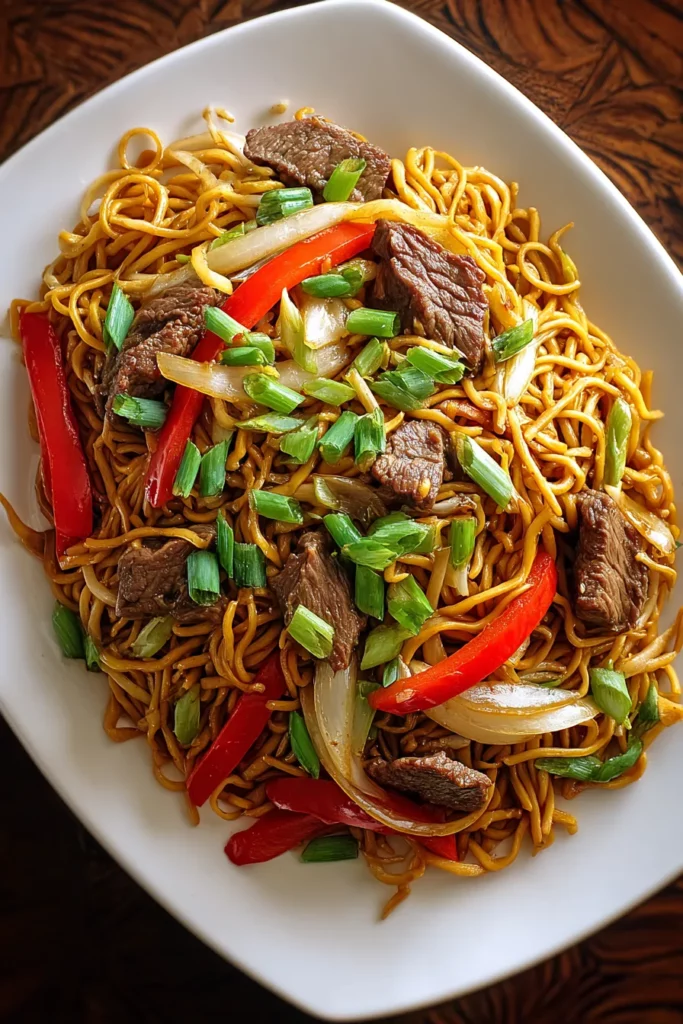

Beef Chow Mein
Description
Tender sirloin meets snappy snow peas, bell peppers, and bean sprouts, all coated in a rich oyster-soy sauce. Ready in under 30 minutes, this Beef Chow Mein is a mouthwatering stir-fry perfect for any night of the week.
Ingredients
Instructions
-
Begin by marinating the beef. In a bowl, combine the beef, soy sauce, and oyster sauce, mixing well. Let it marinate for at least 15 minutes to enhance the flavors.
-
Cook the chow mein noodles according to the package instructions. Once cooked, drain and set aside.
-
In a large skillet or wok, heat half of the vegetable oil over medium-high heat. Add the marinated beef in batches, searing until it is browned and cooked through. Remove the beef from the pan and set aside.
-
In the same skillet, add the remaining oil. Stir in the minced garlic, ginger, and green onions, cooking for about 1 minute until fragrant.
-
Add the red bell pepper and snow peas. Stir-fry the vegetables for 2-3 minutes, keeping them crisp but tender.
-
Return the cooked beef to the pan, mixing it with the vegetables.
-
In a small bowl, dissolve the cornstarch in water to create a slurry. Pour it into the pan to thicken the sauce.
-
Add the cooked chow mein noodles and bean sprouts, tossing everything together until well-combined and heated through. Adjust seasoning with salt and pepper as needed.
-
If desired, drizzle a little sesame oil over the top for added flavor before serving.
Note
- For a vegetarian version, omit the beef and add tofu or more vegetables.
- Use fresh noodles if available for a more authentic taste.
- Feel free to add other vegetables like mushrooms or broccoli to customize the dish.
- For an extra kick, add a pinch of red pepper flakes or a splash of hot sauce.

