

Brown Sugar Glazed Salmon delivers a mouthwatering blend of sticky-sweet caramel, savory soy, and tangy Dijon, balanced by bright lemon notes and crispy, caramelized edges. As a simple dinner for beginner cooks, this recipe comes together in under 20 minutes and turns everyday salmon fillets into a glossy, restaurant-worthy feast. Grab your apron and let’s dive into a dish that’s as effortless as it is impressive!
Key Ingredients
Let’s break down the star players that make this Brown Sugar Glazed Salmon so irresistible:
- 4 salmon fillets: The tender, flaky centerpiece that soaks up every bit of our sticky-sweet glaze.
- 2 tablespoons brown sugar: Provides that signature caramelization and balances the savory elements.
- 1 tablespoon soy sauce: Infuses rich umami depth and a hint of saltiness.
- 1 tablespoon Dijon mustard: Adds a tangy kick that cuts through the sweetness.
- 1 teaspoon olive oil: Helps emulsify the glaze and keeps it silky.
- 1 teaspoon lemon juice: Brings a bright, citrusy zing to lighten the flavors.
- 1/2 teaspoon garlic powder: Lends savory warmth without overpowering the glaze.
- Pinch salt: Enhances all the flavors and keeps everything in balance.
- Pinch black pepper: Adds a subtle heat and aromatic spice finish.
How To Make Brown Sugar Glazed Salmon
Getting this salmon on the table is a breeze, thanks to a simple glaze and straightforward steps. You’ll whisk together a handful of pantry staples, brush it onto your fillets, then let your oven do most of the work. With just a quick broil at the end, you’ll enjoy a melty-sweet topping that’s perfectly caramelized.
1. Preheat your oven to 400°F (204°C), ensuring it’s fully heated before your salmon goes in.
2. Whisk brown sugar, soy sauce, Dijon mustard, olive oil, lemon juice, garlic powder, salt, and pepper in a small bowl until the glaze is completely smooth and glossy.
3. Place salmon fillets skin-side down on a baking sheet lined with parchment paper or foil for easy cleanup.
4. Brush the glaze generously and evenly over the top of each salmon fillet, making sure every inch is coated.
5. Bake in the preheated oven for 12 to 15 minutes, or until the salmon’s flesh turns opaque and flakes easily with a fork.
6. Switch the oven to broil for a caramelized finish, then broil the salmon 1 to 2 minutes, watching closely to prevent any burning of the brown sugar.
7. Remove from the oven and let the salmon rest for 2 minutes before serving, allowing juices to redistribute.
Serving Suggestions
This glazed salmon shines on its own, but pairing it with complementary sides will elevate your meal. Here are four tasty ideas:
- Serve with steamed asparagus tossed in a squeeze of lemon for a fresh, green contrast that complements the glaze.
- Pair alongside fluffy jasmine rice to soak up any extra sauce and add a comforting grain element.
- Plate with a cucumber-dill salad dressed lightly in olive oil and vinegar to cut through the richness.
- Enjoy with roasted potatoes seasoned simply with salt, pepper, and olive oil for a hearty, crispy bite.
Tips For Perfect Brown Sugar Glazed Salmon
Nailing this recipe is all about timing and balance. Follow these friendly tips to ensure your salmon is glazed to perfection:
- Marinate salmon up to 30 minutes for deeper flavor, but avoid over-marinating to prevent a mushy texture.
- Add a teaspoon of fresh lemon zest to the glaze for extra brightness and citrus aroma.
- Keep a close eye during broiling to prevent the brown sugar from burning and becoming bitter.
- Serve with steamed vegetables or rice to create a balanced meal and make the most of the glossy glaze.
How To Store It
Proper storage keeps your salmon flavorful and ready for a quick reheat. Here’s how to maintain its quality:
- Refrigerate cooked salmon in an airtight container for up to 2 days, ensuring it cools to room temperature first.
- Reheat gently in a 300°F (150°C) oven for about 8 to 10 minutes to restore moisture without drying out the fish.
- Freeze individual portions by wrapping tightly in plastic wrap and placing in a freezer bag; use within 1 month for best taste.
- Thaw frozen salmon overnight in the refrigerator, then reheat following the gentle oven method above.
Frequently Asked Questions
Here are some quick answers to common questions about this Brown Sugar Glazed Salmon:
- How long does it take to prepare and cook this Brown Sugar Glazed Salmon?
Total cook time is about 12 to 15 minutes plus roughly 5 minutes of prep time to whisk the glaze and brush the salmon. If you choose to marinate your fillets for deeper flavor, add up to 30 extra minutes, bringing the total to about 50 minutes.
- Can I marinate the salmon overnight for a stronger flavor?
It’s not recommended to marinate salmon longer than 30 minutes because the brown sugar’s moisture and the acidity in the glaze can begin to break down the fish’s texture, making it mushy rather than tender.
- How do I know when the salmon is cooked through without cutting into it?
Look for opaque pink flesh that flakes easily with a fork at the thickest part. For extra precision, the internal temperature should reach 145°F (63°C). If you choose to broil for a caramelized finish, watch the fish carefully to avoid burning the sugar.
- What can I do to get a perfectly caramelized glaze without it burning under the broiler?
After baking, switch to broil for just 1 to 2 minutes, keeping the oven rack a few inches from the heat element. Stay by the oven the entire time and watch for bubbling and light browning—remove at the first sign of golden edges to avoid burnt sugar.
- Are there any easy ingredient substitutions if I’m missing something?
You can substitute coconut sugar or maple syrup for brown sugar, tamari for soy sauce to make it gluten-free, and whole-grain mustard if you prefer a rustic texture. Just keep the ratios roughly the same to maintain the balance of sweet, salty, and tangy.
- What side dishes pair well with this glazed salmon?
Steamed green vegetables like asparagus or broccoli, a simple cucumber salad, or fluffy jasmine rice make great accompaniments. Roasted potatoes tossed in olive oil, salt, and pepper also add a hearty component to round out the meal.
- How should I store and reheat leftovers?
Store any cooled leftover salmon in an airtight container in the refrigerator for up to two days. To reheat, place on a baking sheet and warm in a 300°F (150°C) oven for about 8 to 10 minutes to gently restore moisture without drying out the fish.
What Makes This Special
This Brown Sugar Glazed Salmon stands out by marrying sweet, savory, and tangy flavors in one irresistible bite—plus it’s beginner-friendly and perfect for busy weeknights. The quick broil at the end transforms a simple glaze into a gleaming, caramelized masterpiece you’ll be proud to serve. Feel free to print this guide and tuck it into your recipe folder, and don’t forget to drop a comment or question if you give it a whirl! Enjoy every sweet, tangy forkful.
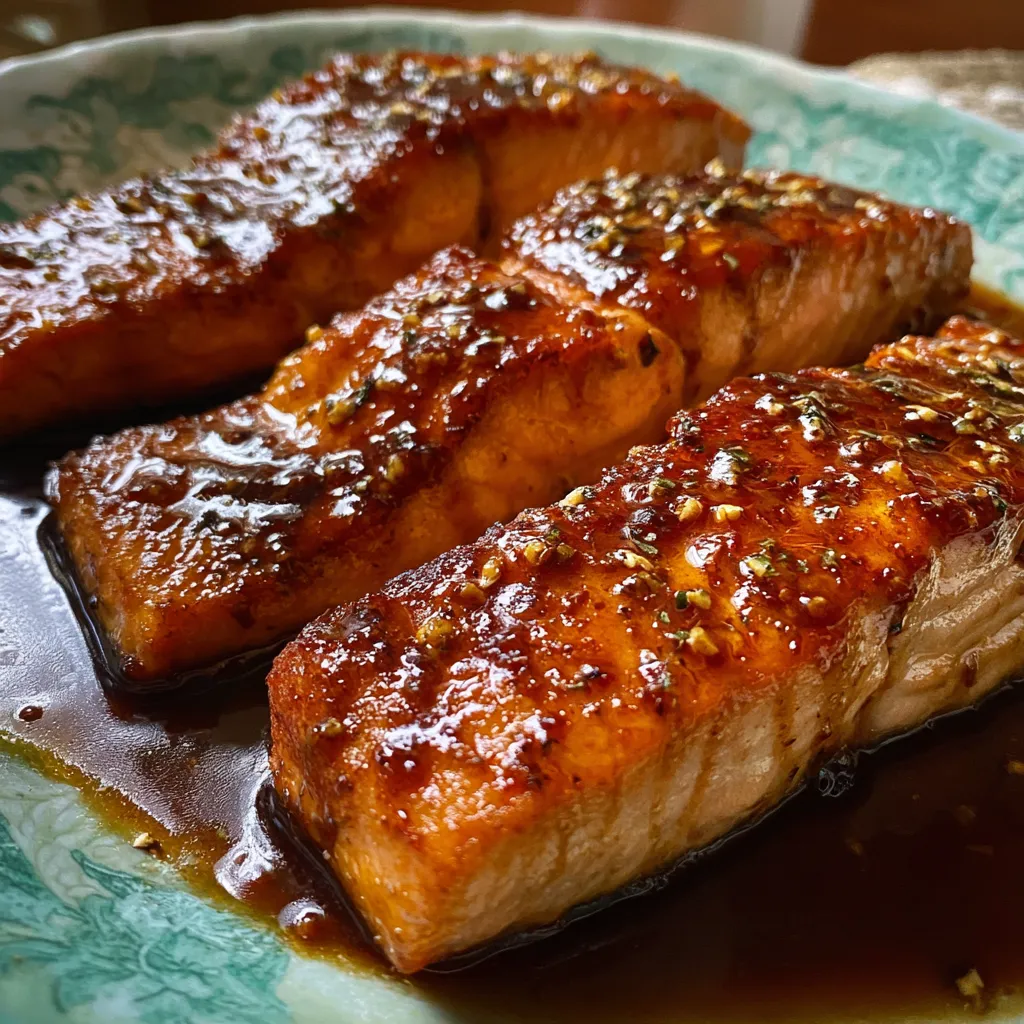

Brown Sugar Glazed Salmon
Description
Sticky-sweet brown sugar melds with savory soy and tangy mustard to form a glossy glaze that crisps at the edges while sealing in the salmon’s buttery texture and bright lemon notes.
Ingredients
Instructions
-
Preheat oven to 400 degrees Fahrenheit.
-
Whisk brown sugar, soy sauce, Dijon mustard, olive oil, lemon juice, garlic powder, salt, and pepper in a small bowl until smooth.
-
Place salmon fillets skin-side down on a baking sheet lined with parchment paper or foil.
-
Brush the glaze evenly over the top of each salmon fillet.
-
Bake in the oven for 12 to 15 minutes, until the salmon is opaque and flakes easily with a fork.
-
For a caramelized finish, switch the oven to broil and broil the salmon for 1 to 2 minutes, watching carefully to prevent burning.
-
Remove from the oven and let the salmon rest for 2 minutes before serving.
Note
- Marinate salmon up to 30 minutes for deeper flavor, but avoid over-marinating to prevent mushy texture.
- Add a teaspoon of fresh lemon zest to the glaze for extra brightness.
- Keep a close eye during broiling to prevent the brown sugar from burning.
- Serve with steamed vegetables or rice to create a balanced meal.

