

Chicken Pad Thai has a special place in my heart, stirring up memories of cozy kitchen experiments and dinner gatherings filled with laughter. This vibrant noodle dish combines tender strips of chicken, silky rice noodles, and a symphony of sauces that dance between sweet, tangy, and savory. Every bite delivers a playful balance of textures—from the gentle chew of the noodles to the satisfying crunch of chopped peanuts and fresh bean sprouts. As a home cook who loves to tinker, I’m always amazed at how a handful of simple ingredients can transform into a restaurant-quality meal in under an hour. Whether you’re an experienced foodie or a kitchen newbie, this Chicken Pad Thai recipe is your ticket to an exotic adventure without leaving home.
Even on busy weeknights, Chicken Pad Thai shines as a go-to dinner that feels far more special than its 30-minute prep and 15-minute cooking time suggest. It’s beginner-friendly, yet versatile enough to adapt to your pantry and heat preferences—swap in shrimp, add extra chili flakes, or throw in more veggies to suit your taste. With a beginner-level difficulty rating, you’ll glide through each step, from soaking the rice noodles in warm water to mastering that satisfying stir-fry sizzle. The end result is a perfectly sauced dish clocking in at around 520 calories per serving, proof that quick dinners can be both wholesome and indulgent. So grab your wok or skillet, and let’s bring the bustling street-side flavors of Thailand right into your kitchen!
KEY INGREDIENTS IN CHICKEN PAD THAI
Before we fire up the stove, let’s take a moment to get familiar with the lineup of ingredients that makes Chicken Pad Thai such a flavor-packed sensation. Each component plays its own role, from lending texture to building layers of sweet, salty, and umami notes. Gather these staples and watch how they come together to create one of Thailand’s most beloved noodle dishes.
- Rice noodles
These flat, chewy strands are the star base of Pad Thai, soaking up every drop of sauce and carrying flavors flawlessly. Soft after soaking, they provide a light yet satisfying foundation.
- Vegetable oil
A neutral, high-heat oil that ensures your chicken and noodles get a beautiful sear without smoking. It helps distribute heat evenly in your wok or skillet.
- Boneless, skinless chicken breast
Lean and tender, thinly sliced chicken breast marinates flavors quickly and cooks in just a few minutes. It brings protein and a gentle meatiness to the dish.
- Garlic
Minced garlic releases a fragrant aroma as soon as it hits hot oil, laying down a savory, aromatic base that perks up every subsequent ingredient.
- Eggs
Lightly beaten and scrambled in the pan, eggs add a silky texture and extra body, tying the noodles and chicken together in a comforting embrace.
- Bean sprouts
Crisp and refreshing, these sprouts add a hydrating crunch, balancing the richness of the sauce and adding a garden-fresh note.
- Shredded carrots
Bright orange ribbons introduce subtle sweetness and color, enhancing both visual appeal and nutritional value.
- Green onions
Sliced green onions bring a mild oniony zing and pop of color, sprinkled throughout for freshness and bite.
- Peanuts
Chopped peanuts deliver a crunchy, nutty finish that contrasts beautifully with the soft noodles and tender chicken. They’re the final flourish.
- Soy sauce
A salty, savory liquid that lays the groundwork for the Pad Thai sauce, deepening the overall umami profile.
- Fish sauce
A classic Southeast Asian seasoning that adds complexity and that unmistakable fishy-salty punch crucial for authenticity.
- Tamarind paste
The sour backbone of Pad Thai, tamarind paste brightens the sauce with tangy notes, balancing sweetness and saltiness.
- Brown sugar
Adds a mellow sweetness and slight molasses undertone, harmonizing with the tangy and savory elements of the sauce.
- Lime juice
Freshly squeezed lime juice brings a citrusy zing, cutting through richness and pulling flavors into perfect harmony.
- Red chili flakes or Sriracha
Optional but highly recommended for a fiery kick. Adjust the heat level to your preference to awaken those taste buds.
- Lime wedges and fresh cilantro
Garnishes that amplify freshness—lime wedges for an extra squeeze of citrus, cilantro leaves for herbal brightness.
HOW TO MAKE CHICKEN PAD THAI
Let’s dive into the steps that transform these vibrant ingredients into a plate of Chicken Pad Thai. The process moves quickly, so have everything prepped and ready before you start cooking. With a hot pan and your ingredients at hand, you’ll be tossing up restaurant-style Pad Thai in no time.
1. Soak the rice noodles in warm water for 20 minutes or until softened, then drain and set aside. This pre-soaking step ensures the noodles cook evenly and absorb the signature Pad Thai sauce without sticking together.
2. In a small bowl, mix together the soy sauce, fish sauce, tamarind paste, brown sugar, and lime juice to form the sauce. Stir until the brown sugar is fully dissolved, creating a balanced blend of sweet, salty, and tangy flavors. Set this sauce aside.
3. Heat the vegetable oil in a large skillet or wok over medium-high heat. Add the sliced chicken and cook until no longer pink, stirring occasionally to ensure an even sear. Once cooked through, remove the chicken from the pan and set aside to rest.
4. In the same skillet, add the minced garlic and sauté until fragrant, about 30 seconds. Push the garlic to the side of the skillet and pour in the beaten eggs. Scramble the eggs gently until they’re just set, folding them into soft curds without overcooking.
5. Return the cooked chicken to the skillet. Stir in the softened rice noodles and pour the prepared sauce over the top. Toss everything together vigorously so each noodle is generously coated and heated through.
6. Add the bean sprouts, shredded carrots, and sliced green onions. Give the mixture a final toss just until the vegetables are warmed but still retain their crispness, ensuring a delightful textural contrast.
7. Serve immediately, garnished with chopped peanuts, lime wedges, fresh cilantro, and optional red chili flakes or Sriracha for extra heat. The result is a colorful, flavor-packed plate ready to impress.
SERVING SUGGESTIONS FOR CHICKEN PAD THAI
Once your Chicken Pad Thai is sizzling and plated, it’s time to think about those finishing touches that elevate both presentation and taste. Serving this dish with a few thoughtful add-ons ensures each mouthful is balanced, visually appealing, and bursting with layered flavors. Invite friends or family to help themselves, garnishing their own bowls for an interactive meal experience.
- Extra Citrus
Arrange additional lime wedges around the plate so everyone can tailor the tanginess to their liking. A quick squeeze amps up freshness and brightens the dish beautifully.
- Herb Burst
Offer a bowl of fresh cilantro leaves and thinly sliced green onion curls on the side. Guests can sprinkle these aromatic herbs right before digging in for a garden-fresh lift.
- Crunch Crunch
Present an extra dish of toasted peanuts and crushed chili flakes. This allows diners to dial up the crunch and heat, ensuring every bite has a satisfying textural contrast.
- Accompaniment Pairing
Serve your Chicken Pad Thai alongside a light cucumber salad dressed in rice vinegar and sesame oil. The cool, crisp salad provides a soothing counterpoint to the warm, savory noodles.
HOW TO STORE CHICKEN PAD THAI
Storing Chicken Pad Thai properly is key to retaining its vibrant flavors and textures for later enjoyment. Whether you’re meal-prepping for the week or saving leftovers from a lively dinner, a few simple steps will keep your Pad Thai tasting as fresh as the day you made it. Proper storage also prevents soggy noodles and ensures the sauce remains lively.
- Refrigeration
Transfer cooled Pad Thai into an airtight container and refrigerate for up to three days. Make sure to cool the noodles completely before sealing to prevent condensation from making them mushy.
- Freezing
For longer storage, freeze your Pad Thai in a freezer-safe container, leaving about half an inch of headspace to allow for expansion. Freeze for up to two months and thaw overnight in the refrigerator before reheating.
- Separate Garnishes
Store chopped peanuts, lime wedges, and fresh cilantro in small containers or resealable bags alongside the noodles. Adding garnishes just before serving prevents them from wilting or softening.
- Reheating Tips
When ready to enjoy leftovers, reheat gently in a skillet over medium heat, adding a splash of water or extra lime juice to rejuvenate the sauce. Stir constantly until warmed through, then finish with fresh garnishes.
CONCLUSION
From the moment you begin soaking those rice noodles to the satisfying crunch of fresh peanuts, Chicken Pad Thai invites you on a flavorful, aromatic journey straight from your stovetop. We’ve walked through every step—pre-soaking noodles, balancing a tangy-sweet sauce, mastering the scramble, and perfecting that final toss—so you feel confident recreating this Thai classic at home. With only 30 minutes of prep and a quick 15-minute cook time, this beginner-friendly recipe strikes the perfect balance of convenience, bold flavors, and textural delight, clocking in at around 520 calories per serving. Whether you’re whipping it up for a solo weeknight dinner or impressing friends at a casual gathering, this Chicken Pad Thai is sure to become a staple in your recipe rotation.
Feel free to print this article and save it for later reference—clip it to your fridge or tuck it into your recipe binder. Below, you’ll find a handy FAQ section to address any lingering questions, from ingredient substitutions to troubleshooting tricks. And if you give this recipe a spin, I’d love to hear how it turned out! Drop a comment with your experience, any personal tweaks you made, or questions you have about the process. Your feedback not only helps me refine future recipes, but also builds a community of home cooks eager to share tips, stories, and that shared joy of a bowl of perfectly balanced Chicken Pad Thai.
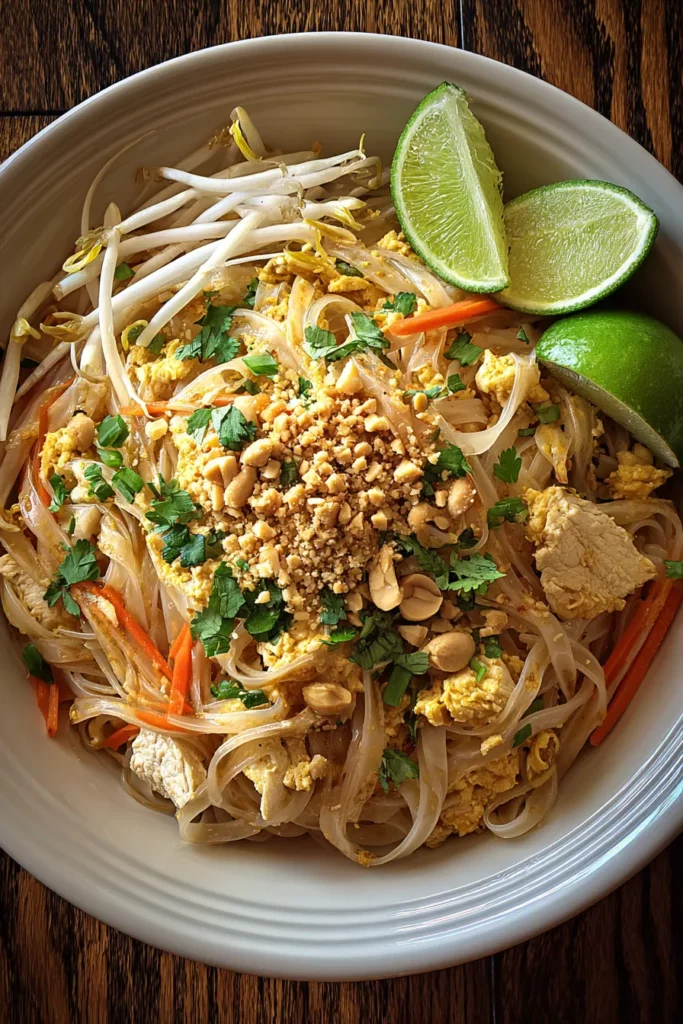

Chicken Pad Thai
Description
A perfect harmony of tender chicken, savory sauces, and fresh veggies, Chicken Pad Thai delivers a burst of flavors in every bite. Quick and satisfying, it's a weekday favorite!
Ingredients
Instructions
-
Soak the rice noodles in warm water for 20 minutes or until softened. Drain and set aside.
-
In a small bowl, mix together the soy sauce, fish sauce, tamarind paste, brown sugar, and lime juice to form the sauce. Set aside.
-
Heat the vegetable oil in a large skillet or wok over medium-high heat. Add the sliced chicken and cook until no longer pink. Remove and set aside.
-
In the same skillet, add the garlic and sauté until fragrant. Move the garlic to the side of the skillet and pour in the beaten eggs. Scramble them until just set.
-
Return the cooked chicken to the skillet. Stir in the softened rice noodles and pour the sauce over the top. Toss everything together to combine and until the noodles are heated through.
-
Add the bean sprouts, shredded carrots, and green onions. Toss lightly to combine and heat through.
-
Serve immediately, garnished with chopped peanuts, lime wedges, fresh cilantro, and optional red chili flakes or Sriracha if you prefer extra heat.
Note
- The balance of flavors in Pad Thai can be adjusted to your taste; feel free to tweak the sauce ingredients.
- Tamarind paste is key for authentic Pad Thai flavor but can be hard to find; lemon or additional lime juice are possible substitutes.
- Using a very hot pan is essential for giving the noodles and chicken a nice sear.
- If you prefer shrimp instead of chicken, they can be easily substituted.
- This dish is traditionally cooked in a wok, but a large skillet works just as well.

