

A bubbling pot of classic beef stew feels like a warm embrace on a chilly evening. Every time I tiptoe into my kitchen on a crisp autumn afternoon, the deep, soulful scent of slow-cooked beef, rich tomato paste, and an aromatic blend of thyme and rosemary greets me like an old friend. As the chuck cubes soften into succulent morsels, glossy carrots and earthy potatoes join the party, each slice surrendering its sweetness to the savory broth. A splash of red wine adds a velvety depth that lingers on the tongue, perfectly balancing the hearty umami notes with a subtle acidity. Stirring the stew becomes a comforting ritual—each swirl lifts browned bits from the bottom of the pot, layering flavor with every pass and promising that final bowl will be nothing short of spectacular.
Over the years, classic beef stew has become my go-to dinner when I crave something both nourishing and indulgent. It’s the sort of dish that bonds a family together, as everyone gathers around and passes bread for dunking into its rich gravy. I still recall the warmth of my grandmother’s kitchen, where she would coax every ounce of flavor out of simple ingredients through slow, patient simmering. Whether you’re looking for a way to warm up after a day in the rain or you simply want to savor a timeless comfort meal, this recipe offers that perfect blend of tradition, taste, and heart. So grab your largest pot, roll up your sleeves, and let’s dive into a hearty dinner adventure!
KEY INGREDIENTS IN CLASSIC BEEF STEW
Before diving into the cooking process, let’s take a closer look at the heart and soul of this hearty stew: its ingredients. Each component plays a specific role in building layers of flavor, texture, and color. From the tender beef that forms the foundation to aromatic herbs that elevate the broth, here’s what you’ll need to gather for this recipe:
- Beef chuck: A sturdy, well-marbled cut that becomes meltingly tender when slow-cooked, delivering rich, savory depth to the stew’s base.
- All-purpose flour: Used to lightly coat the beef cubes, it helps create a silky, slightly thickened gravy as it blends with the meat juices during searing and simmering.
- Olive oil: Adds a fruity undertone and provides the ideal medium to sear the beef until golden brown, locking in juices and building flavorful fond.
- Beef broth: The main liquid component offering a robust, meaty canvas that supports all other flavors and ensures a satisfying mouthfeel.
- Red wine: Contributes acidity and complexity, deglazing the pan to lift caramelized bits and enrich the stew with deep, layered undertones.
- Tomato paste: Intensifies umami and lends subtle sweetness, anchoring the broth with vibrant color and balancing the richness of the beef.
- Dried thyme: Imparts earthy, slightly minty notes that harmonize perfectly with the savory elements and add aromatic warmth.
- Dried rosemary: Offers pine-like, resinous aromatics that cut through the stew’s richness, giving each spoonful a refreshing herbaceous twist.
- Bay leaves: Release a mild, floral bitterness as they simmer, boosting the broth’s complexity without overpowering other flavors.
- Garlic: Minced cloves lend pungent warmth and depth, infusing the stew with a fragrant bite that complements the onions and herbs.
- Onion: Chopped and sautéed until translucent, it forms the aromatic foundation, sweetening the stew and layering subtle savory nuances.
- Carrots: Peeled and sliced, these root vegetables soften to tender sweetness, adding color and natural sugars that balance the meat.
- Potatoes: Diced into hearty chunks, they soak up the savory gravy and create a creamy, comforting texture in every mouthful.
- Celery: Diced stalks contribute crisp freshness and mild bitterness, helping to break up heavier flavors and introduce a bright crunch.
- Salt and pepper: Essential seasonings that sharpen and highlight all the rich flavors, adjusted to taste for a perfectly balanced stew.
- Fresh parsley: Optional garnish that sprinkles a burst of green color and fresh, slightly peppery notes, giving the finished dish a lively finish.
HOW TO MAKE CLASSIC BEEF STEW
With your ingredients at the ready, this section walks you through each step of transforming humble components into a soul-warming masterpiece. You’ll master techniques like searing, deglazing, and simmering, resulting in a beautifully balanced stew that’s sure to become a household favorite.
1. In a large bowl, toss the beef cubes with the flour until each piece is evenly coated. This simple dredge lays the groundwork for a luscious gravy as the starch helps thicken the cooking liquids.
2. Heat the olive oil in a large pot or Dutch oven over medium-high heat. Add the beef cubes in batches, searing them until they are deeply browned on all sides. Work in batches to avoid crowding, then remove the beef and set it aside.
3. In the same pot, add the chopped onion and minced garlic. Sauté for about 2 minutes or until the onion becomes translucent and fragrant, scraping up any browned bits for extra flavor.
4. Stir in the tomato paste, dried thyme, dried rosemary, and bay leaves. Cook for another minute, allowing the aromatic herbs and paste to bloom and deepen the flavor.
5. Pour in the red wine, scraping up any browned bits from the bottom of the pot with a wooden spoon. Allow the wine to simmer for a couple of minutes to reduce slightly and concentrate its flavor.
6. Return the seared beef to the pot, then pour in the beef broth. Bring the mixture to a gentle boil, stirring to combine, then reduce the heat to a low simmer.
7. Add the carrots, potatoes, and celery to the pot. Season generously with salt and pepper to taste, ensuring each vegetable absorbs the seasoning as it cooks.
8. Cover and simmer the stew for about 1.5 to 2 hours, stirring occasionally, or until both the beef and vegetables are tender and the broth has thickened to a rich consistency.
9. Discard the bay leaves before serving to remove any unwanted bitterness. Taste once more and adjust salt and pepper if necessary.
10. Serve the beef stew hot, garnished with chopped fresh parsley if desired, and accompany with a slice of crusty bread for soaking up every last drop of that delicious gravy.
SERVING SUGGESTIONS FOR CLASSIC BEEF STEW
A hearty beef stew is versatile and pairs beautifully with a range of side dishes that can elevate the overall dining experience. Whether you’re hosting friends or enjoying a cozy night in, these serving suggestions will help you present your stew in the most irresistible way.
- Serve with crusty artisan bread: Tear off sections of a fresh baguette or sourdough loaf to dip into the rich broth, ensuring each bite is mopped up with luscious gravy.
- Pair with a bright green salad: A crisp mix of baby spinach or arugula tossed with a light lemon vinaigrette offers a refreshing contrast that cuts through the stew’s richness.
- Offer a side of buttery garlic mashed potatoes: Whip peeled potatoes with butter, milk, and roasted garlic until silky smooth, then spoon the stew over the top for an extra layer of comfort.
- Complement with steamed green beans or roasted Brussels sprouts: Lightly seasoned with salt, pepper, and a drizzle of olive oil, these veggies bring color and a satisfying crunch to your robust meal.
HOW TO STORE CLASSIC BEEF STEW
Storing your beef stew properly ensures you can enjoy every delicious morsel even days or weeks after cooking. With a few simple strategies, you can maintain its flavor, texture, and freshness for later meals.
- Refrigeration: Allow the stew to cool to room temperature, then transfer it into an airtight container. It will keep well in the fridge for up to 4 days without losing its vibrant flavors.
- Freezing: Portion the stew into freezer-safe bags or containers, leaving a small gap for expansion. Label with the date and store for up to 3 months. Thaw overnight in the refrigerator before reheating.
- Reheating: Gently warm leftover stew over low heat in a pot, stirring occasionally to prevent sticking. Add a splash of beef broth or water if the consistency has thickened too much.
- Vacuum sealing: For longer shelf life, consider vacuum-sealing portions before freezing. This method reduces air exposure and preserves the stew’s original taste and texture for several months.
CONCLUSION
From the moment you gather your beef chuck, herbs, vegetables, and seasonings, to the satisfying stir of the final simmer, this classic beef stew recipe guides you through a deliciously comforting journey. We began by exploring the essential ingredients and their unique contributions—flour for body, red wine for complexity, and aromatic herbs for depth. In the cooking section, we covered key techniques like searing the beef, deglazing with wine, and the slow simmer that transforms simple components into a soul-warming meal. Serving suggestions highlighted everything from crusty bread for dipping to crisp salads that balance bold flavors, while storage tips guaranteed you can savor this dish days or even months later.
Feel free to print this article and save it for future use—you’ll find a handy FAQ below to answer any lingering questions about variations, substitutions, or troubleshooting. If you try this recipe yourself, don’t hesitate to leave a comment or share your culinary experience. I’d love to hear about your favorite ways to serve this stew, any personal twists you’ve added, or questions you encountered along the way. Your feedback helps create an ever-evolving kitchen conversation, and I’m here to help if you need a little extra guidance or encouragement. Happy cooking!
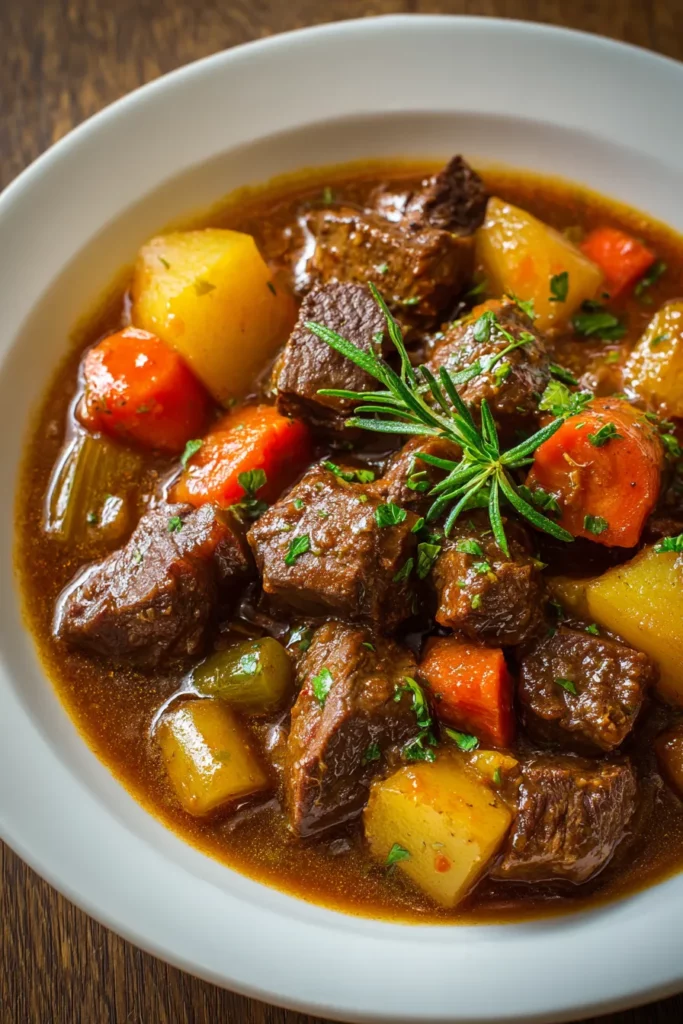

Classic Beef Stew
Description
This classic beef stew is a comforting blend of savory flavors, with tender beef, hearty vegetables, and aromatic herbs simmered to perfection. Each bite reveals a satisfying medley that warms the soul.
Ingredients
Instructions
-
In a large bowl, toss the beef cubes with the flour until each piece is evenly coated.
-
Heat the olive oil in a large pot or Dutch oven over medium-high heat. Add the beef cubes in batches, searing them until they are browned on all sides. Remove the beef and set aside.
-
In the same pot, add the chopped onion and minced garlic. Sauté for about 2 minutes or until the onion becomes translucent.
-
Stir in the tomato paste, thyme, rosemary, and bay leaves. Cook for another minute to blend the flavors.
-
Pour in the red wine, scraping up any browned bits from the bottom of the pot. Allow the wine to simmer for a couple of minutes.
-
Return the beef to the pot, then pour in the beef broth. Bring the mixture to a low boil, then reduce the heat to a simmer.
-
Add the carrots, potatoes, and celery to the pot. Season with salt and pepper to taste.
-
Cover and simmer the stew for about 1.5 to 2 hours, or until the beef and vegetables are tender.
-
Discard the bay leaves before serving. Garnish with chopped fresh parsley if desired.
-
Serve the beef stew hot, accompanied by a slice of crusty bread if preferred.
Note
- For a richer flavor, you can marinate the beef in red wine and herbs overnight before cooking.
- If you prefer a thicker stew, mash some of the potatoes or remove a portion, blend, and return.
- Beef stew often tastes better the next day as the flavors meld together over time.
- You can substitute sweet potatoes for a slightly sweeter variation.
- This recipe can be adapted for a slow cooker by browning the meat and then adding all ingredients to the slow cooker, cooking on low for 6-8 hours.

