

Nothing quite compares to biting into a slice of Coconut Cloud Cake on a lazy Sunday afternoon. With its soft, pillowy crumb and layers of creamy frosting, each forkful feels like a tiny celebration in your mouth. The gentle sweetness of coconut milk intertwines with a whisper of vanilla, creating a dessert that’s both comforting and exotic. As you pass a slice around the table, you’ll notice how the toasted coconut flakes on top crackle under your teeth, adding just the right amount of texture to balance out the dreamy sponge beneath. Whether you’re an experienced baker or someone who just loves a good sweet treat, this cake invites you to slow down, savor the moment, and share smiles with everyone you care about.
What makes this Coconut Cloud Cake so special is how it brings a little bit of the tropics right into your kitchen. You don’t need palm trees swaying in the breeze or the sound of the ocean to feel transported—just a bowl, a few simple ingredients, and a dash of enthusiasm. Remember that time you pulled a gooey cookie out of the oven and watched everyone’s faces light up? This cake has that same magic but kicked up a notch with layers of luscious, tangy cream cheese frosting. Trust me, once you master this recipe, you’ll find a million reasons to bake it: birthdays, potlucks, or simply whenever you need a sweet pick-me-up.
KEY INGREDIENTS IN COCONUT CLOUD CAKE
Every unforgettable cake starts with quality components that work in harmony. Here’s a breakdown of the ingredients you’ll need for both the sponge and the frosting, along with why each one plays a starring role in this tropical treat:
- All-purpose flour
The backbone of your cake, creating structure and supporting all the lovely coconut flavors. It helps form a tender crumb without weighing the cake down.
- Granulated sugar
Adds sweetness and assists in creating a light, airy texture by trapping air during the creaming process.
- Canned coconut milk
Delivers a rich, creamy coconut taste that’s far more decadent than carton varieties, keeping the sponge moist and fragrant.
- Unsalted butter
Contributes to a silky texture and adds depth of flavor. Softened butter helps achieve that perfect fluffy crumb when creamed with sugar.
- Vegetable oil
Boosts moisture and keeps the cake tender, ensuring a melt-in-your-mouth experience even days after baking.
- Large eggs
Act as a binding agent and leavening component, making sure your cake rises evenly and holds its shape.
- Baking powder
Provides the lift needed to create a soft, cloud-like sponge that feels light but substantial.
- Vanilla extract
Rounds out the flavors with warm, sweet aromatics, enhancing both the cake batter and the frosting.
- Coconut extract
Intensifies the tropical essence, giving every bite a burst of coconutty goodness.
- Salt
Balances sweetness and highlights the natural flavors of all the other ingredients.
- Sweetened shredded coconut
Adds pockets of chewy coconut throughout the cake and a satisfying crunch when toasted on top.
- Heavy cream
Whipped into stiff peaks for a light and airy component in the frosting, lending a luxurious mouthfeel.
- Cream cheese
Provides a tangy contrast to the sweet sponge, creating a frosting that’s rich, smooth, and irresistibly creamy.
- Powdered sugar
Sweetens and stabilizes the frosting, ensuring it stays fluffy yet holds its shape under those toasted coconut bits.
HOW TO MAKE COCONUT CLOUD CAKE
Let’s dive into how you turn these ingredients into a show-stopping cake. From preparing the pans to frosting the final layer, each step is designed to maximize flavor and texture, giving you a bakery-quality dessert right at home.
1. Preheat your oven to 350°F (175°C). Grease and flour two 9-inch round cake pans to prevent sticking and ensure an even rise.
2. In a large mixing bowl, cream together the softened butter, sugar, and vegetable oil until the mixture is light, pale, and fluffy, about 3–5 minutes with an electric mixer.
3. Add the eggs, one at a time, beating well after each addition to incorporate air and maintain a smooth batter. Mix in the vanilla and coconut extracts until fragrant.
4. In a separate bowl, whisk together the all-purpose flour, baking powder, and salt, ensuring the leavening agent is evenly distributed.
5. Gradually incorporate the dry ingredients into the wet mixture, alternating with the canned coconut milk. Start and end with the flour mixture, mixing just until no streaks remain—overmixing can lead to a denser cake.
6. Gently fold in the shredded coconut using a spatula, preserving as much air as possible in the batter for that cloud-like texture.
7. Divide the batter evenly between the prepared cake pans, smoothing the tops with a spatula for an even bake.
8. Bake in the preheated oven for 25–30 minutes, or until a toothpick inserted in the center comes out clean and the edges start to pull away slightly from the pan.
9. Let the cakes cool in the pans for 10 minutes to set, then gently turn them out onto wire racks to cool completely.
10. Meanwhile, prepare the frosting: In a medium bowl, beat the cream cheese until smooth and lump-free. Add the powdered sugar, vanilla extract, and coconut extract, beating until everything is fully incorporated.
11. In a separate bowl, whip the heavy cream to stiff peaks, making sure it holds its shape without collapsing.
12. Gently fold the whipped cream into the cream cheese mixture until smooth and fluffy—this will lighten the frosting and give it a mousse-like consistency.
13. Once the cakes have cooled completely, place one layer on a serving platter. Spread half of the frosting evenly over the top, creating a smooth, even surface.
14. Place the second cake layer over the frosted layer and use the remaining frosting to cover the top and sides, achieving clean lines with a bench scraper or offset spatula.
15. Garnish with toasted shredded coconut on top for a golden, crunchy finish. Refrigerate the cake for at least 1 hour before serving to allow the frosting to set perfectly.
SERVING SUGGESTIONS FOR COCONUT CLOUD CAKE
Once your Coconut Cloud Cake has chilled and set, it’s time to think about how to present it in all its glory. Whether you’re hosting a backyard brunch or simply sharing a slice with a loved one, a few thoughtful serving touches can elevate this tropical beauty even further. Below are four ideas to help you plate, garnish, and pair your cake for maximum wow factor.
- Fresh Fruit Medley
Serve each slice alongside a vibrant selection of berries, pineapple chunks, or mango slices. The bright, juicy fruits not only add a pop of color to the plate but also balance the cake’s sweetness with refreshing acidity.
- Iced Coffee or Herbal Tea
Pair with a cold-brewed coffee or a fragrant cup of hibiscus tea. The subtle bitterness of these beverages cuts through the richness of the cream cheese frosting, making every bite feel light and renewed.
- Coconut Caramel Drizzle
Warm up some homemade coconut caramel sauce and lightly drizzle it over each slice. The silky, sweet sauce creates a decadent twist that enhances the cake’s tropical notes and adds a glossy finish.
- Edible Flower Garnish
Top each serving plate with a few edible flowers like orchids or pansies. Their delicate petals and bold colors lend an elegant, whimsical touch, perfect for special occasions or afternoon tea spreads.
HOW TO STORE COCONUT CLOUD CAKE
Proper storage is key to maintaining the delightful combination of moist sponge and fluffy frosting that makes this cake so irresistible. From keeping it fresh for days to freezing slices for future indulgence, here’s how to retain its cloud-like texture and coconut flavor at every turn.
- Short-Term Refrigeration
Place the cake in an airtight container or cover it securely with plastic wrap. Store it in the refrigerator for up to 5 days, ensuring the frosting stays firm and the coconut topping remains crisp.
- Freezing Individual Slices
For longer storage, first freeze individual slices on a parchment-lined baking sheet until solid. Once frozen, wrap each piece tightly in plastic wrap and then foil. Store in a freezer-safe bag for up to 2 months—thaw in the fridge before serving.
- Frosting-On vs. Frosting-Off
If you plan to keep the cake more than 3 days, consider removing any fresh garnishes (like extra toasted coconut) and storing them separately. This prevents moisture from softening the toppings while the cake rests.
- Temperature Consistency
Avoid frequent temperature swings by keeping the cake toward the back of the fridge. Sudden changes can cause condensation, which may soften the frosting or make the sponge slightly soggy.
CONCLUSION
Throughout this article, we’ve journeyed from the first stir of coconut-scented batter to the final sprinkle of golden toasted flakes atop a fully frosted cake. You’ve learned how each ingredient—from creamy coconut milk to tangy cream cheese—plays an essential role in crafting a dessert that’s light, moist, and brimming with tropical flair. By following the step-by-step process and mastering key techniques like creaming, folding, and whipping to stiff peaks, you’re well on your way to creating a Coconut Cloud Cake that will impress friends and family alike. Whether you’re baking for a celebration or simply craving a slice of sunshine, this recipe offers a reliable roadmap to dessert success. Feel free to save or print this guide so you can refer back to it whenever the mood for a dreamy, coconut-kissed treat strikes.
We’re excited for you to try this cake in your own kitchen—don’t hesitate to scroll down to the FAQ below if you have any lingering questions or need troubleshooting tips. If you give it a go, please drop a comment and share how it turned out, or let us know if you have any tweaks or personal touches you added along the way. Your feedback and stories are what make recipes like this come alive, transforming a simple list of steps into a community of home cooks sharing their love of baking. Happy baking, and here’s to many cloud-soft slices ahead!
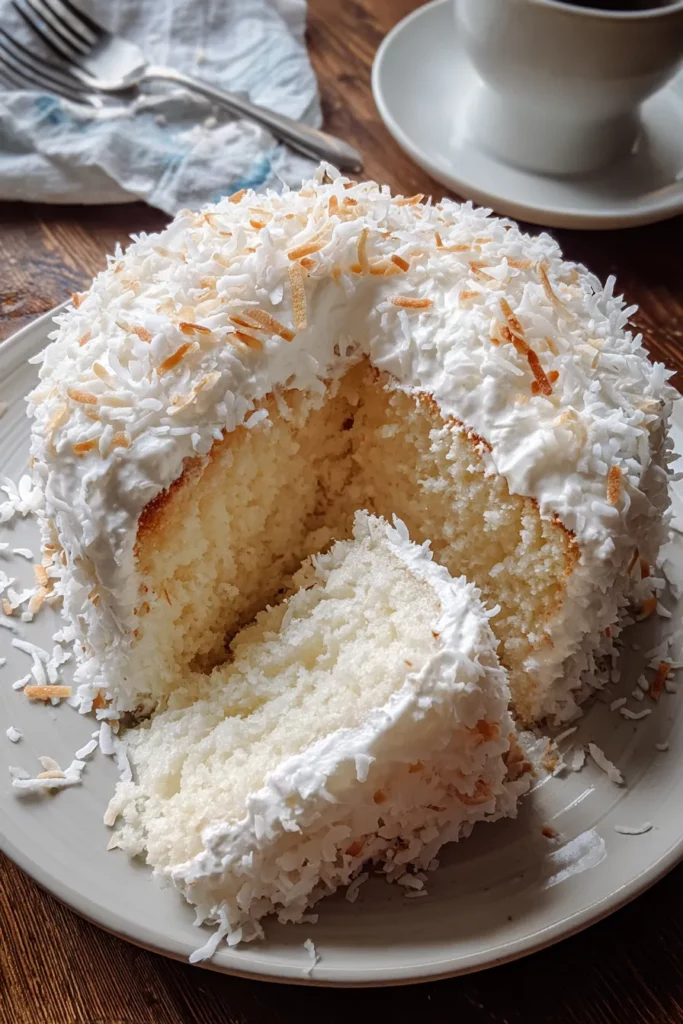

Coconut Cloud Cake
Description
A tropical marvel of moist coconut milk cake and fluffy cream cheese frosting, finished with crunchy toasted coconut for extra texture and irresistible sweetness.
Ingredients
Instructions
-
Preheat your oven to 350°F (175°C). Grease and flour two 9-inch round cake pans.
-
In a large mixing bowl, cream together the softened butter, sugar, and vegetable oil until light and fluffy.
-
Add the eggs, one at a time, beating well after each addition. Mix in the vanilla and coconut extracts.
-
In a separate bowl, whisk together the flour, baking powder, and salt.
-
Gradually incorporate the dry ingredients into the wet mixture, alternating with the coconut milk. Start and end with the flour mixture. Mix until just combined.
-
Gently fold in the shredded coconut.
-
Divide the batter evenly between the prepared cake pans and smooth the tops with a spatula.
-
Bake in the preheated oven for 25-30 minutes, or until a toothpick inserted into the center of the cakes comes out clean.
-
Let the cakes cool in the pans for 10 minutes, then turn them out onto wire racks to cool completely.
-
Meanwhile, prepare the frosting. In a medium bowl, beat the cream cheese until smooth. Add the powdered sugar, vanilla extract, and coconut extract, and beat until incorporated.
-
In a separate bowl, whip the heavy cream until stiff peaks form. Gently fold the whipped cream into the cream cheese mixture until smooth and fluffy.
-
Once the cakes have cooled completely, place one cake layer on a serving platter. Spread half of the frosting evenly over the top.
-
Place the second cake layer over the frosted layer and spread the remaining frosting over the top and sides of the cake.
-
Garnish with toasted shredded coconut on top.
-
Refrigerate the cake for at least 1 hour before serving to set the frosting.
Note
- Toasting the coconut for garnish brings out a delightful nutty flavor.
- Canned coconut milk provides a richer coconut taste than regular coconut milk from a carton.
- Ensure the cream cheese is soft to prevent lumps in your frosting.
- For extra coconut flavor, you can add a teaspoon of coconut extract to the batter.
- The cake can be stored in the refrigerator for up to 5 days.

