

Looking for a weeknight recipe that feels like a warm hug? Creamy Tomato Sauce Ground Beef Orzo delivers with a rich, velvety tomato sauce swirling with cream, coating tender orzo and browned ground beef in a lush, savory embrace. Garlic and herbs weave their magic, creating a one-pot wonder that’s perfect for a cozy dinner. Whether you’re cooking for family or meal prepping for the week, this dish brings comfort and flavor in every twirl—so grab your pan and let’s dive in!
Key Ingredients
Before diving into the cooking steps, let’s gather the essentials that make this dish shine:
- 1 lb (450 g) ground beef (85–90% lean): Rich protein that browns beautifully and forms the savory base for the creamy tomato sauce.
- 1 1/2 cups (285 g) dry orzo pasta: Chewy little pasta pearls that soak up every bit of sauce for maximum flavor.
- 2 tbsp olive oil, divided: Provides a smooth cooking medium for browning meat and sautéing aromatics.
- 1 small yellow onion, finely diced: Adds a sweet, tender bite that enhances the sauce’s depth.
- 3 cloves garlic, minced: Infuses the dish with classic aromatic warmth and subtle heat.
- 1/2 tsp crushed red pepper flakes (optional, adjust to taste): Gives a gentle kick and brightens the tomato base.
- 2 tbsp tomato paste: Intensifies tomato flavor and helps thicken the sauce for richness.
- 1 can (14.5 oz / 410 g) crushed tomatoes or tomato sauce: Creates the tangy, saucy foundation that wraps around the orzo.
- 1/2 cup (120 ml) beef broth or chicken broth: Adds savory depth and helps adjust sauce consistency.
- 3/4 cup (180 ml) heavy cream (or half-and-half for lighter version): Brings silky texture and balances acidity in the tomatoes.
- 1/2 cup (50 g) freshly grated Parmesan cheese, plus more for serving: Melts into the sauce for a nutty, salty finish.
- 1 tsp dried Italian seasoning (or 1/2 tsp dried oregano + 1/2 tsp dried basil): Lends classic herb notes for an Italian-inspired profile.
- 1/2 tsp smoked paprika (optional but recommended): Adds subtle smokiness and depth without overpowering.
- 1–1 1/4 tsp kosher salt, divided (adjust to taste): Seasoning that amplifies all the other flavors.
- 1/2 tsp freshly ground black pepper, divided: Provides gentle heat and rounds out the savory notes.
- 1–2 tbsp fresh basil or parsley, chopped (for garnish): Bright, fresh finish that elevates presentation and flavor.
- 1 tbsp butter (optional, for extra richness): Optional indulgence for added silkiness in the sauce.
- 1 1/2–2 cups (360–480 ml) water or broth, for cooking orzo (if doing one-pan method): Ensures the pasta cooks perfectly without a separate pot.
- Lemon wedge or 1–2 tsp lemon juice (optional, to brighten flavor): A quick squeeze awakens and balances the richness at the end.
How To Make Creamy Tomato Sauce Ground Beef Orzo
This recipe builds layers of flavor—from toasting orzo to browning beef, then simmering a savory tomato base enriched with cream and cheese. You can choose a two-pot method for precise control or a one-pan technique to minimize cleanup. Either way, each step coax out deep, comforting notes before folding in tender orzo for a luscious, cohesive finish.
1. Prepare ingredients
Start by finely dicing the onion and mincing the garlic, then grate the Parmesan and chop fresh basil or parsley. Measure out tomato paste, crushed tomatoes, broth, cream, and seasonings into small bowls so everything is within reach.
2. Toast and par-cook the orzo (stovetop + separate pot method)
Bring a medium pot of well-salted water to a boil, add the orzo, and cook 1–2 minutes shy of package directions. Drain, toss with a tiny drizzle of olive oil to prevent sticking, and set aside. (See step 7 for the one-pan alternative.)
3. Brown the ground beef
In a large deep skillet, heat 1 tablespoon of olive oil over medium-high heat. Add the ground beef, ½ teaspoon salt, and ¼ teaspoon black pepper. Break up the meat with a spatula and cook 5–7 minutes until well browned. Remove excess fat, leaving about 1–2 teaspoons for flavor.
4. Sauté aromatics
Push the beef to one side, add the remaining tablespoon of olive oil to the empty side, and cook the diced onion for 3–4 minutes until soft. Stir in the minced garlic and cook 30–60 seconds until fragrant.
5. Build the tomato base
Stir in the tomato paste and cook 1–2 minutes until it darkens slightly. Add crushed red pepper flakes, Italian seasoning, and smoked paprika. Pour in the crushed tomatoes and ½ cup broth, then bring to a gentle simmer. Reduce heat to medium-low and simmer 5–8 minutes until thickened.
6. Make it creamy
Lower heat to low and slowly pour in the heavy cream, stirring constantly for a silky blend. Let it bubble gently for 2–3 minutes. Stir in butter (if using) and gradually add the grated Parmesan, stirring until fully melted. Adjust salt and pepper to taste.
7. Combine with orzo (two options)
- Option A – using pre-cooked orzo: Add the drained, par-cooked orzo to the sauce and stir over low heat for 3–5 minutes until the pasta has absorbed some sauce. Thin with splashes of broth or water if needed.
- Option B – one-pan method: After step 5, stir in 1½ cups water or broth with the tomatoes, then add dry orzo. Simmer gently, stirring often, for 10–12 minutes until tender. Proceed with step 6, thinning the sauce with extra liquid if it gets too thick.
8. Adjust consistency and flavor
Check the texture: for a looser sauce, stir in extra cream, broth, or hot pasta water; for a thicker, risotto-like result, simmer a few more minutes. Brighten with a squeeze of lemon juice if the dish feels too rich.
9. Finish and garnish
Remove from heat and stir in chopped basil or parsley. Let it rest 2–3 minutes so the sauce sets slightly. Serve hot, topped with extra grated Parmesan and a sprinkle of fresh herbs.
10. Serving suggestions
When plating, consider pairing with a fresh green salad dressed in lemon and olive oil, a side of warm garlic bread to soak up every drop, or stirring in a handful of spinach or peas at the end for extra veggies. Finish with an extra squeeze of lemon and grated Parmesan for a polished touch.
Serving Suggestions
Once your Creamy Tomato Sauce Ground Beef Orzo is ready, these ideas will take it from delicious to unforgettable:
- Fresh green salad: Toss mixed greens with a lemon-olive oil vinaigrette to cut through the richness and add a crisp contrast.
- Garlic bread: Slather slices with garlic butter and toast until golden brown so you can scoop up every last bit of creamy sauce.
- Herb-infused garnish: Sprinkle chopped basil or parsley generously over each bowl for a pop of color and bright, fresh flavor.
- Lemon wedge: Serve with a lemon wedge on the side so diners can add a spritz of brightness that wakes up the whole dish.
Tips For Perfect Creamy Tomato Sauce Ground Beef Orzo
With a few insider tweaks, you’ll nail this dish every time. Feel free to swap proteins, sneak in extra veggies, or lighten up the cream—whatever matches your mood. Keep your tools ready, taste as you go, and adjust seasonings at each stage for a balanced, rich result. Here are some friendly tips to streamline your process and boost flavor:
- You can substitute ground turkey, chicken, or Italian sausage for the ground beef; adjust salt since sausage is often saltier.
- For extra veg, add diced bell pepper, mushrooms, or spinach when sautéing the onion or near the end.
- Use half-and-half or whole milk instead of heavy cream for a lighter version, but simmer gently to avoid curdling.
- Freshly grated Parmesan melts better and gives a smoother sauce than pre-shredded cheese.
- Leftovers thicken as they sit; when reheating, stir in a splash of water, broth, or cream to bring back the creaminess.
- For a spicier dish, increase crushed red pepper flakes or add a pinch of cayenne.
- This dish freezes reasonably well; cool completely, portion into airtight containers, and reheat with added liquid to loosen.
How To Store It
This orzo dish holds up well for make-ahead meals or leftovers, so you can enjoy creamy comfort any night of the week. Follow these storage tips to keep it fresh and flavorful:
- Refrigerate in an airtight container for up to 3–4 days and chill quickly to preserve texture.
- Reheat gently on the stovetop over low heat, stirring in a splash of broth or cream to restore its silky consistency.
- Freeze portions in freezer-safe containers for up to 2 months; thaw overnight in the fridge before reheating.
- Meal-prep style: Divide into single-serve containers, cool completely, then seal and store for grab-and-go dinners.
Frequently Asked Questions
Here are answers to common questions about this creamy, comforting recipe:
- Can I substitute other proteins for the ground beef?
Yes. You can swap in ground turkey, ground chicken, or Italian sausage in place of the 1 lb of ground beef. If you choose sausage, reduce or omit added salt since sausage tends to be saltier. Cook the substitute just as you would the ground beef in step 3, breaking it up and browning until no pink remains, then proceed with the recipe as written.
- What’s the best way to prevent the orzo from sticking together?
If using the stovetop method, drain the orzo after cooking it 1–2 minutes shy of al dente, then toss it with a tiny drizzle of olive oil before setting aside. This coating keeps the grains separate until you fold them into the sauce in step 7A. In the one-pan method, stir the dry orzo often and add small splashes of water or broth if the pan becomes too dry before the grains fully cook, which prevents clumping.
- How do I choose between the one-pan and separate-pot methods for cooking orzo?
Use the separate-pot method if you prefer precise control over the orzo’s doneness and want to avoid stirring constantly. You par-cook the orzo, drain it, then add it in step 7A so it finishes in the sauce. The one-pan method (step 7B) is more hands-on—you add dry orzo directly to the simmering tomato base with broth and watch it for 10–12 minutes until tender. One-pan means fewer dishes, while the separate-pot gives you margin for timing and texture.
- How can I adjust the creaminess or thickness of the sauce?
After adding the heavy cream and Parmesan in step 6, the sauce should be silky and slightly thick. If you prefer a looser, more saucy consistency, stir in extra broth, hot pasta water, or a splash more cream until you reach your desired texture. For a thicker, almost risotto-like finish, let the sauce simmer a couple more minutes uncovered, stirring frequently to reduce excess liquid.
- How can I make this recipe lighter or reduce calories?
To lighten the dish, substitute half-and-half or whole milk for the heavy cream in step 6 and simmer gently to avoid curdling. Use a leaner ground meat like turkey or chicken, omit the optional butter, and reduce Parmesan slightly. You can also stir in extra vegetables (e.g., spinach, peas) to bulk up the volume without adding many calories.
- How do I adjust the spiciness of the sauce?
The recipe calls for 1/2 tsp crushed red pepper flakes in step 5, which you can increase or decrease to taste. To make it milder, omit the flakes entirely or start with just a pinch. For extra heat, add more flakes or a pinch of cayenne pepper when building the tomato base, then taste and adjust before adding the cream.
- What’s the best way to store and reheat leftovers?
Cool the dish completely, then portion it into airtight containers and refrigerate for up to 3–4 days. When reheating, warm it gently on the stovetop over low heat, stirring in a splash of broth, water, or cream to restore the sauce’s original creaminess. You can also freeze portions for up to 2 months; thaw overnight in the fridge before reheating.
- Can I add extra vegetables to this recipe?
Absolutely. You can fold in diced bell pepper or sliced mushrooms when sautéing the onion in step 4, or stir in a handful of baby spinach or peas during the final few minutes of cooking in step 7 until just wilted or heated through. Adjust seasoning afterward, as the extra vegetables may dilute the sauce’s flavor slightly.
What Makes This Special
This Creamy Tomato Sauce Ground Beef Orzo hits all the right notes: hearty beef, dreamy tomato-cream sauce, and perfectly cooked orzo that soaks up every drop. It works in one pan or two, so cleanup is a breeze—just the sound of your spoon scraping the edges is the ultimate dinner bell. Feel free to print this article and stash it in your recipe binder for those busy weeknights. If you try it, let me know how it turned out or drop any questions below—your feedback makes cooking even more fun!
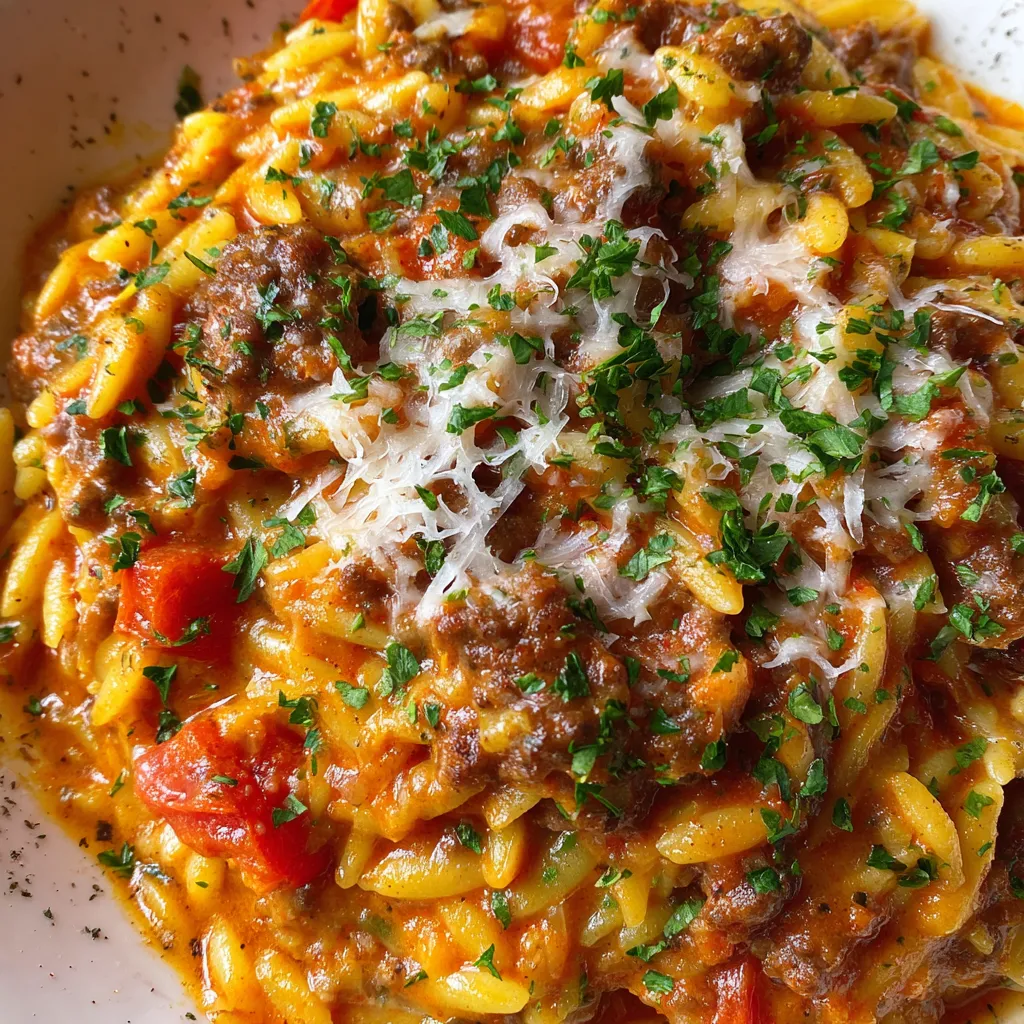

Creamy Tomato Sauce Ground Beef Orzo
Description
Rich tomato sauce swirls with cream, coating chewy orzo and browned beef in a luscious, savory hug, while garlic and herbs release an irresistible aroma through your kitchen.
Ingredients
Instructions
-
Prepare ingredients:
-
- Finely dice the onion and mince the garlic.
-
- Grate the Parmesan cheese and chop the fresh basil or parsley.
-
- Measure out tomato paste, crushed tomatoes, broth, cream, and seasonings so everything is ready.
-
Toast and par-cook the orzo (stovetop + separate pot method):
-
- Bring a medium pot of salted water to a boil.
-
- Add the orzo and cook 1–2 minutes less than package directions (it will finish in the sauce).
-
- Drain and toss with a tiny drizzle of olive oil to keep from sticking. Set aside.
-
- Alternatively, see step 7 for one-pan orzo method if you prefer to cook it directly in the sauce.
-
Brown the ground beef:
-
- In a large deep skillet or sauté pan, heat 1 tbsp olive oil over medium-high heat.
-
- Add the ground beef, 1/2 tsp salt, and 1/4 tsp black pepper.
-
- Break the meat up with a spatula and cook 5–7 minutes until well browned and no pink remains.
-
- If there is excess fat, spoon off most of it, leaving about 1–2 tsp in the pan for flavor.
-
Sauté aromatics:
-
- Push the beef to one side of the pan.
-
- Add the remaining 1 tbsp olive oil to the empty side, then add the diced onion.
-
- Cook the onion 3–4 minutes over medium heat until soft and translucent.
-
- Stir in the minced garlic and cook 30–60 seconds until fragrant, being careful not to burn.
-
Build the tomato base:
-
- Add the tomato paste to the pan and cook, stirring it into the beef and onion, for 1–2 minutes until it darkens slightly in color. This deepens the flavor.
-
- Stir in crushed red pepper flakes (if using), Italian seasoning, and smoked paprika.
-
- Pour in the crushed tomatoes and 1/2 cup broth. Stir well to combine.
-
- Bring the mixture to a gentle simmer, then reduce heat to medium-low.
-
- Simmer for 5–8 minutes, stirring occasionally, until slightly thickened and the flavors begin to meld.
-
Make it creamy:
-
- Reduce the heat to low.
-
- Slowly pour in the heavy cream while stirring continuously so it blends smoothly with the tomato sauce.
-
- Let it gently bubble (not a hard boil) for 2–3 minutes until slightly thickened and silky.
-
- Stir in the butter if using, then gradually add the grated Parmesan, stirring until melted and fully incorporated.
-
- Taste and adjust seasoning with additional salt and pepper as needed.
-
Combine with orzo (two options):
-
Option A – using pre-cooked orzo:
-
- Add the drained, par-cooked orzo to the creamy beef tomato sauce.
-
- Stir very well so every grain is coated.
-
- Cook over low heat 3–5 minutes, stirring frequently, until the orzo is tender and has absorbed some of the sauce.
-
- If the mixture seems too thick, splash in a bit more broth or water (1–2 tbsp at a time) until it reaches your desired creaminess.
-
Option B – one-pan method (cook orzo in the sauce):
-
- After step 5, stir in 1 1/2 cups water or broth along with the crushed tomatoes and broth.
-
- Bring the mixture to a simmer over medium heat.
-
- Add the dry orzo directly to the pan, stirring well so it is evenly distributed and mostly submerged.
-
- Simmer gently, uncovered, for about 10–12 minutes, stirring often to prevent sticking, until the orzo is just tender and has absorbed most of the liquid. Add small splashes of extra water or broth if the pan gets too dry before the orzo is cooked.
-
- Once the orzo is cooked, reduce heat to low, then proceed with step 6 by adding cream and Parmesan. If the sauce becomes too thick, loosen with a bit more broth or water.
-
Adjust consistency and flavor:
-
- Once the orzo is tender and everything is combined, assess the texture.
-
- For a creamier, looser sauce, add a small splash of cream, broth, or hot pasta water (if you reserved any) and stir until smooth.
-
- For thicker, more risotto-like texture, let it simmer a couple more minutes, stirring frequently.
-
- Taste and adjust salt, pepper, and red pepper flakes as needed.
-
- If the sauce tastes very rich, brighten it with a small squeeze of lemon juice (start with 1 tsp, then taste again).
-
Finish and garnish:
-
- Remove the pan from heat.
-
- Stir in chopped fresh basil or parsley.
-
- Let the dish rest for 2–3 minutes so the sauce sets slightly and coats the orzo.
-
- Serve hot, topped with extra grated Parmesan and more fresh herbs, if desired.
-
Serving suggestions:
-
- Pair with a simple green salad dressed with lemon and olive oil to balance the richness.
-
- Add a side of garlic bread or warm crusty bread to scoop up the sauce.
-
- For extra vegetables, you can fold in a handful of baby spinach or peas during the last few minutes of cooking until just wilted/heated through.
Note
- You can substitute ground turkey, chicken, or Italian sausage for the ground beef; adjust salt since sausage is often saltier.
- For extra veg, add diced bell pepper, mushrooms, or spinach when sautéing the onion or near the end.
- Use half-and-half or whole milk instead of heavy cream for a lighter version, but simmer gently to avoid curdling.
- Freshly grated Parmesan melts better and gives a smoother sauce than pre-shredded cheese.
- Leftovers thicken as they sit; when reheating, stir in a splash of water, broth, or cream to bring back the creaminess.
- For a spicier dish, increase crushed red pepper flakes or add a pinch of cayenne.
- This dish freezes reasonably well; cool completely, portion into airtight containers, and reheat with added liquid to loosen.

