

There’s something about a vibrant plate of freshly chopped vegetables that simply makes you want to dive right in. The Crispy Fresh Mediterranean Greek Salad is like a sunlit picnic on your plate, each bite bursting with bright, crunchy textures and lively flavors. Juicy tomatoes mingle with crisp cucumber rounds, while thin ribbons of red onion add just the right hint of zing. Tangy Kalamata olives and creamy feta cheese bring a satisfying saltiness that ties everything together. A simple dressing of extra virgin olive oil, red wine vinegar, and oregano gently coats the mix, highlighting each ingredient without overpowering their natural goodness.
This salad feels like a celebration of summer’s best produce, even on the chilliest of days. You’ll find yourself savoring the fresh parsley garnish, which adds a touch of herbal brightness, or experimenting by swapping in mint for a cool, unexpected twist. Whether you’re hosting friends on the patio or craving a light lunch that’s anything but boring, this Greek salad delivers. It’s beginner-friendly, takes just about 20 minutes to prepare, and needs no cooking time—just a short rest for flavors to mingle. With roughly 350 calories per serving, it’s perfectly suited for appetizers, lunch, or even a refreshing dinner side.
KEY INGREDIENTS IN CRISPY FRESH MEDITERRANEAN GREEK SALAD
Before we dive into the fun of tossing everything together, let’s take a closer look at what goes into this colorful masterpiece. Each ingredient plays its part, from refreshing crunch to creamy richness, bringing that signature Mediterranean flair straight to your table.
- Cucumber
Delicate and hydrating, cucumber adds a crisp, cool crunch that balances the richer ingredients. Peeling and slicing it into thin rounds ensures every forkful is refreshing.
- Tomatoes
Juicy and ripe, tomatoes bring natural sweetness and vibrant color. Chopping them into uniform chunks helps distribute their flavorful juices evenly throughout the salad.
- Red Onion
Thinly sliced and briefly soaked in cold water, red onion offers a subtle sharpness without overwhelming the dish. Its mild bite brightens each mouthful.
- Green Bell Pepper
Crisp and slightly grassy, green bell pepper adds textural contrast and a hint of vegetal flavor. Stripping out seeds ensures a smooth, enjoyable bite.
- Red Bell Pepper
With its sweet, fruity notes, red bell pepper complements its green counterpart and elevates the salad’s color palette. Strips of pepper bring both crunch and charm.
- Feta Cheese
Creamy and tangy, feta adds a savory punch that elevates the entire salad. Choose cubed or crumbled for pockets of gustatory delight in every bite.
- Kalamata Olives
Deep purple and briny, Kalamata olives contribute a rich, Mediterranean saltiness. Pitting them beforehand makes tossing and eating a breeze.
- Extra Virgin Olive Oil
Golden-hued and fruity, good-quality olive oil is the backbone of the dressing. It brings a smooth coating that ties all ingredients together.
- Red Wine Vinegar
Sharp and slightly sweet, red wine vinegar cuts through the oil for a balanced, zesty finish. It accentuates the fresh flavors without overpowering.
- Dried Oregano
Earthy and aromatic, oregano infuses the dressing with classic Greek herb notes. A little goes a long way, creating that unmistakable Mediterranean essence.
- Salt and Freshly Ground Black Pepper
Simple seasonings that amplify the natural tastes of your vegetables and cheese. Adjust them to your preference for a perfectly balanced bite.
- Fresh Parsley or Mint
Bright, green herbs for garnish, adding an herbal lift and a pop of color just before serving. Parsley is classic; mint brings a cool twist.
HOW TO MAKE CRISPY FRESH MEDITERRANEAN GREEK SALAD
Now that we’ve gathered our vibrant ingredients, let’s walk through the steps to assemble this crunchy, flavorful salad. Each technique is simple but essential for building layers of texture and taste.
1. Prepare the vegetables: Start by washing all vegetables thoroughly under cool running water. Peel the cucumber and slice it into thin, even rounds. Chop the tomatoes into medium-sized chunks, aiming for consistency so every bite captures the same juicy brightness.
2. Soak the red onion: Slice the red onion as thinly as possible and soak it in a bowl of cold water for 10 minutes. This step mellows its sharp edge, creating a sweeter, more approachable flavor. After soaking, pat the slices dry with a clean towel.
3. Cut the bell peppers: Deseed both green and red bell peppers, then slice them into slender strips. Carefully remove all seeds to avoid any unexpected bitterness. Combine these pepper strips with the cucumber and tomato in a large salad bowl.
4. Add the feta and olives: Gently toss in the crumbled or cubed feta cheese alongside the pitted Kalamata olives, layering in that creamy-salty contrast.
5. Whisk the dressing: In a small bowl, whisk together the extra virgin olive oil, red wine vinegar, dried oregano, salt, and freshly ground black pepper until the dressing is well combined and slightly emulsified.
6. Dress the salad: Pour the dressing evenly over the vegetable and cheese mixture. Use a gentle tossing motion to ensure every piece is lightly coated without smashing the tomatoes.
7. Garnish: Sprinkle the salad with freshly chopped parsley or mint. This last flourish adds a touch of herbal freshness and makes the colors pop.
8. Serve or rest: Enjoy immediately for maximum crunch, or let the salad sit for a few minutes so flavors can meld before diving in.
SERVING SUGGESTIONS FOR CRISPY FRESH MEDITERRANEAN GREEK SALAD
When it comes to serving this Greek salad, creativity and presentation can elevate the experience even further. The mix of colors, textures, and flavors makes it a natural crowd-pleaser, but there are so many fun ways to enjoy it. Whether you’re setting out appetizers for a casual get-together or looking to round out a dinner plate, these suggestions will inspire you to make every serving special. From pairing with other Mediterranean bites to transforming leftovers into new meals, the possibilities are endless—and delicious.
- As a vibrant side dish
Plate the salad alongside grilled fish, lamb chops, or chicken skewers. The crisp vegetables and tangy feta balance rich proteins beautifully. Use a shallow bowl to highlight the colorful layers.
- In a hearty wrap
Spoon the salad into warm pita pockets or flatbreads, adding a drizzle of extra tzatziki sauce or hummus for creaminess. This makes a portable, flavorful lunch perfect for picnics.
- As a mezze board centerpiece
Arrange the salad in a large, shallow dish surrounded by stuffed grape leaves, marinated artichokes, and warm pita wedges. Guests can scoop bites onto their plates, making it a fun, interactive spread.
- Topped on grilled grain bowls
Create a bed of quinoa or farro, then pile on the Greek salad. The warm grains soak up the dressing, turning each spoonful into a balanced meal with protein, carbs, and veggies.
HOW TO STORE CRISPY FRESH MEDITERRANEAN GREEK SALAD
Storing your Greek salad thoughtfully ensures that it stays crisp and flavorful for as long as possible. While this dish is best enjoyed fresh, you can extend its life by separating certain components and using proper containers. Moisture and air are the main foes of salad crispness, so airtight storage and utensil care go a long way. Whether you’re prepping ahead or saving leftovers, these storage methods will help maintain that delightful crunch and bright flavor profile.
- Store dressing separately
Transfer the olive oil-vinegar dressing into a small airtight jar. Keep it in the refrigerator and only dress your salad right before serving to avoid soggy vegetables.
- Use airtight containers
Place the vegetable and cheese mixture in a lidded container, pressing a layer of plastic wrap directly onto the surface to minimize air contact. This slows down oxidation and keeps ingredients looking fresh.
- Refrigerate promptly
Always chill leftovers within two hours of serving. Keep the container on a middle shelf where temperatures are most stable, and consume within 2–3 days for best quality.
- Separate delicate garnishes
Store chopped parsley or mint in a small plastic bag with a slightly damp paper towel. This prevents wilting and ensures your herbs stay bright until you’re ready to garnish again.
CONCLUSION
We’ve taken a delightful journey through the creation of the Crispy Fresh Mediterranean Greek Salad, exploring every crunch of cucumber, every burst of tomato juice, and the creamy tang of feta cheese—all tied together with an herby, zesty dressing. From peeling and slicing to soaking and whisking, each step builds the perfect balance of textures and flavors that make this salad a standout dish for any occasion. Whether you’re a beginner home cook or a seasoned salad enthusiast, this recipe is designed to inspire and satisfy. Feel free to print this article and save it for quick reference: it’s your go-to guide for assembling vibrant summer fare or sprucing up any meal with Mediterranean flair. And if you scroll down, you’ll find an FAQ section to answer all your burning questions about substitutions, storage tips, and more.
Your feedback matters—so let me know how it goes! Did you swap in sun-dried tomatoes? Try adding grilled chicken or chickpeas? Or perhaps you discovered your own twist with fresh mint instead of parsley? Share your comments, questions, or any mouthwatering photos in the section below. I’m here to help with tips, troubleshoot any salad-making snags, or simply celebrate your tasty triumphs. Happy chopping, and may every forkful transport you to sun-drenched shores!
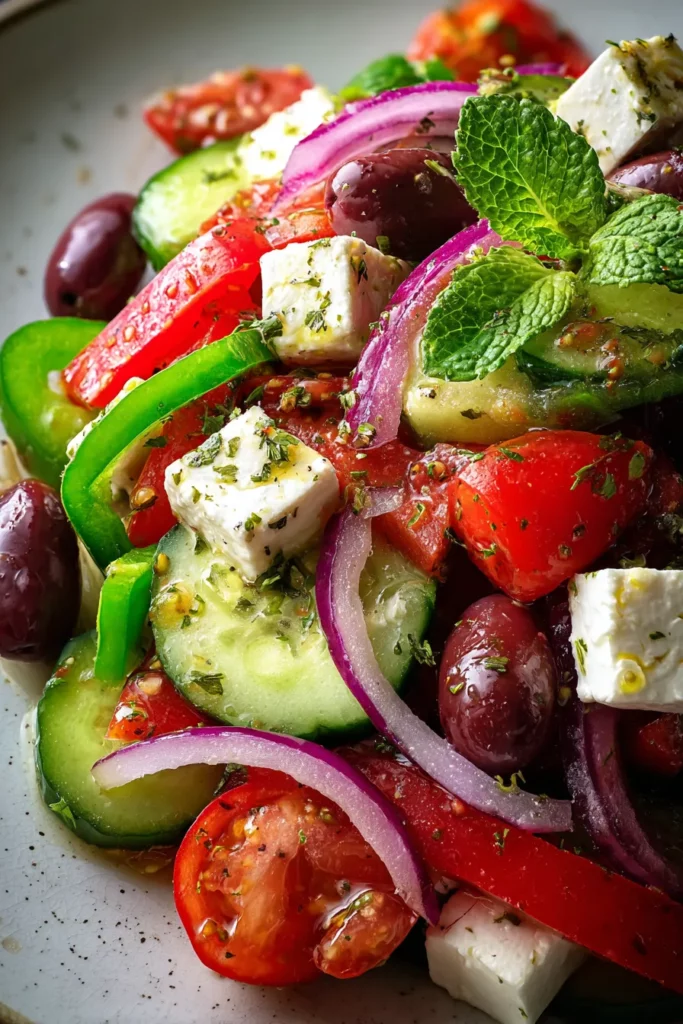

Crispy Fresh Mediterranean Greek Salad
Description
This vibrant Greek salad bursts with fresh flavors from juicy tomatoes, crisp cucumbers, and tangy feta, all tossed in a zesty olive oil dressing for a delightful crunch.
Ingredients
Instructions
-
Prepare the vegetables: Start by washing all vegetables thoroughly. Peel the cucumber and slice it into thin rounds. Chop the tomatoes into medium-sized chunks, ensuring they are uniform for an even distribution of flavors.
-
Slice the red onion thinly and soak in cold water for 10 minutes to mellow its sharpness. Pat dry before adding to the salad.
-
Cut the green and red bell peppers into thin strips, being careful to remove all seeds. Combine them with the cucumbers and tomatoes in a large salad bowl.
-
Add the crumbled or cubed feta cheese and Kalamata olives to the bowl with the vegetables.
-
In a small bowl, whisk together the extra virgin olive oil, red wine vinegar, dried oregano, salt, and freshly ground black pepper until well combined.
-
Pour the dressing over the salad and gently toss everything together to ensure all ingredients are well coated with the dressing.
-
Garnish with freshly chopped parsley or mint just before serving for an added touch of freshness.
-
Serve immediately or let it sit for a few minutes to allow the flavors to meld.
Note
- This salad is a great way to use up any nutrient-rich vegetables you have on hand.
- For added flavor, you can incorporate sun-dried tomatoes or capers into the salad.
- Make this a meal by adding grilled chicken or chickpeas for extra protein.
- If preparing in advance, store the dressing separately and toss it with the vegetables just before serving to maintain the salad's crispness.

