
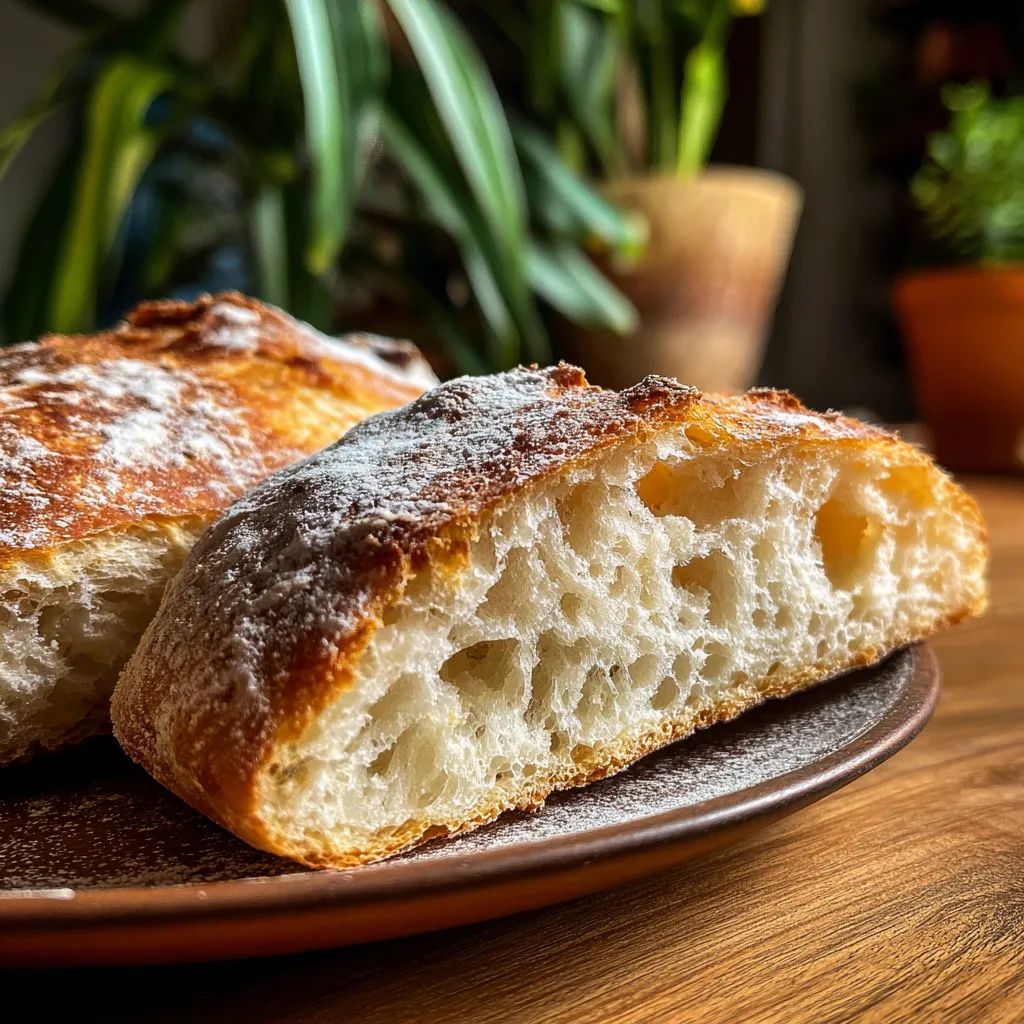
If you’ve ever longed to bake bakery-quality ciabatta at home without breaking a sweat, this crusty no-knead artisan ciabatta is your new best friend. All you need are flour, water, yeast, and a bit of patience—and you’ll be rewarded with a crackling golden crust and a cloud-like interior that’s perfect for sandwiches or dipping in olive oil.
These four pantry staples come together to create a showstopping loaf with minimal effort.
This foolproof method relies on time instead of elbow grease. You’ll mix a simple dough, let it ferment slowly to build flavor, perform a few gentle folds to develop strength, and then bake in a scorching-hot Dutch oven for that irresistible crust. Ready to dive in? Follow the detailed steps below.
1. In a large mixing bowl, combine the all-purpose flour, salt, and instant yeast. Whisk until the dry ingredients are evenly distributed to ensure consistent rising.
2. Gradually pour in the room-temperature water, stirring with a wooden spoon or spatula until a wet, sticky dough forms without any dry pockets.
3. Cover the bowl with plastic wrap or a clean kitchen towel and let the dough rest at room temperature for 12 to 18 hours, allowing flavor to develop and bubbles to form.
4. After fermentation, the dough will be visibly puffy with bubbles. Lightly flour your work surface and turn the dough out, then dust the top with a little flour to prevent sticking.
5. Gently stretch the dough into a rectangle, being careful not to deflate the air pockets. Fold the dough in thirds like a letter, turn 90 degrees, and fold again.
6. Place the folded dough seam-side down on a floured piece of parchment paper, dust the top with flour, cover with a kitchen towel, and let it rise for another 1 to 2 hours.
7. Preheat your oven to 450°F (230°C) and place a Dutch oven with its lid inside to heat for about 30 minutes, creating a steamy environment.
8. Carefully remove the hot Dutch oven. Using the parchment paper as a sling, lift the dough and place it inside, then cover with the lid.
9. Bake covered for 30 minutes, then remove the lid and bake uncovered for an additional 15–20 minutes until the crust turns deep golden brown and sounds hollow when tapped.
10. Transfer the bread to a wire rack and let it cool completely before slicing to set the crumb and maximize flavor.
Once you’ve pulled that gorgeous loaf from the oven, the fun really begins. This versatile ciabatta shines in both simple and gourmet applications—just pick your favorite pairing and let the bread do the talking.
Every home baker can nail this artisan ciabatta with a few insider tweaks. Whether you crave a tangier loaf or want to add mix-ins, these tips will have your kitchen smelling like a bakery. Embrace the slow fermentation and don’t skimp on the steam—your extra patience will reward you with that coveted open crumb and crackling crust.
Maintaining the perfect crust and fluffy interior doesn’t end when the oven timer dings. Proper storage will keep your ciabatta tasting fresh for days. Here’s how to preserve that signature crunch and avoid a soggy loaf.
Got questions? I’ve gathered the most common ciabatta queries below—let’s clear up any baking mysteries with friendly advice.
A: The long ferment at room temperature allows the yeast to slowly develop flavor and create those large, irregular bubbles in the crumb. Resting closer to 18 hours yields a mildly tangy taste, while shorter times produce a milder loaf.
A: Yes. Dissolve the active dry yeast in about 1/4 cup of the water (warmed to 100–110°F) and let it proof for 5–10 minutes until foamy. Then mix it with the remaining water and dry ingredients, adjusting the hydration so the dough stays wet and sticky.
A: Folding gently builds gluten strength while preserving the delicate air bubbles formed during fermentation. This technique yields the open, airy crumb that’s characteristic of artisan ciabatta without the effort of traditional kneading.
A: Preheat a baking stone or heavy baking sheet on the oven rack. Place a metal pan on the floor of the oven and pour in hot water just before loading the loaf to create steam. Alternatively, mist the oven walls with water immediately after sliding in the dough.
A: The crust should be a deep golden brown all over, and the loaf will sound hollow when tapped on the bottom. An internal temperature of 200–210°F (93–99°C) measured with an instant-read thermometer also indicates it’s done.
A: Absolutely. After the bulk fermentation and just before the first fold, gently pat the dough into a rough rectangle, sprinkle your mix-ins (chopped olives, herbs, spices), then fold as instructed to incorporate them without deflating the dough.
A: Once cool, wrap the loaf in a clean kitchen towel and store it at room temperature for up to 2 days. Avoid plastic, which traps moisture and softens the crust. For longer storage, freeze individual slices in a sealed bag and reheat in a hot oven.
There’s something magical about a loaf that comes together with zero kneading and minimal babysitting—just flour, water, yeast, and plenty of patience. The long ferment builds flavor, while the Dutch oven’s trapped steam gives you that signature crackling exterior. You’ll love how every slice boasts an airy crumb perfect for sandwiches, dipping, or a simple pat of butter. Bookmark or print this recipe so it’s always on hand for lazy weekends or impromptu dinner parties. If you give it a whirl, let me know how it turned out or if you have any questions, I’d love to hear from you!
Bite into a crackling crust and pillowy interior of this no-knead ciabatta, fermented for depth and baked in a steaming Dutch oven for irresistible aroma and flavor.

I’m Sophia Montgomery, your guide and fellow food enthusiast on this delicious journey. As a home cook with a deep love for creating meals that bring people together, I started this blog to share my passion for simple, flavorful, and heartwarming dishes