

Sink your teeth into pillowy-sweet brioche, where ribbons of butter and vanilla infuse each tender slice with a whisper of Parisian charm. This Fluffy Buttery French Vanilla Brioche combines a velvety dough studded with real vanilla bean and layers of soft butter to deliver a golden loaf with a cloudlike crumb and a gentle sweetness that melts on your tongue. Ready for brunch or a cozy breakfast, this intermediate-level recipe guides you step by step to bake your own slice of French pastry heaven, so let’s dive in!
Key Ingredients
Before we get mixing, here’s a look at the stars of our French vanilla brioche:
- 4 cups bread flour: Provides strong structure and optimal gluten development for that signature brioche rise.
- 1/3 cup granulated sugar: Adds sweetness and feeds the yeast for an active rise.
- 1 teaspoon salt: Balances flavor and strengthens gluten strands.
- 2 1/4 teaspoons active dry yeast: Leavens the dough to create that airy, fluffy crumb.
- 1/2 cup whole milk (warm, about 110°F): Activates the yeast and keeps the dough tender.
- 4 large eggs (room temperature): Enrich the dough with richness and contribute to its soft texture.
- 1 vanilla bean (split and seeds scraped) or 2 teaspoons vanilla extract: Infuses the dough with fragrant vanilla flavor.
- 1 cup unsalted butter (softened and cut into cubes): Creates rich, buttery ribbons throughout the dough.
- 1 large egg: Used for the egg wash to promote a glossy, golden crust.
- 1 tablespoon water: Thinned into the egg wash to help it spread smoothly.
How To Make Fluffy Buttery French Vanilla Brioche
Roll up your sleeves and let the stand mixer do the heavy lifting; this enriched dough takes a bit of patience but rewards you with a tender, buttery loaf. From proofing the yeast to kneading until the dough passes the windowpane test, each detailed step builds that signature brioche texture. Follow these instructions closely for a perfectly fluffy and golden French vanilla brioche every time:
1. Warm the whole milk to 110°F, then stir in the active dry yeast and a pinch of sugar; let sit for 5 minutes until it’s covered with a layer of foam.
2. In the bowl of a stand mixer fitted with the dough hook, combine the bread flour, granulated sugar, and salt until evenly distributed.
3. Add the room-temperature eggs, scraped vanilla bean seeds (or vanilla extract), and the yeast-milk mixture; mix on low speed until a rough dough forms.
4. With the mixer still running on low, gradually add the softened butter cubes one at a time, ensuring each piece is fully incorporated before adding the next.
5. Increase the mixer speed to medium and knead the dough for about 10 minutes, until it’s smooth, elastic, and passes the windowpane test.
6. Transfer the dough to a lightly oiled bowl, cover with plastic wrap, and let it rise in a warm place until doubled in size, about 1 to 2 hours.
7. Deflate the dough gently, refrigerate for 1 hour to firm up for easier shaping, then form into a loaf or individual rolls and place in a greased pan.
8. Cover and let the dough proof for about 1 hour (nearly doubled) while preheating the oven to 350°F.
9. Whisk together the large egg and water for the egg wash, then brush it gently over the dough surface to ensure a shiny, golden crust.
10. Bake for 25 to 30 minutes, until the brioche is deeply golden and the internal temperature reaches 190°F; cool in the pan for 10 minutes before transferring to a wire rack.
Serving Suggestions
Whether you're planning a leisurely Sunday brunch or a decadent afternoon snack, these serving ideas will highlight the rich vanilla notes and pillowy texture of your brioche:
- Serve slices fresh and warm straight from the oven for a melt-in-your-mouth experience.
- Pair with tangy fruit preserves (think raspberry or apricot) to balance the buttery sweetness.
- Transform thick slices into French toast by dipping in a cinnamon-spiced custard and pan-frying until golden.
- Spread with a dollop of honey butter or nutella for an indulgent twist perfect for breakfast or dessert.
Tips For Perfect Fluffy Buttery French Vanilla Brioche
To get that dreamy, cloudlike crumb and deep vanilla aroma, a few simple tricks can make a world of difference. Whether you're chilling the dough overnight or choosing the right flour, these tips will help you bake a flawless brioche every time. Keep them in mind as you mix, rise, and shape for a bakery-worthy result without the guesswork.
- Refrigerate the dough overnight for a more nuanced, complex flavor and easier handling.
- Choose bread flour to boost gluten development and give your brioche the perfect chew and structure.
- Once baked and cooled, store the loaf in an airtight container at room temperature for up to 2 days to maintain softness.
- Slice and toast lightly, then serve with butter, jam, or honey for an indulgent breakfast or snack.
How To Store It
Freshly baked brioche is at its best when enjoyed right away, but a few simple storage techniques can keep that buttery sweetness intact for days—or even weeks. Proper packaging and temperature control will ensure each slice stays moist and flavorful, whether you're stashing it on the counter or tucking it into the freezer.
- Room Temperature Storage
Store the completely cooled brioche in an airtight container at room temperature for up to 2 days to preserve its tender crumb.
- Freezing for Long-Term
Wrap the loaf tightly in plastic wrap and then in aluminum foil (or place in a freezer bag) before freezing for up to 1 month.
- Reheating Slices
Refresh individual slices in a toaster or a preheated oven at 350°F for a few minutes to restore that freshly baked warmth.
- Avoid Refrigeration
Refrigerating brioche can accelerate staling; if you must use the fridge, keep it well-sealed and consume within 24 hours.
Frequently Asked Questions
Got questions? I’m here to help with answers to the most common queries about making your brioche perfect every time:
- How long does it take to make the brioche from start to finish?
Total active prep time is about 30–40 minutes (warming milk, mixing, kneading, shaping). First rise takes 1–2 hours, followed by a 1-hour refrigeration, then a 1-hour proof, and finally 25–30 minutes of baking. In all, you’re looking at roughly 4–5 hours, not including any optional overnight chill for extra flavor.
- How do I know when the yeast is properly proofed?
After warming the milk to about 110°F, stir in yeast and a pinch of sugar and let it sit for 5 minutes. It’s ready when the surface is covered with a layer of foam or bubbles. If it doesn’t foam, your yeast may be old or the milk too cool or too hot.
- What is the windowpane test and why is it important?
The windowpane test checks gluten development. Pinch off a small piece of dough and gently stretch it between your fingers. If it forms a thin, translucent membrane without tearing, the gluten is well-developed, ensuring that your brioche will be light and airy.
- Can I substitute vanilla extract for a vanilla bean?
Yes. The recipe allows 2 teaspoons of vanilla extract in place of the scraped seeds from one vanilla bean. While beans impart tiny flecks and a slightly more intense aroma, extract delivers excellent flavor and a smoother appearance.
- Why is there a refrigeration step after the first rise?
Chilling the dough for about an hour firms it up, making it easier to handle and shape. It also slows fermentation, allowing flavors to mature and producing a more complex, buttery taste in the finished brioche.
- Is it okay to refrigerate the dough overnight before shaping?
Absolutely. Refrigerating the dough overnight after the first rise deepens the flavor and gives you scheduling flexibility. Just shape and proof directly from the fridge for the 1-hour final rise before baking.
- How should I store leftover brioche and how long will it stay fresh?
Once completely cooled, store the brioche in an airtight container at room temperature for up to 2 days. For longer storage, wrap tightly in plastic wrap and freeze for up to 1 month. Thaw at room temperature and, if desired, refresh in a warm toaster or oven before serving.
What Makes This Special
From its luscious ribbons of butter to the delicate vanilla aroma, this Fluffy Buttery French Vanilla Brioche is the kind of recipe that turns your kitchen into a Parisian boulangerie. It works because the combination of enriched dough, patient kneading, and that chilled rest delivers a pillowy crumb you can’t resist. Feel free to print this guide and stash it in your recipe binder—future you will thank you for a happy breakfast surprise. If you give it a whirl, drop a comment or let me know how it turned out; I love hearing your stories and troubleshooting any buttery bun concerns.
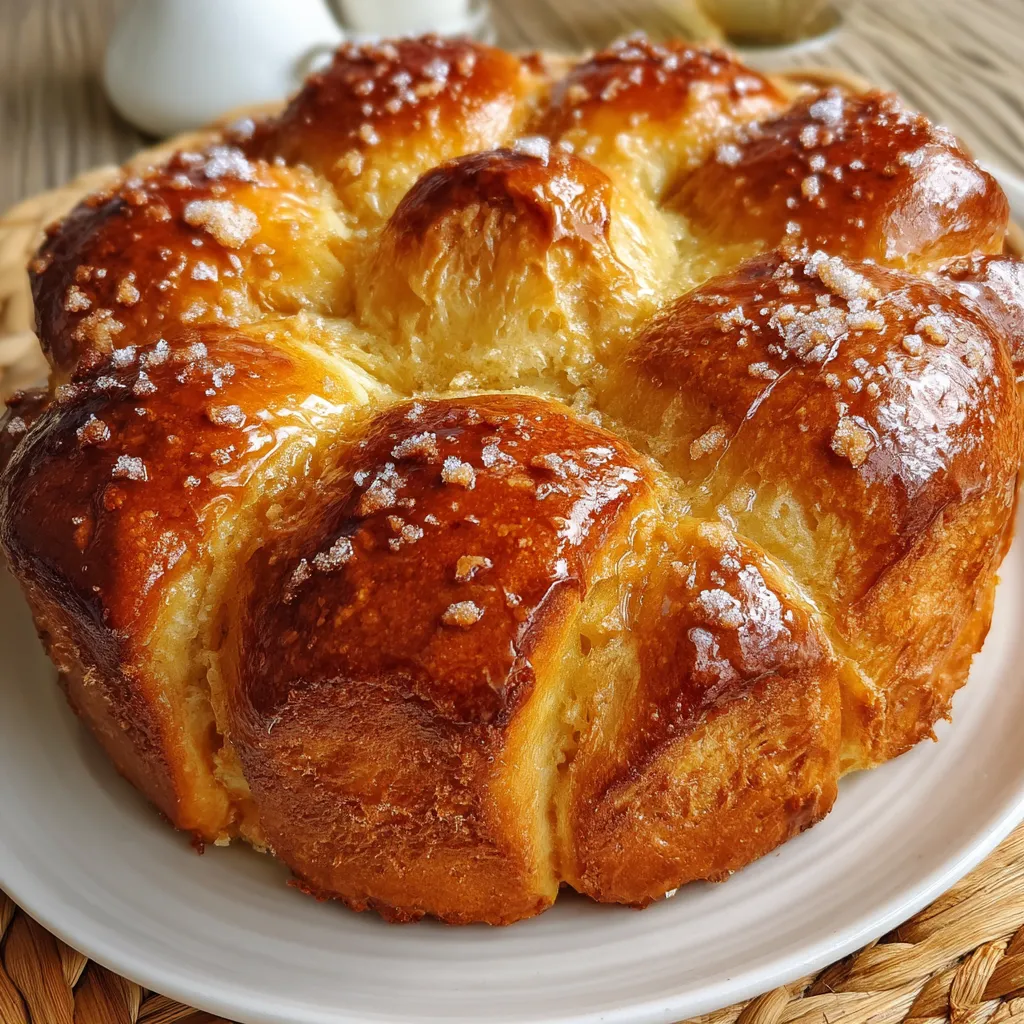

Fluffy Buttery French Vanilla Brioche
Description
A velvety dough studded with real vanilla bean and layers of soft butter delivers a golden loaf with a cloudlike crumb and a gentle sweetness that melts on your tongue.
Ingredients
Instructions
-
Warm milk to 110°F then stir in yeast and a pinch of sugar; let sit 5 minutes until foamy.
-
In the bowl of a stand mixer fitted with the dough hook, combine flour, sugar, and salt.
-
Add eggs and vanilla bean seeds (or extract) and the yeast mixture; mix on low speed until a rough dough forms.
-
Gradually add softened butter cubes, one at a time, mixing until each piece is fully incorporated.
-
Increase speed to medium and knead until the dough is smooth, elastic, and passes the windowpane test, about 10 minutes.
-
Transfer dough to a lightly oiled bowl, cover with plastic wrap, and let rise in a warm place until doubled in size, about 1 to 2 hours.
-
Deflate the dough, refrigerate for 1 hour to firm up, then shape into a loaf or individual rolls and place in a greased pan.
-
Cover and proof until nearly doubled, about 1 hour, while preheating the oven to 350°F.
-
Whisk together egg and water for the egg wash; brush gently over the dough surface.
-
Bake for 25 to 30 minutes until golden brown and the internal temperature reaches 190°F; cool in the pan 10 minutes before transferring to a wire rack.
Note
- Dough can be refrigerated overnight for a deeper, more complex flavor.
- Using bread flour provides better gluten development and structure.
- Store cooled brioche in an airtight container at room temperature for up to 2 days.
- Slice and toast slightly, then serve with butter, jam, or honey for extra indulgence.

