

Deeply rooted in French culinary tradition, French Onion Soup elevates humble ingredients into a soul-warming masterpiece. This dish shines when sweet, thinly sliced onions surrender their natural sugars through slow, patient caramelization, transforming into a golden-brown tapestry of flavor. As you stir the onions in butter and olive oil, you’ll witness that magical shift—pungent rawness dissipates, replaced by a mellow, almost honeyed sweetness. Layered with aromatic thyme and a hint of bay leaf, the simmering broth absorbs every nuance before it meets that glorious crown of toasted baguette and melted Gruyère cheese. Each spoonful offers a blend of silky broth, tender onions, and cheesy gratin that feels like a warm hug on a blustery day.
I still remember the first time I tackled this classic and felt like I’d unlocked a secret nook of comfort cooking. My kitchen turned into a fragrant workshop of caramelized onions, and I couldn’t resist sneaking taste after taste before the final assembly. The golden toast under that melted, bubbling cheese was pure bliss. Whether you’re hosting friends for a cozy weekend lunch, sharing a heartfelt family dinner, or simply craving something deeply satisfying, this soup never disappoints. It’s an ideal centerpiece for slow conversations, clinking spoons, and lingering smiles around the table. Once you master these techniques, you’ll find yourself returning to this recipe season after season, eager to recreate its rich layers of flavor and warmth.
KEY INGREDIENTS IN FRENCH ONION SOUP
Before we dive into the cooking process, let’s take a closer look at the star players of this recipe. Each ingredient contributes its own personality, working in harmony to create that signature sweet-savory broth and gratinéed top. Understanding their roles will help you appreciate every step as you build depth and complexity in this timeless soup.
- Yellow onions
These form the backbone of the soup. When sliced thinly and cooked low and slow, they release natural sugars that caramelize beautifully, delivering that characteristic sweet and slightly nutty flavor.
- Unsalted butter
Adds a rich, creamy mouthfeel and helps the onions develop that golden-brown color without the risk of extra salt content, giving you control over seasoning later.
- Olive oil
Blends with butter to raise its smoke point and infuse a subtle fruitiness, ensuring your onions sauté evenly without burning.
- Salt
Serves a dual purpose by drawing moisture from the onions and enhancing their inherent sweetness, which is crucial for perfect caramelization.
- Sugar
Provides an extra nudge to help the onions brown more evenly and faster, deepening the soup’s overall flavor profile.
- Garlic
Minced garlic brings a warm, pungent note that pops through the sweet onion base, adding aromatic complexity in the final simmer.
- Beef broth
Delivers a robust, meaty foundation that melds with the caramelized onions. For a vegetarian twist, swap in a high-quality vegetable broth to keep it hearty.
- Thyme
Fresh or dried, this herb lends an earthy, slightly minty undertone that bridges the gap between sweet onions and savory broth.
- Bay leaf
Offers subtle herbal notes and depth of flavor during the simmering stage. Remember to remove it before serving.
- Dry white wine
(Optional) Deglazes the pot, lifting up flavorful browned bits from the bottom and adding a gentle acidity to balance sweetness.
- Baguette
Sliced and toasted, these pieces create a sturdy, crispy platform for the melted cheese, soaking up just enough broth to soften without falling apart.
- Gruyère cheese
Known for its rich, nutty character and superb melting qualities, it creates that irresistible, bubbling crust when broiled.
- Black pepper
Freshly ground right before serving, it adds a hint of heat and aroma that brightens the soup’s overall richness.
HOW TO MAKE FRENCH ONION SOUP
Let’s walk through the heart of this recipe, where technique meets patience to create layers of flavor. From caramelizing onions to building the perfect gratinée, each step invites you to engage with textures, aromas, and tastes that define classic French Onion Soup.
1. Start by heating a large pot or Dutch oven over medium heat. Add the butter and olive oil together and let them melt fully. This fat base ensures even cooking and prevents the butter from browning too quickly.
2. Once melted, add the sliced onions to the pot. Stir to coat every strand in the butter and oil mixture, ensuring a uniform cook and preparing them for gentle caramelization.
3. Sprinkle the onions with salt and sugar. The salt will help draw out excess moisture, while the sugar accelerates browning. Cook the onions over medium heat, stirring frequently to avoid scorching. Continue for about 40–45 minutes until they attain a deeply caramelized, rich brown hue.
4. Add the minced garlic to the pot and cook for an additional 2–3 minutes until the garlic is fragrant, taking care not to let it burn, which would introduce bitterness.
5. If you are using white wine, pour it into the pot and use a wooden spoon to scrape up any browned bits from the bottom. Let it simmer for about 5 minutes until most of the liquid has evaporated and the flavors concentrate.
6. Add the beef (or vegetable) broth, thyme, and bay leaf to the pot. Bring the mixture to a boil, then reduce the heat and let it simmer for about 30 minutes, allowing the flavors to meld. Season to taste with freshly ground black pepper.
7. While the soup is simmering, preheat your oven to 350°F (175°C). Arrange the sliced baguette on a baking sheet and toast in the oven for about 10 minutes until golden brown and crisp.
8. Once the soup has simmered, remove the bay leaf and ladle the hot soup into oven-safe bowls. Top each bowl with a toasted baguette slice and sprinkle generously with grated Gruyère cheese.
9. Place the bowls on a baking tray and set the oven to broil. Broil for 3–5 minutes, or until the cheese is bubbly and golden brown. Keep a close eye to avoid burning.
10. Carefully remove the bowls from the oven and let them cool for a minute before serving, as they will be extremely hot.
SERVING SUGGESTIONS FOR FRENCH ONION SOUP
Serving French Onion Soup is all about balancing textures and highlighting those savory-sweet flavors with complementary sides. Whether you’re hosting a casual lunch or an intimate dinner, these ideas will elevate your presentation and round out the meal beautifully.
- Fresh Green Salad with a tangy vinaigrette
A crisp green salad—think mixed lettuces, thinly sliced fennel, and radishes—cuts through the richness of the soup. Dress it lightly in a lemon Dijon vinaigrette to add bright acidity and balance.
- Charcuterie Platter featuring cured meats and olives
Pair the soup with an assortment of salami, prosciutto, and marinated olives for a tapas-style starter that complements the deeply flavored broth and cheesy top.
- Herb-Infused Water or Sparkling Wine
Offer cucumber-mint water or a light sparkling wine to cleanse the palate between bites. The effervescence and fresh notes refresh the taste buds and keep the meal feeling vibrant.
- Crusty Bread Basket with flavored butters
In addition to the cheesy toasts, provide a basket of warm, crusty rolls alongside flavored butters—like garlic-herb or honey-fig—to extend that delightful bread experience without overpowering the soup.
HOW TO STORE FRENCH ONION SOUP
Storing French Onion Soup correctly ensures that its complex flavors and velvety texture remain intact for future enjoyment. The key is to separate components when possible and use airtight containers to maintain freshness. Follow these methods to preserve your soup without losing any of its signature taste.
- Refrigeration in Airtight Containers
Allow the soup to cool to room temperature, then transfer it to airtight glass or BPA-free plastic containers. Store in the refrigerator for up to 4 days. When reheating, warm gently on the stovetop to preserve onion texture.
- Freezing Portions
For longer storage, ladle cooled soup into freezer-safe containers, leaving a little headspace for expansion. Freeze for up to 3 months. Thaw overnight in the fridge before reheating, and add fresh toasted baguette and cheese when serving.
- Storing Bread and Cheese Separately
Keep your toasted baguette slices and grated Gruyère in separate airtight bags or containers at room temperature or in the fridge. This prevents sogginess and ensures maximum crispness and melt when you’re ready to gratinée.
- Reheating Guidelines
Reheat soup slowly in a pot over low to medium heat, stirring occasionally. Add a splash of broth if it seems too thick. Once hot, assemble in oven-safe bowls with fresh toast and cheese, then broil briefly to recreate that golden topping.
CONCLUSION
This journey through French Onion Soup brings together simple ingredients—caramelized onions, savory broth, crisp bread, and gooey cheese—and transforms them into an unforgettable comfort classic. We’ve explored key elements, step-by-step techniques, serving ideas, and storage tips that will keep your soup tasting fresh and vibrant. From the initial caramelization process to the final broil, each step builds layers of flavor that culminate in a dish both elegant and homey. Feel free to print this article and save it for your collection—having these instructions at your fingertips means you can recreate this heartwarming recipe whenever the craving strikes. Below, you’ll also find a FAQ section to address any additional questions you might have about variations, substitutions, or troubleshooting.
Whether you’re a seasoned home cook or trying French Onion Soup for the first time, your feedback and questions are invaluable. If you try this recipe, please leave a comment sharing your experience—did you add a splash of sherry for extra depth, or perhaps experiment with a different cheese? Any tips or challenges you encountered can help fellow cooks in our community. Comments, questions, or even stories about family gatherings around bubbling bowls of this soup are all welcome. Let’s keep the conversation going and continue celebrating the magic of comfort cooking together!
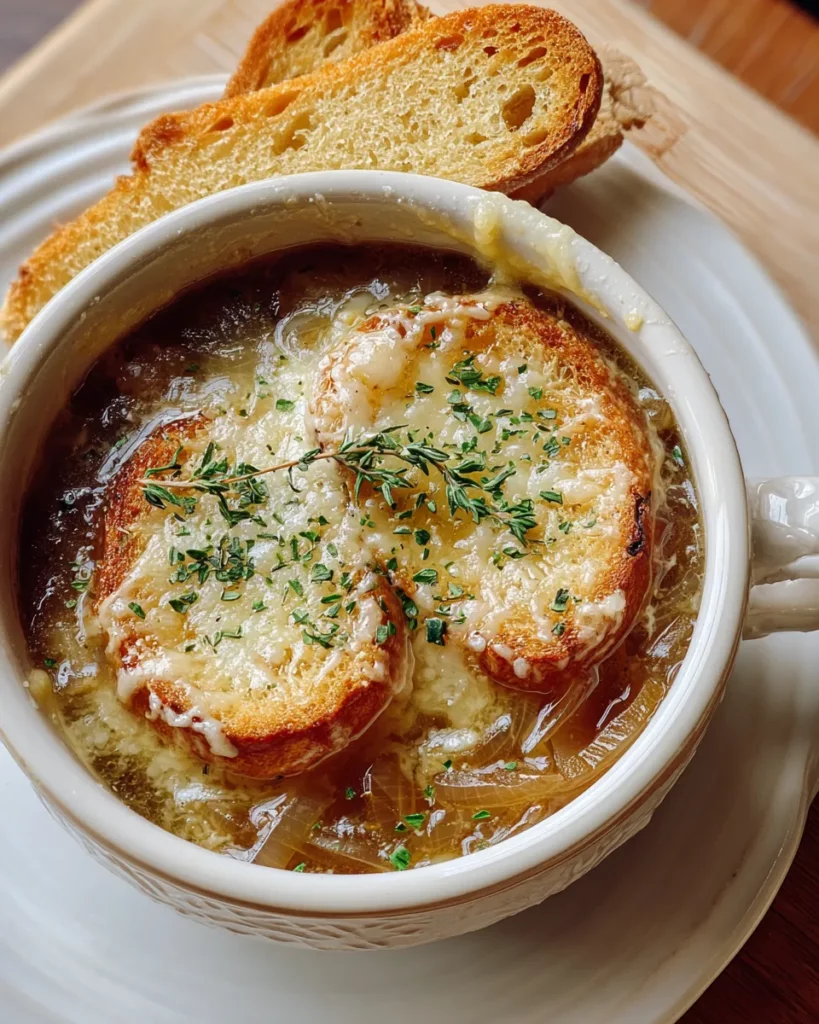

French Onion Soup
Description
Experience the rich, savory depths of this traditional French onion soup, a perfect blend of sweet onions, fragrant thyme, and melty cheese that warms the soul.
Ingredients
Instructions
-
Start by heating a large pot or Dutch oven over medium heat. Add the butter and olive oil together and let them melt.
-
Once melted, add the sliced onions to the pot. Stir to coat the onions in the butter and oil.
-
Sprinkle the onions with salt and sugar. The salt will help to draw out the moisture from the onions, and the sugar will aid in caramelization. Cook the onions over medium heat, stirring frequently, for about 40-45 minutes until they are deeply caramelized and a rich brown color.
-
Add the minced garlic to the pot and cook for an additional 2-3 minutes until fragrant.
-
If you are using white wine, pour it into the pot and scrape up any browned bits from the bottom. Let it simmer for about 5 minutes until the wine is mostly evaporated.
-
Add the beef (or vegetable) broth, thyme, and bay leaf to the pot. Bring the mixture to a boil, then reduce the heat and let it simmer for about 30 minutes. Season to taste with freshly ground black pepper.
-
While the soup is simmering, preheat your oven to 350°F (175°C). Arrange the sliced baguette on a baking sheet and toast them in the oven for about 10 minutes until they are golden brown.
-
Once the soup has simmered, remove the bay leaf and ladle the soup into oven-safe bowls. Place a toasted piece of baguette on top of each bowl and sprinkle with plenty of grated Gruyère cheese.
-
Place the bowls on a baking tray and broil in the oven for 3-5 minutes, or until the cheese is bubbly and golden brown. Keep a close eye to avoid burning.
-
Carefully remove from the oven and let cool for a minute before serving.
Note
- A great way to enhance the flavor is by using homemade broth.
- To achieve a deeper color and richness, you can caramelize the onions even longer if desired.
- This soup can be made ahead of time and reheated; just add fresh toasted bread and cheese before serving.
- A splash of sherry or brandy can be added for an extra layer of flavor.
- For a vegetarian version, use vegetable broth and omit the cheese or substitute with a vegan alternative.

