

Garlic Herb Roasted Pork Tenderloin brings together fragrant garlic, fresh rosemary, and thyme in a simple yet impressive dinner that turns any weeknight into a special occasion. With a golden, herb-crusted exterior giving way to silky, juicy pork, this beginner-friendly recipe delivers restaurant-worthy results without the fuss. Serve it alongside your favorite sides—think roasted vegetables or creamy mashed potatoes—and watch friends and family come back for seconds.
Key Ingredients
Every ingredient here works together to build layers of flavor and lock in juicy tenderness:
- 2 pounds pork tenderloin: Lean, mild-flavored cut that roasts quickly and stays tender under the garlic herb crust.
- 2 tablespoons olive oil: Helps the herbs and garlic adhere to the meat while promoting a golden, crispy exterior.
- 4 cloves garlic, minced: Delivers a pungent kick that infuses every slice with aromatic flavor.
- 2 teaspoons fresh rosemary, chopped: Adds a woodsy, pine-like fragrance that complements the pork beautifully.
- 2 teaspoons fresh thyme, chopped: Contributes a subtle, earthy note that enhances the herb blend.
- 1 teaspoon salt: Essential for seasoning and drawing out natural juices to boost flavor.
- 1/2 teaspoon black pepper: Provides a gentle spice that balances the herbaceous and savory elements.
How To Make Garlic Herb Roasted Pork Tenderloin
This recipe follows a handful of straightforward steps to transform pantry staples into an elegant roast. You’ll start by building a simple garlic-herb marinade, then coat the tenderloin before it goes into a hot oven. The high heat ensures a crisp, golden crust while locking in all those fragrant juices. Finally, a brief rest period lets the pork relax so every slice is perfectly moist.
1. Preheat the oven to 425°F to ensure a hot cooking environment for a crispy crust.
2. Pat the pork tenderloin dry using paper towels, which helps the herb mixture stick and prevents steaming.
3. In a small bowl, combine the olive oil, minced garlic, chopped rosemary, chopped thyme, salt, and black pepper into a flavorful marinade.
4. Rub the herb mixture all over the pork, making sure to coat every surface for even seasoning.
5. Place the pork on a baking sheet lined with foil or parchment paper for easy cleanup.
6. Roast the tenderloin in the preheated oven for 20 to 25 minutes, or until an instant-read thermometer inserted into the thickest part reads 145°F.
7. Rest the pork for 5 to 10 minutes after removing it from the oven, allowing the juices to redistribute before slicing.
Serving Suggestions
Slicing into that golden, herb-crusted pork is half the fun—pair it with complementary sides to create a truly memorable meal. Whether you crave comforting starches or vibrant salads, these ideas will round out your plate:
- Roasted Vegetables: Toss carrots, Brussels sprouts, or sweet potatoes in olive oil, salt, and pepper; roast until tender for a colorful side.
- Creamy Mashed Potatoes: Whip Yukon gold potatoes with butter and a splash of cream for a silky base that soaks up pan juices.
- Bright Green Salad: Combine mixed greens with a tangy vinaigrette and toasted nuts for a refreshing contrast.
- Crusty Artisan Bread: Warm thick slices of bread to mop up every last bit of herb-infused juices.
Tips For Perfect Garlic Herb Roasted Pork Tenderloin
A few insider tips make this easy dinner really shine—read on to ensure you nail the texture and flavor every time.
- Resting the pork helps the juices redistribute, keeping it moist.
- Use an instant-read thermometer for accurate temperature measurement.
- Adjust roasting time for larger or smaller tenderloins as needed.
- Pair with roasted vegetables or mashed potatoes for a balanced meal.
How To Store It
Proper storage keeps your leftovers tasting just as good as day one. Here’s how to maintain freshness and flavor:
- Refrigerator: Once cooled, place sliced pork in an airtight container and refrigerate for up to three days.
- Freezer: Wrap individual portions tightly in plastic wrap and then foil; freeze for up to two months.
- Labeling: Always write the date on containers so you can track how long they’ve been stored.
- Thawing: Move frozen portions to the fridge overnight to thaw gently and preserve juiciness.
Frequently Asked Questions
Got questions? Here are clear answers to the most common queries:
- Q: How long does it take to prepare this recipe?
A: It takes about 10 minutes to prepare the ingredients, including patting the pork dry, mincing the garlic, and chopping the herbs. The pork then roasts for 20 to 25 minutes, and you allow it to rest for 5 to 10 minutes before slicing, so the total time from start to finish is roughly 35 to 45 minutes.
- Q: Can I use dried herbs instead of fresh rosemary and thyme?
A: Yes, you can substitute dried herbs if fresh aren’t available. Use about one teaspoon of dried rosemary and one teaspoon of dried thyme in place of the fresh herbs, as dried herbs are more concentrated. Mix them with the olive oil and garlic as directed, and consider letting the mixture sit for a few minutes to rehydrate the dried herbs before rubbing it onto the pork.
- Q: What’s the best way to tell when the pork tenderloin is done cooking?
A: The most reliable method is to use an instant-read thermometer. Insert it into the thickest part of the tenderloin and look for an internal temperature of 145°F. Once it reaches this temperature, remove the pork from the oven and let it rest, during which time the temperature may rise a few degrees and the juices will redistribute for a moist result.
- Q: Can I marinate the pork ahead of time?
A: Absolutely. After combining the olive oil, garlic, and herbs, rub the mixture evenly over the pork, then cover it tightly and refrigerate for up to 24 hours. Marinating overnight will deepen the flavors. Before roasting, bring the pork to room temperature for about 30 minutes to ensure even cooking.
- Q: Can I cook two tenderloins at once or double the recipe?
A: Yes, you can prepare more than one tenderloin. Arrange them on the baking sheet with enough space between each so the hot air can circulate. You may need to add a few extra minutes of roasting time if the oven is crowded. Always confirm doneness with an instant-read thermometer to ensure each piece reaches 145°F internally.
- Q: How should I store and reheat leftovers?
A: After slicing, place any leftover pork in an airtight container and refrigerate for up to three days. To reheat, you can wrap slices in foil and warm them in a 300°F oven for 10 to 15 minutes, or microwave on low power in short intervals to prevent drying out. Adding a splash of broth or a light drizzle of olive oil can help maintain moisture.
- Q: What side dishes pair well with garlic herb roasted pork tenderloin?
A: This pork tenderloin goes beautifully with roasted vegetables such as carrots, Brussels sprouts, or sweet potatoes. Creamy mashed potatoes or cauliflower mash are classic choices, and a simple green salad with a tangy vinaigrette provides a refreshing contrast. A side of sautéed spinach or garlic green beans also complements the herb flavors.
What Makes This Special
This Garlic Herb Roasted Pork Tenderloin stands out thanks to its quick prep, beginner-friendly steps, and that unbeatable golden crust hugging juicy pork infused with fresh rosemary and thyme. It’s perfect for a no-fuss weeknight dinner or an impressive weekend feast. Go ahead, print this article, save it, and give it a whirl—then come back and share your questions, tweaks, or rave reviews. We can’t wait to hear how it turns out!
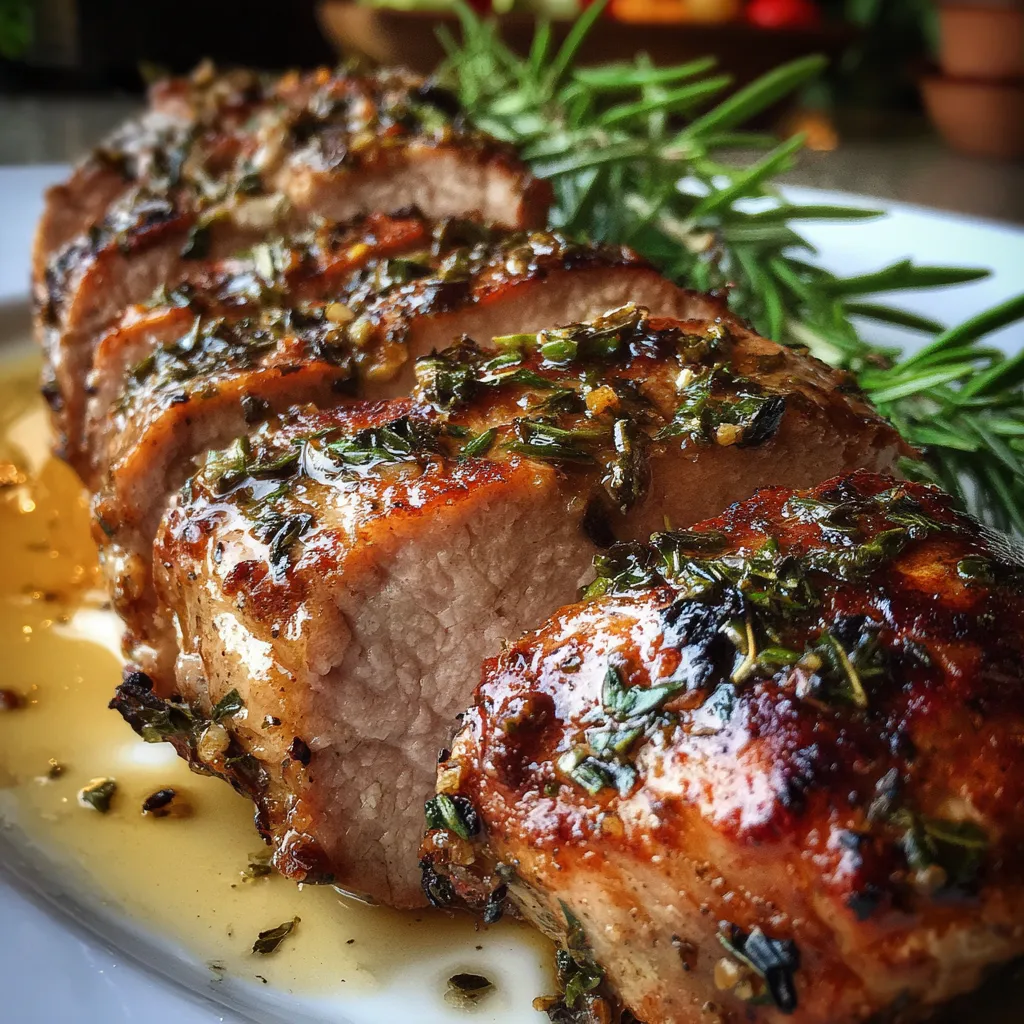

Garlic Herb Roasted Pork Tenderloin
Description
This garlic-herb roast creates a crisp, golden exterior that gives way to silky, juicy pork infused with fresh rosemary and thyme—aromatic, flavorful, and perfect alongside roasted vegetables or mashed potatoes.
Ingredients
Instructions
-
Preheat the oven to 425°F.
-
Pat the pork tenderloin dry with paper towels.
-
In a small bowl, combine olive oil, minced garlic, rosemary, thyme, salt, and black pepper.
-
Rub the herb mixture evenly over the pork tenderloin.
-
Place the pork on a baking sheet lined with foil or parchment paper.
-
Roast for 20 to 25 minutes, or until the internal temperature reaches 145°F.
-
Remove from the oven and let the pork rest for 5 to 10 minutes before slicing.
Note
- Resting the pork helps the juices redistribute, keeping it moist.
- Use an instant-read thermometer for accurate temperature measurement.
- Adjust roasting time for larger or smaller tenderloins as needed.
- Pair with roasted vegetables or mashed potatoes for a balanced meal.

