

If you’re craving a real homestyle hug on a plate, Ground Beef and Gravy Over Mashed Potatoes delivers exactly that. Creamy mashed potatoes crowned by velvety ground beef gravy flecked with caramelized onions and fragrant thyme create a comforting feast perfect for a chilly evening—trust me, one bite and you’ll be hooked!
Key Ingredients
Let’s break down the star players that make this dish so irresistible:
- 2 pounds (900 g) russet or Yukon gold potatoes, peeled and cut into 1½-inch chunks: Provide the base for fluffy, creamy mashed potatoes.
- 4 tablespoons (55 g) unsalted butter: Adds rich, buttery flavor and contributes to a silky mash.
- ½–¾ cup (120–180 ml) warm milk or half-and-half, plus more as needed: Loosens the potatoes into a smooth, velvety texture.
- ¼ cup (60 ml) sour cream (optional, for extra creaminess): Injects tang and ultra-creamy mouthfeel.
- 1 teaspoon fine salt, plus more to taste: Enhances all the flavors in the mash.
- ½ teaspoon freshly ground black pepper: Gives a gentle heat and depth.
- ½ teaspoon garlic powder or 2 cloves garlic, minced and lightly sautéed (optional): Infuses a savory garlic note.
- 1½ pounds (680 g) ground beef (80–90% lean): The hearty protein base for the savory gravy.
- 1 medium yellow onion, finely diced: Sweetens and builds flavor in the gravy.
- 2 cloves garlic, minced: Lifts the gravy with aromatic freshness.
- 3 tablespoons unsalted butter (or 2 tbsp butter + 1 tbsp oil): Creates a flavorful fat for browning and roux.
- 3 tablespoons all-purpose flour: Thickens the gravy into a luscious sauce.
- 2 cups (480 ml) beef broth (low-sodium preferred): Forms the savory liquid backbone of the gravy.
- 1 tablespoon Worcestershire sauce: Adds umami richness and depth.
- ½ teaspoon Dijon mustard (optional, for depth): Brings subtle tang and complexity.
- ½ teaspoon dried thyme or Italian seasoning (optional): Infuses herbaceous warmth.
- ½ teaspoon smoked paprika or regular paprika (optional): Offers gentle smokiness or color.
- Salt, to taste (start with ½ teaspoon if using low-sodium broth): Balances and brightens every bite.
- ½ teaspoon freshly ground black pepper, plus more to taste: Fine-tunes the gravy’s spice.
- ¼ cup (60 ml) heavy cream or milk (optional, to enrich the gravy): Envelops the sauce in silky creaminess.
- 2 tablespoons chopped fresh parsley or chives, for garnish (optional): Adds a pop of freshness and color.
- Neutral oil for browning, if needed: Prevents the beef from sticking and boosts crust formation.
How To Make Ground Beef and Gravy Over Mashed Potatoes
This recipe comes together in three main stages: cooking and whipping the potatoes until ultra-creamy, browning the beef then building a rich gravy with aromatics and a roux, and finally plating everything for maximum comfort. Follow these steps closely to get that perfect balance of fluffy mash and savory gravy.
1. Prepare the potatoes
Peel the potatoes and cut them into roughly equal 1½-inch chunks so they cook evenly. Place them in a large pot and cover with cold water by 1–2 inches, then add 1 teaspoon of salt. Bring to a boil over medium-high heat, reduce to a gentle boil, and cook for 15–20 minutes until each piece is very tender and easily pierced with a fork.
2. Mash the potatoes
Drain thoroughly in a colander and return the hot potatoes to the warm pot—this residual heat helps evaporate extra moisture. Add the butter, ½ cup of warm milk or half-and-half, and sour cream if using. Mash with a potato masher or ricer until smooth, adding more milk in small amounts until you reach the desired creaminess. Season with salt, pepper, and garlic powder or sautéed garlic. Keep warm over very low heat or on a turned-off but still-warm burner.
3. Brown the ground beef
While the potatoes cook, heat a large skillet over medium-high heat. Add a teaspoon of oil if your beef is very lean, then add the ground beef, breaking it into small pieces with a spatula. Cook for 5–7 minutes, stirring occasionally, until well browned with a few crusty bits for flavor. Season lightly with salt and pepper. Spoon off excess fat, leaving about a tablespoon to help with the roux.
4. Cook the aromatics
Push the beef to one side of the skillet and add 1 tablespoon of butter to the empty side. Add the diced onion and cook for 3–4 minutes, stirring until softened and lightly golden. Add the minced garlic, cooking 30–60 seconds until fragrant. Stir the onions and garlic into the beef until evenly combined.
5. Make the roux
Reduce heat to medium. Add the remaining 2 tablespoons of butter and let it melt. Sprinkle the flour evenly over the beef mixture. Stir constantly for 1–2 minutes to coat everything and cook off the raw flour taste. The mixture will thicken into a slightly pasty roux.
6. Build the gravy
Slowly pour in the beef broth, starting with about ½ cup while stirring constantly to prevent lumps. Gradually add the rest. Stir in Worcestershire sauce, Dijon mustard, thyme or Italian seasoning, and paprika. Scrape up any browned bits from the pan bottom to intensify the flavor.
7. Simmer and thicken
Bring to a gentle simmer over medium heat and cook for 5–8 minutes, stirring occasionally, until the gravy reaches a silky, spoon-coating consistency. If it gets too thick, stir in a splash of broth or water to loosen it.
8. Enrich and season
Stir in the heavy cream or milk for extra richness. Taste and adjust seasoning with salt, pepper, or a dash more Worcestershire sauce if you like a bolder savor. Keep the gravy warm over low heat.
9. Assemble the dish
Give the mashed potatoes a quick stir, adding a splash of warm milk if they’ve firmed up and adjusting seasoning as needed. Spoon a generous mound onto each plate or into bowls. Ladle the hot beef gravy over the center, letting it cascade down the sides. Garnish with fresh parsley or chives.
10. Serve
Serve immediately while hot, offering extra gravy on the side. Pair with a simple green vegetable like peas, green beans, or a crisp salad to round out the meal.
Serving Suggestions
This hearty dish stands strong on its own, but a few thoughtful sides can take it to the next level and add balance:
- Serve with steamed green beans tossed in a pat of butter and a sprinkle of salt for a bright, crisp contrast.
- Plate alongside buttered peas for bursts of sweetness that complement the savory gravy.
- Add a crisp side salad with a tangy vinaigrette to cut through the richness and refresh your palate.
- Offer warm dinner rolls brushed with garlic-herb butter to mop up every last drop of gravy.
Tips For Perfect Ground Beef and Gravy Over Mashed Potatoes
Nailing this homestyle classic is all about choosing the right ingredients and timing your steps perfectly. Below are some friendly pointers to elevate your comfort-food game, whether you’re cooking for family, friends, or just treating yourself.
- For extra flavor, replace half of the beef with ground pork or sausage.
- Yukon gold potatoes give a naturally buttery taste, while russets yield fluffier mashed potatoes.
- For a deeper brown gravy, cook the flour a minute longer until light golden before adding broth.
- You can add sliced mushrooms to the onions for a mushroom-beef gravy variation.
- Leftovers reheat well in a skillet with a splash of broth or milk to loosen the gravy and potatoes.
How To Store It
Leftover mashed potatoes and gravy can be just as satisfying the next day if stored properly. Keep them separate and sealed tight to preserve texture and flavor:
- Refrigerate in airtight containers: Transfer cooled mash and gravy into separate containers and refrigerate for up to 3–4 days.
- Freeze for longer storage: Portion both components into freezer-safe bags or containers, pressing out excess air. Freeze for up to 2 months.
- Label and date: Always mark containers with the date to help track freshness and rotate your meals.
- Thaw and reheat properly: Thaw overnight in the fridge, then gently reheat the gravy in a skillet and the mash in a pot over low heat, adding a splash of milk or broth to restore creaminess.
Frequently Asked Questions
Here are some quick answers to common questions:
- Can I use a different type of potato if I don’t have russet or Yukon gold?
Yes. While russet potatoes yield the fluffiest texture and Yukon golds add natural creaminess, you can substitute red potatoes or fingerlings. Just be aware that waxy varieties like reds will produce a denser, slightly firmer mash. Adjust the amount of butter and milk, adding a bit more to reach your desired creaminess, and ensure you cut all pieces roughly the same size so they cook evenly.
- How can I avoid lumpy mashed potatoes?
To achieve silky-smooth potatoes, cut them into uniform 1½-inch chunks so they cook through at the same rate. Boil until each piece is easily pierced with a fork, about 15–20 minutes. Drain thoroughly, then return the hot potatoes to the warm pot to evaporate excess moisture. Mash immediately with a potato masher or ricer, adding warm milk and melted butter in stages. Overworking them can release too much starch and make them gummy, so mash just until incorporated and adjust seasoning at the end.
- What’s the best way to thicken or thin the beef gravy?
If the gravy is too thin, let it simmer a few extra minutes on medium-low heat to reduce and concentrate. You can also stir in a small slurry of flour and water—start with 1 teaspoon flour mixed with 1 tablespoon cold water—then simmer until the desired consistency. If it’s too thick, whisk in reserved beef broth or a splash of water or milk until it loosens up. Always add liquids gradually, stirring constantly, to maintain a smooth texture.
- Can I prepare any components in advance?
Yes. You can peel and cut potatoes up to a few hours ahead; keep them submerged in cold water in the fridge to prevent browning. Brown the beef and cook the onions and garlic, then refrigerate the mixture without adding broth; when ready to serve, reheat gently, make the roux, and build the gravy. For mashed potatoes, prepare up to step 2, then keep them warm in a covered pot over very low heat or a warm burner, stirring in extra milk if they firm up.
- How should I store and reheat leftovers?
Transfer cooled mashed potatoes and beef gravy into separate airtight containers. In the refrigerator, they’ll keep for up to 3–4 days. To reheat, warm the gravy in a skillet over medium-low heat, adding a splash of beef broth or milk to restore its silky consistency. Gently reheat the mashed potatoes in a pot over low heat, stirring in additional warm milk or butter as needed to loosen and revive their creamy texture. Do not microwave at high power as this can make them gummy.
- Can I add other ingredients to customize the flavor?
Absolutely. For deeper savoriness, replace half the ground beef with ground pork or sausage. Stir in sliced mushrooms when softening the onions to create a mushroom-beef gravy. You can also swap sour cream for crème fraîche in the mash for a tangier note, or add a pinch of smoked paprika and a dash of Dijon mustard to the gravy for extra depth. Fresh herbs like thyme, rosemary, or chives stirred in at the end brighten the dish.
What Makes This Special
Ground Beef and Gravy Over Mashed Potatoes works its magic by layering unapologetic comfort: fluffy potatoes whipped with butter and cream meet a rich, well-seasoned gravy that’s as cozy as your favorite sweater. It’s fuss-free, adaptable, and downright satisfying—perfect for family dinners or solo indulgence. Feel free to print this recipe and stash it in your kitchen binder for any night you crave pure, hearty goodness. Have thoughts, tweaks, or questions? Drop a comment below—I’d love to hear how yours turns out!
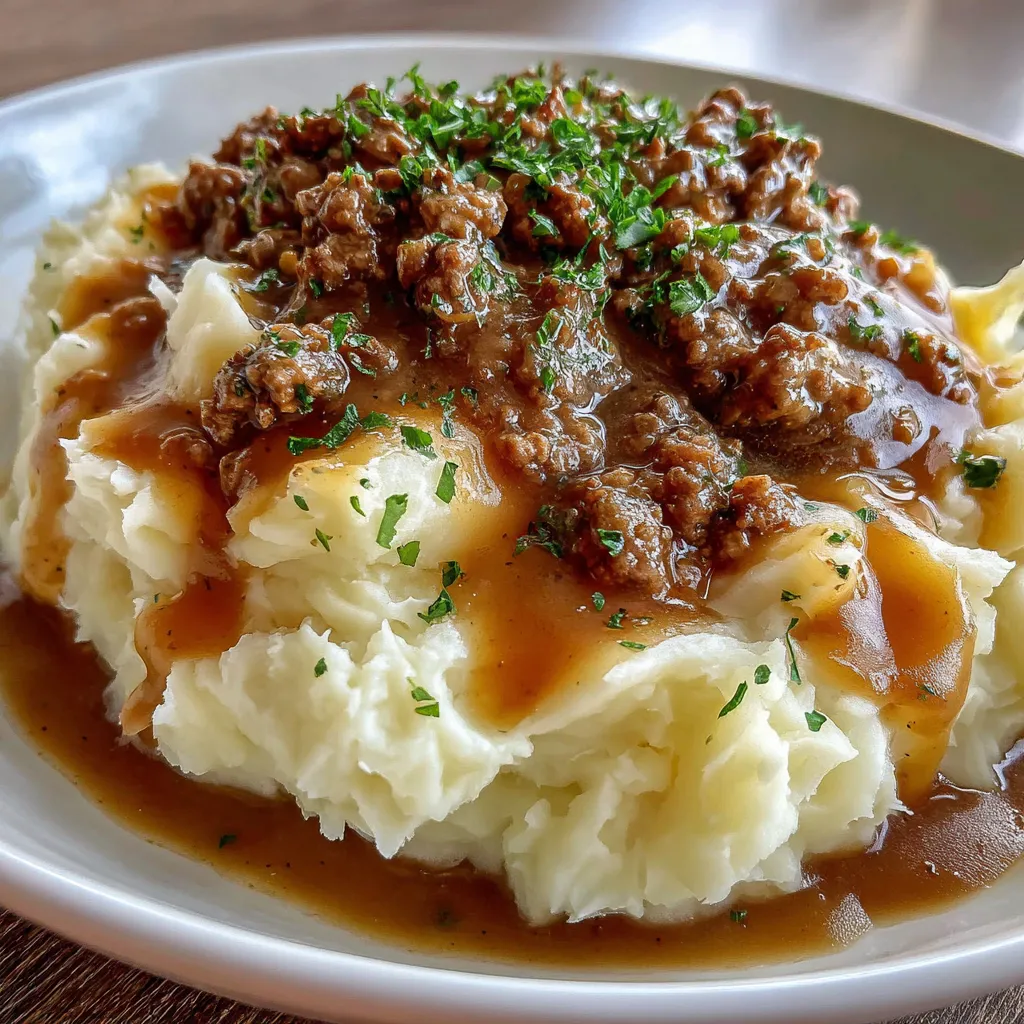

Ground Beef and Gravy Over Mashed Potatoes
Description
Silky potatoes whipped with butter and cream are smothered in a savory beef gravy enriched with garlic, onions, and fragrant thyme. Every bite is warm, hearty comfort perfect for a chilly evening.
Ingredients
Instructions
-
Prepare the potatoes:
-
- Peel the potatoes and cut them into roughly equal 1½-inch chunks so they cook evenly.
-
- Place the potatoes in a large pot and cover them with cold water by about 1–2 inches. Add 1 teaspoon of salt.
-
- Bring to a boil over medium-high heat, then reduce to a gentle boil and cook for 15–20 minutes, or until the potatoes are very tender and easily pierced with a fork.
-
Mash the potatoes:
-
- Drain the potatoes well in a colander, then return them to the warm pot (the residual heat helps dry them slightly).
-
- Add the butter, ½ cup warm milk or half-and-half, and sour cream (if using).
-
- Mash using a potato masher or ricer until smooth and creamy, adding more warm milk a little at a time until you reach your desired consistency.
-
- Season with salt, black pepper, and garlic powder (or the sautéed garlic, if using). Taste and adjust seasoning as needed.
-
- Cover the pot and keep the mashed potatoes warm over very low heat or place the covered pot over a warm (but turned off) burner.
-
Brown the ground beef:
-
- While the potatoes are cooking, heat a large skillet over medium-high heat.
-
- If your beef is very lean, add a teaspoon of oil. Add the ground beef, breaking it into small pieces with a spatula.
-
- Cook for 5–7 minutes, stirring occasionally, until the beef is well browned and no pink remains. Allow some pieces to develop a bit of crust for extra flavor.
-
- Season lightly with salt and pepper as it cooks.
-
- If there is more than 1–2 tablespoons of fat in the pan, spoon off the excess, leaving just a thin layer of fat for flavor and to help with the roux.
-
Cook the aromatics:
-
- Push the beef to one side of the skillet and add 1 tablespoon of the butter to the empty side.
-
- Add the diced onion to the butter and cook for 3–4 minutes, stirring, until softened and lightly golden.
-
- Add the minced garlic and cook for 30–60 seconds until fragrant, avoiding browning.
-
- Stir the onions and garlic into the beef until evenly combined.
-
Make the roux:
-
- Reduce the heat to medium.
-
- Add the remaining 2 tablespoons of butter to the pan and let it melt.
-
- Sprinkle the flour evenly over the beef mixture.
-
- Stir constantly for 1–2 minutes to coat the meat and onions and cook off the raw flour taste. The mixture will look slightly pasty and thick.
-
Build the gravy:
-
- Slowly pour in the beef broth while stirring constantly to prevent lumps. Start with about ½ cup, stir until smooth, then add the rest gradually.
-
- Add Worcestershire sauce, Dijon mustard (if using), thyme or Italian seasoning, and paprika.
-
- Stir well, scraping up any browned bits from the bottom of the pan; these add flavor to the gravy.
-
Simmer and thicken:
-
- Bring the mixture to a gentle simmer over medium heat.
-
- Let it simmer for 5–8 minutes, stirring occasionally, until the gravy thickens to a silky, spoon-coating consistency.
-
- If the gravy becomes too thick, stir in a splash of broth or water to loosen it.
-
Enrich and season:
-
- Stir in the heavy cream or milk (if using) for a richer, creamier gravy.
-
- Taste and adjust seasoning with salt and black pepper. You can add a bit more Worcestershire for deeper savoriness if desired.
-
- Turn the heat to low to keep the gravy warm while you finish the potatoes, if needed.
-
Assemble the dish:
-
- Give the mashed potatoes a quick stir; add a splash of warm milk if they’ve thickened too much, and adjust salt and pepper.
-
- Spoon a generous mound of mashed potatoes onto each plate or into a shallow bowl.
-
- Ladle the hot ground beef and gravy over the center of the mashed potatoes, letting some gravy run down the sides.
-
- Garnish with chopped fresh parsley or chives for color and freshness, if using.
-
Serve:
-
- Serve immediately while hot, with extra gravy on the side if you have it.
-
- This dish pairs well with a simple green vegetable, like peas, green beans, or a side salad.
Note
- For extra flavor, replace half of the beef with ground pork or sausage.
- Yukon gold potatoes give a naturally buttery taste, while russets yield fluffier mashed potatoes.
- For a deeper brown gravy, cook the flour a minute longer until light golden before adding broth.
- You can add sliced mushrooms to the onions for a mushroom-beef gravy variation.
- Leftovers reheat well in a skillet with a splash of broth or milk to loosen the gravy and potatoes.

