

Craving a show-stopping dish that brings the bold, savory flavors of Korea right into your kitchen? This Korean BBQ Beef Rice Stack is exactly what your dinner table has been waiting for. Tender slices of marinated flank steak are seared to perfection and piled high on a bed of fluffy jasmine rice. Each layer is dressed with crisp julienned carrots, refreshing cucumber ribbons, and a tangy spoonful of kimchi that adds just the right amount of fiery zip. With a drizzle of umami-rich sesame oil and a touch of brown sugar sweetness, every bite is a harmonious dance of textures and tastes that will have everyone at the table asking for seconds.
Behind this mouthwatering masterpiece lies an easy-to-follow process that transforms simple pantry staples—like soy sauce, garlic, and ginger—into a flavor-packed marinade. The real star, though, is the gochujang, that iconic Korean red chili paste that infuses the beef with a smoky heat and a deep red hue. Layering fresh veggies not only brings vibrant color but also balances the richness of the meat. Whether you’re cooking for a cozy family dinner or entertaining a crowd, this dish is designed to impress without keeping you chained to the stove for hours. With its intermediate difficulty level, you’ll sharpen your cooking skills and create a meal that feels both refined and homey.
KEY INGREDIENTS IN KOREAN BBQ BEEF RICE STACK
Every unforgettable meal starts with quality ingredients. In this recipe, each element plays a crucial role, joining forces to create a stack that’s bursting with flavor, texture, and visual appeal. From the savory marinade that tenderizes the beef to the crunchy fresh veggies that cut through the richness, here’s why each component matters:
- Flank steak
A lean, flavorful cut that soaks up the marinade beautifully. Thin slices cook quickly and stay tender when properly rested.
- Soy sauce
The salty backbone of the marinade, adding depth and a hint of umami that elevates the beef.
- Sesame oil
A fragrant finishing oil that brings a toasty, nutty aroma to the marinade and garnish.
- Brown sugar
Balances the savory and spicy notes with a mellow sweetness, helping to caramelize the meat.
- Garlic
Offers a pungent bite that brightens the marinade and pairs perfectly with ginger.
- Ginger
Adds a fresh, spicy warmth, enhancing the complexity of the marinade without overpowering it.
- Rice wine vinegar
Introduces a subtle tang that balances the richness and helps tenderize the meat.
- Gochujang
This signature Korean chili paste delivers sweet, spicy, and savory layers in every morsel.
- Jasmine rice
Fluffy, aromatic rice provides a neutral base that soaks up all the delicious juices.
- Vegetable oil
Ensures a hot, nonstick surface for achieving that perfect sear on the beef.
- Carrots
Julienned for a crisp, fresh texture and a pop of bright color.
- Cucumber
Thin ribbons lend a cool, refreshing crunch that contrasts beautifully with the warm beef.
- Kimchi
Fermented cabbage with a spicy tang that cuts through richness and adds a probiotic punch.
- Scallions
Sliced and sprinkled on top for a mild oniony finish and a burst of green.
- Sesame seeds
Toasted for a delicate crunch and a final nutty note in every bite.
- Fried eggs (optional)
A runny yolk can add creamy richness, turning this stack into an indulgent delight.
HOW TO MAKE KOREAN BBQ BEEF RICE STACK
Let’s dive into the magic of putting these ingredients together. This recipe has you start by marinating the beef and ends with a stunning, layered presentation that highlights each element. Follow these steps carefully, and you’ll have a restaurant-worthy dish on your table in under an hour (plus marinating time):
1. In a large bowl, combine the soy sauce, sesame oil, brown sugar, minced garlic, grated ginger, rice wine vinegar, and gochujang. Whisk thoroughly until the brown sugar dissolves and the marinade is smooth and cohesive.
2. Add the thinly sliced flank steak to the bowl, ensuring each piece is fully coated in the marinade. Cover the bowl tightly and refrigerate for at least 2 hours, or ideally overnight to deepen the flavors and tenderize the meat.
3. Cook the jasmine rice according to the package instructions. Once done, fluff it with a fork and keep warm in a covered container or rice cooker.
4. Heat the vegetable oil in a large skillet or grill pan over medium-high heat. When the oil shimmers, remove the steak from the marinade and sear in batches, avoiding overcrowding. Cook until each side is well-browned and cooked to your liking. Discard any leftover marinade.
5. To assemble, layer a base of warm jasmine rice on each serving plate. Top the rice with slices of the seared Korean BBQ beef.
6. Add a colorful layer of julienned carrots and ribboned cucumber over the beef, alternating to showcase vibrant hues and textures.
7. Spoon a generous portion of kimchi over the vegetables, letting its spicy juices drizzle down.
8. If you love that velvety richness, place a freshly fried egg on top of each stack, letting the runny yolk cascade.
9. Garnish with sliced scallions and a sprinkling of sesame seeds to add brightness and a final nutty crunch.
10. Serve immediately, inviting everyone to mix the layers as they eat—each bite is a personalized flavor journey.
SERVING SUGGESTIONS FOR KOREAN BBQ BEEF RICE STACK
When it comes to serving this Korean BBQ Beef Rice Stack, presentation and accompaniments can elevate your meal to an unforgettable feast. Start by arranging your stacks on warmed plates so the rice stays hot, and the beef retains its sizzle. Embrace the contrast of textures by providing small bowls of crisp lettuce leaves for wrapping bites, perfect for those who love a hands-on experience. A side of pickled radish or spicy cucumber salad adds a refreshing crunch and cutting acidity that balances the stack’s richness. For added depth, keep a small dish of extra gochujang or a drizzle of sweet Korean BBQ sauce within reach, letting guests adjust heat levels to their taste. Finally, set out personal-sized bowls for each guest to mix in a spoonful of kimchi and the runny egg yolk, creating a luscious sauce that ties every layer together. Don’t forget to garnish with extra scallions and a handful of toasted sesame seeds right before serving—these finishing touches make each plate feel as special as a night out at a top Korean BBQ joint.
- Serve with cold banchan sides like pickled radish and potato salad to balance flavors.
- Offer lettuce wraps, letting diners scoop rice stacks into leaves for a fun DIY bite.
- Provide small bowls of extra gochujang and BBQ sauce so everyone can spice or sweeten their stack.
- Top each portion with a runny egg yolk spooned over the layers for an opulent, creamy finish.
HOW TO STORE KOREAN BBQ BEEF RICE STACK
Storing your Korean BBQ Beef Rice Stack properly ensures you can enjoy those vibrant flavors and textures later without any compromise. If you plan to save leftovers, consider separating the components so they maintain their integrity. Keep rice and beef apart from raw or fresh veggies, and store kimchi in its own airtight container to prevent its pungent aroma from overpowering other items. When you’re ready to enjoy the next day, gently reheat the beef and rice in the microwave or on the stovetop with a splash of water to restore moisture. Add fresh veggies and kimchi just before serving to preserve their crunch. If you’d like to prep in advance, marinate your steak and prep vegetables the night before, then assemble and cook just before mealtime. For longer storage, you can freeze the cooked beef and rice—flash-freeze on a baking sheet before transferring to freezer bags—and thaw in the refrigerator overnight. Always use within 2-3 days for refrigerated portions and within a month if frozen, ensuring you savor every nuanced flavor as intended.
- Store rice and beef separately in airtight containers to maintain texture and prevent sogginess.
- Keep fresh vegetables and kimchi in their own sealed jars or containers to preserve crunch and flavor.
- Reheat rice and beef with a sprinkle of water in the microwave or covered on the stove to restore moisture.
- Freeze components like cooked beef and rice on a baking sheet, then transfer to freezer bags; thaw overnight in the fridge.
CONCLUSION
This Korean BBQ Beef Rice Stack has everything you need for a memorable meal: layers of unctuous marinated beef, fluffy jasmine rice, crisp vegetables, and tangy kimchi that all come together in perfect harmony. From the Preparation Time of just 30 minutes to the Cooking Time of 20 minutes (plus a minimum 2-hour rest for marinating), this intermediate-level recipe is accessible to home cooks looking to impress. Whether you’re hosting a casual dinner party or simply want to level up your weeknight routine, the visual appeal and bold flavors make this dish a true crowd-pleaser. Feel free to customize with extra banchan, drizzle on your favorite Korean BBQ sauce, or swap in tofu for a vegetarian twist. Don’t forget to garnish with scallions and sesame seeds for that final, delicious flourish.
You can easily print and save this article for your recipe binder or digital collection, ensuring you always have these instructions at your fingertips. Below, you’ll find a helpful FAQ section to answer any lingering questions about techniques, ingredient swaps, and troubleshooting tips. If you give this Korean BBQ Beef Rice Stack a try, I’d love to hear your thoughts—drop a comment with your feedback, questions, or personal twists on the recipe. Happy cooking, and enjoy every flavorful, layered bite!
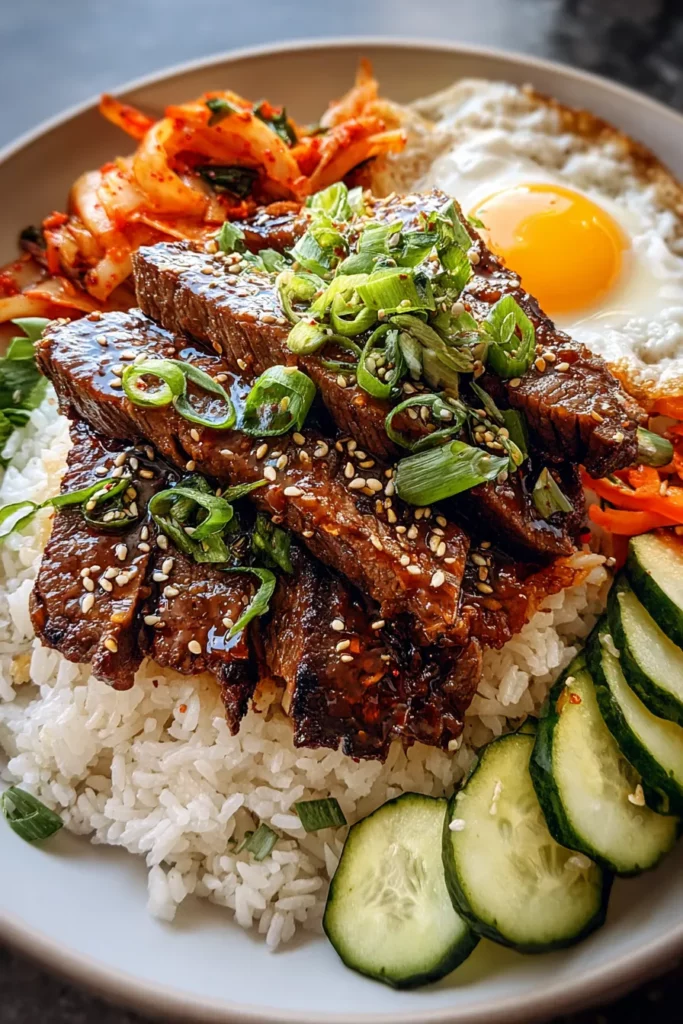

Korean BBQ Beef Rice Stack
Description
This Korean BBQ Beef Rice Stack is bursting with rich flavors from marinated flank steak, fresh veggies, and a kick of kimchi, all beautifully layered for an unforgettable meal.
Ingredients
Instructions
-
In a large bowl, combine the soy sauce, sesame oil, brown sugar, garlic, ginger, rice wine vinegar, and gochujang. Mix well to create a marinade.
-
Add the sliced flank steak to the marinade, ensuring the meat is well-coated. Cover and refrigerate for at least 2 hours, preferably overnight for best flavor.
-
Cook the jasmine rice according to package instructions and set aside, keeping it warm.
-
In a large skillet or grill pan, heat the vegetable oil over medium-high heat. Once hot, remove the steak from the marinade and cook in batches until well-browned and cooked to your desired level of doneness. Discard the marinade.
-
To assemble the stack, place a base layer of rice on each serving plate. Top the rice with slices of the cooked beef.
-
Add a layer of julienned carrots and sliced cucumber on top of the beef.
-
Place a generous spoonful of kimchi over the vegetables.
-
If using, place a fried egg on top of each stack.
-
Finish with a sprinkle of sliced scallions and sesame seeds for garnish.
-
Serve immediately, allowing guests to mix the components as they eat.
Note
- Marinating the beef overnight enhances the flavor, making it juicier and more tender.
- Gochujang adds a spicy kick; adjust the amount based on your heat preference.
- This dish can be customized with other vegetables like bell peppers or spinach.
- For a richer taste, add a drizzle of Korean BBQ sauce before serving.
- Perfectly paired with banchan, small Korean side dishes like pickled radishes or Korean potato salad.
- For a vegetarian version, replace beef with tofu or tempeh and marinate as instructed.

