

Korean Cucumber Salad is a spicy-sweet cucumber salad with toasted sesame and garlic, perfect for a crunchy kick. Crunchy cucumber slices meet fiery gochugaru, tangy vinegar, and garlicky sesame oil, creating a refreshing side that pops with heat, sweetness, and vibrant crunch in every bite. This beginner-friendly side is ready in minutes and will brighten up any meal—give it a try!
Key Ingredients
To nail this Oi Muchim, you'll want the freshest, crispiest cucumbers and just the right seasonings to bring out every layer of flavor.
- 3 small Korean cucumbers or 2 English cucumbers (about 450 g), washed: Crisp base that soaks up the spicy-sweet dressing while keeping each bite refreshingly crunchy.
- 1 tsp fine sea salt (for salting cucumbers): Draws out excess moisture so the cucumber slices stay firm and flavorful.
- 2 green onions, finely sliced: Adds a mild oniony bite and vibrant green color to the salad.
- 1 tbsp Korean red pepper flakes (gochugaru), mild or medium-spicy: Delivers authentic heat and gorgeous red flecks throughout the dish.
- 1 tbsp soy sauce (regular, not dark): Brings umami-rich saltiness that balances the tang and spice.
- 1 tbsp rice vinegar or apple cider vinegar: Offers bright, tangy notes that lift the flavors.
- 1 tsp sugar or honey: Adds a touch of sweetness to round out the heat and acidity.
- 1 tsp toasted sesame oil: Infuses the salad with deep nutty aroma and richness.
- 1½ tsp minced garlic (about 2–3 cloves): Introduces a punch of garlicky fragrance and savory depth.
- 1 tsp toasted sesame seeds: Sprinkles of extra nutty crunch on top for texture and aroma.
- 1–2 tsp water (optional, to adjust seasoning and sauciness): Helps mellow or thin the dressing to your liking.
- Optional: ½ tsp fish sauce for extra depth: Provides a subtle umami boost without an overtly “fishy” taste.
- Optional: ¼ small carrot, cut into very thin matchsticks for color: Adds crisp sweetness and a pop of orange.
- Optional: ¼ small onion, very thinly sliced and rinsed in cold water: Tames sharpness and lends a gentle onion flavor.
How To Make Korean Cucumber Salad
Ready to transform these simple ingredients into a vibrant Korean Cucumber Salad? Follow the steps below to properly prep, season, and blend each element for a crunchy, tangy, and spicy side dish. From trimming and salting the cucumbers to stirring up that fiery gochugaru dressing, each phase builds on the last. Pay attention to techniques like gentle squeezing of excess liquid and tasting adjustments to ensure every slice bursts with balanced flavor. Let’s dive into making your best Oi Muchim yet!
1. Prepare the cucumbers:
- If using Korean cucumbers, simply trim the ends and leave the thin skin intact for extra crispness. For English cucumbers, peel alternating strips of skin for a striped effect, then trim the ends.
- Cut the cucumbers in half lengthwise and slice into 0.5–0.7 cm (¼ inch) half-moons. For a chunkier bite, cut them into diagonal, bite-sized pieces.
2. Salt the cucumbers:
- Place the sliced cucumbers in a large bowl, sprinkle 1 tsp of fine sea salt evenly, and toss gently to coat.
- Let them sit at room temperature for 10–15 minutes as the salt draws out excess water.
- After resting, gently squeeze the cucumbers by hand or press them in a strainer to remove the released liquid without crushing them. Transfer the drained cucumbers to a clean, dry mixing bowl.
3. Prepare aromatics and optional vegetables:
- Thinly slice the green onions.
- If using carrot, cut into very thin matchsticks.
- If using onion, slice as thinly as possible, rinse in very cold water to soften the sharp bite, then drain well.
4. Make the seasoning sauce:
- In a small bowl, combine the gochugaru, soy sauce, rice vinegar, sugar or honey, sesame oil, minced garlic, and sesame seeds.
- Add ½ tsp fish sauce if you want extra umami depth.
- Stir until the sugar dissolves and the mixture is well blended. Taste a drop and adjust by adding sugar for sweetness, vinegar for tang, or 1–2 tsp water if it’s too thick or intense.
5. Dress the cucumbers:
- Add the sliced green onions, carrots, and onion (if using) to the salted cucumbers.
- Pour the seasoning sauce over everything and, using clean hands or chopsticks, gently toss until each slice is evenly coated without squashing them.
6. Final seasoning adjustment:
- Taste a cucumber slice and remember it’s already salted.
- If you prefer more saltiness, add a small splash of soy sauce or a pinch of salt. For extra heat, sprinkle in more gochugaru. If it’s too intense, drizzle a little more sesame oil or water to mellow it out.
7. Rest and serve:
- Serve immediately for maximum crunch and brightness, or cover and refrigerate for 15–30 minutes to let the flavors meld and deepen.
- Transfer to a serving dish, spooning any seasoned juices over the top, and finish with a light extra sprinkle of toasted sesame seeds.
8. Storage (in the same bowl):
- Place any leftovers in an airtight container and refrigerate.
- Best enjoyed within 1–2 days to keep the cucumbers crisp.
- Before serving, stir gently to redistribute the dressing and drain any excess liquid if needed.
Serving Suggestions
This Korean Cucumber Salad shines as a versatile side, bringing a spicy-sweet crunch to any meal. Whether you’re hosting a backyard barbecue or assembling a weeknight dinner, these cucumber slices effortlessly complement richer dishes and provide a refreshing palate cleanser. Below are four easy ways to serve Oi Muchim so it truly stands out on your table.
- With Korean barbecue: Pair it alongside grilled beef, pork, or chicken to cut through the richness with its zesty heat and tang.
- Next to steamed rice: Serve with fluffy white rice to highlight the salad’s bold flavors and crisp texture in each mouthful.
- In a picnic spread: Pack it in a sealed container for an easy, refreshing addition to sandwiches, wraps, or cheese boards outdoors.
- As a taco topping: Spoon the dressed cucumbers over fish or shrimp tacos for an unexpected burst of spicy crunch and bright flavor.
Tips For Perfect Korean Cucumber Salad
Mastering this salad is all about balancing textures and flavors while staying flexible to your taste. Here are some friendly pointers to take your Oi Muchim from great to unforgettable:
- Korean cucumbers are ideal for this recipe because they are crisp and thin-skinned, but English cucumbers are a great substitute.
- Gochugaru (Korean red pepper flakes) is key for authentic flavor; avoid substituting with regular chili powder or flakes if possible.
- Adjust the spiciness by using less gochugaru for a mild salad or more for a bolder, spicier version.
- Lightly toasting sesame seeds in a dry pan until fragrant makes the salad more aromatic and nutty.
- This salad pairs perfectly with Korean barbecue, grilled meats, or a simple bowl of rice as a refreshing, spicy side.
- For a non-spicy version, omit gochugaru and add a little extra soy sauce, vinegar, and sesame oil for a Korean-style cucumber salad without heat.
How To Store It
Keeping your Korean Cucumber Salad fresh and crunchy is simple with the right storage tricks. Store it properly to maintain that lively texture and vibrant flavor, even when enjoying leftovers the next day.
- Airtight container: Transfer the salad to a sealed container to prevent it from absorbing other fridge odors.
- Refrigerate promptly: Chill within an hour of preparation and keep below 40°F to maintain crispness.
- Consume within 1–2 days: For optimal bite and flavor, enjoy the salad while the cucumbers remain firm.
- Refresh the dressing: If the salad gets watery, drain excess liquid, whisk up a small batch of gochugaru-soy-vinegar dressing, and gently toss before serving.
Frequently Asked Questions
Here are some quick FAQs to clear up common curiosities about Oi Muchim!
- Can I use regular cucumbers instead of Korean cucumbers for Oi Muchim?
A: Yes. Korean cucumbers are prized for their thin skin, small seeds, and extra crunch, but English cucumbers or other garden cucumbers work fine. If using English cucumbers, consider peeling alternating strips of skin to improve texture and appearance, then slice into half-moons about ¼ inch thick. Just be sure to salt and drain them the same way to remove excess water and maintain crispness.
- Why do I need to salt and rest the cucumbers before dressing them?
A: Salting draws out excess moisture so the cucumbers stay crispy rather than getting soggy under the dressing. After sprinkling 1 teaspoon of fine sea salt over the cucumber slices and letting them sit for 10–15 minutes, you’ll gently squeeze or drain off the released liquid. This step concentrates the cucumber’s natural flavor and ensures the final salad has a satisfying crunch.
- How can I adjust the spiciness and flavor balance of the salad?
A: The key seasoning ingredients are gochugaru (Korean red pepper flakes), soy sauce, vinegar, sugar, garlic, and sesame oil. To make it milder, reduce the gochugaru or omit it entirely for a non-spicy version, then boost vinegar, soy sauce, and sesame oil for depth. For extra heat, add more gochugaru. If the dressing tastes too intense, stir in 1–2 teaspoons of water. Balance sweetness with sugar or honey, tanginess with rice or apple cider vinegar, and savoriness with soy sauce. Always taste as you go until you reach your preferred harmony.
- Is fish sauce necessary, and what does it add?
A: Fish sauce is optional but recommended if you want a deeper umami note. Just ½ teaspoon lends a subtle salty-savory complexity without making the salad overtly “fishy.” If you choose not to use fish sauce, simply increase the soy sauce by a small splash (about ½ teaspoon) and consider adding a touch more garlic or sesame oil to round out the flavor.
- Can I prepare this salad ahead of time, and how long should it rest before serving?
A: You can dress and refrigerate the salad immediately or let it rest for 15–30 minutes. Serving right away offers maximum crunch and brightness, while a short chill allows the flavors to meld and intensify. Either way, gently toss again before plating to redistribute any settled seasoning. For best texture, consume within 1–2 days of preparation.
- What should I do if the salad becomes too watery after storing?
A: Cucumbers inevitably release some moisture over time. Before serving leftovers, drain any accumulated liquid from the container, then give the salad a quick toss. If the dressing has diluted, whisk up a small fresh batch of the gochugaru-soy-vinegar mixture (using the same ratio) and gently fold it back in. This refreshes both flavor and color without compromising crispness.
- Which garnishes and optional vegetables work best in Oi Muchim?
A: Beyond the basic green onions, thinly matchstick carrots and very thinly sliced onions add color, texture, and sweetness. If you include onions, rinse them in ice water after slicing to tame sharpness, then drain well. Finish the salad with a final sprinkle of toasted sesame seeds for aroma. You can also add a handful of fresh herbs like cilantro or chives for a lively twist, but keep the core ingredients consistent for an authentic taste.
What Makes This Special
This Korean Cucumber Salad hits the sweet spot between spicy, tangy, and nutty, thanks to gochugaru, rice vinegar, and toasted sesame oil working in perfect harmony. The quick salting step keeps each slice crisp, while garlic and sesame seeds bring that extra pop of flavor. It’s so simple that even a kitchen newbie can whip it up in under 15 minutes, yet it looks and tastes like you spent hours. Feel free to print or save this recipe for later, and drop a comment if you have any questions or want to share how your salad turned out—it’s always fun to chat about crunchy cucumbers!
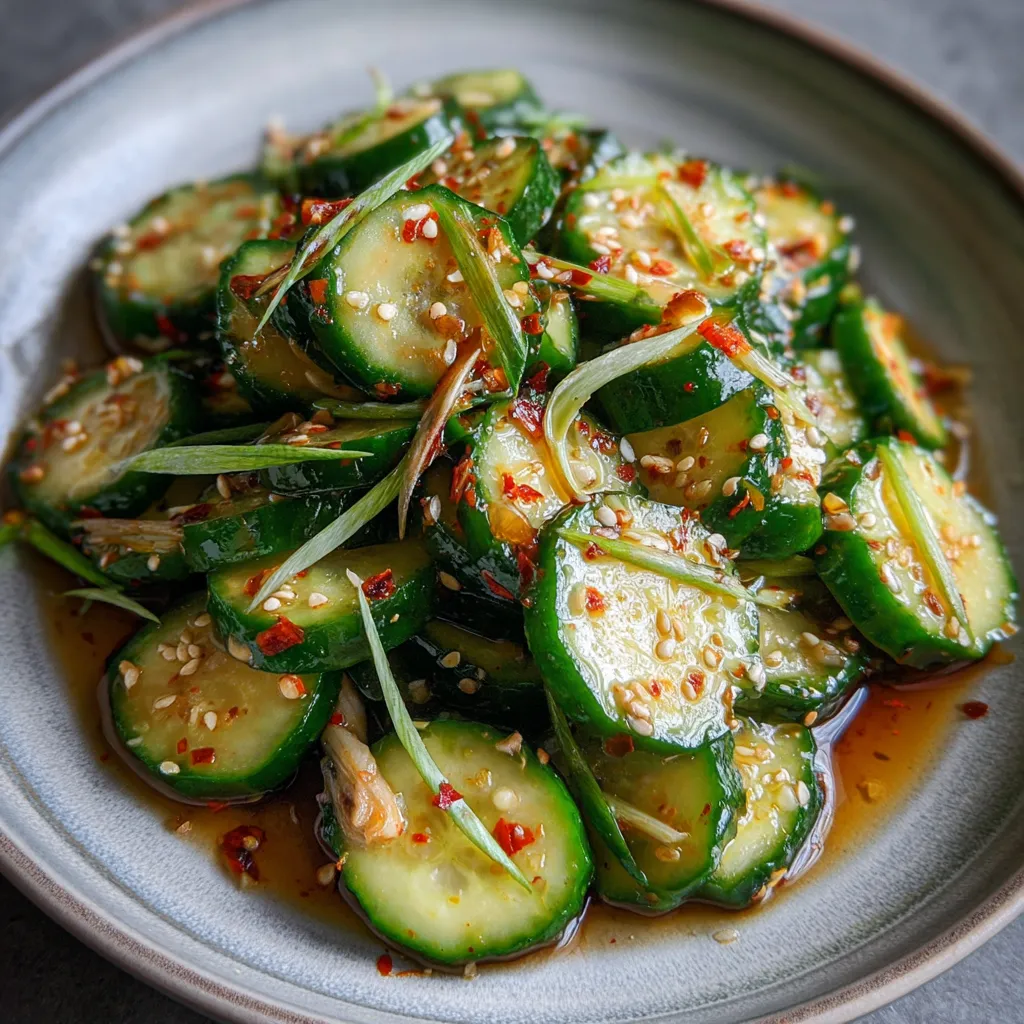

Korean Cucumber Salad
Description
Crunchy cucumber slices meet fiery gochugaru, tangy vinegar and garlicky sesame oil, creating a refreshing side that pops with heat, sweetness and vibrant crunch in every bite.
Ingredients
Instructions
-
Prepare the cucumbers:
-
- If using Korean cucumbers: simply trim the ends. You can leave the skin on.
-
- If using English cucumbers: optionally peel a few strips of skin to create a striped effect (for better texture and appearance), then trim the ends.
-
- Cut cucumbers in half lengthwise, then slice into half-moons about 0.5–0.7 cm (¼ inch) thick. For chunkier texture, you can also cut them into bite-sized diagonal pieces.
-
Salt the cucumbers:
-
- Place the cucumber pieces in a large bowl.
-
- Sprinkle 1 tsp fine sea salt evenly over them and toss gently to coat.
-
- Let sit for 10–15 minutes at room temperature. This draws out excess water and keeps the salad crunchy.
-
- After resting, you will see some liquid at the bottom of the bowl. Gently squeeze the cucumbers with your hands or press them lightly in a strainer to remove excess moisture. Do not over-squeeze; you want them crisp, not limp.
-
- Transfer the cucumbers to a clean, dry mixing bowl.
-
Prepare aromatics and optional vegetables:
-
- Thinly slice the green onions.
-
- If using carrot, cut into very thin matchsticks.
-
- If using onion, slice as thin as possible, then rinse in very cold water and drain well to soften the sharp taste.
-
Make the seasoning sauce:
-
- In a small bowl, combine the gochugaru, soy sauce, rice vinegar, sugar (or honey), sesame oil, minced garlic, and sesame seeds.
-
- If using fish sauce, add it now.
-
- Stir until the sugar dissolves and everything is evenly mixed.
-
- Taste a small drop: it should be savory, a little spicy, tangy, lightly sweet, and garlicky. Adjust:
-
- Add a pinch more sugar if you like it slightly sweeter.
-
- Add a little more vinegar for extra tang.
-
- Add 1–2 tsp water if it tastes too strong or thick.
-
Dress the cucumbers:
-
- Add the sliced green onions, carrots, and onions (if using) to the salted cucumbers.
-
- Pour the seasoning sauce over the top.
-
- Using clean hands or chopsticks, gently mix until every cucumber slice is evenly coated with the red seasoning. Be careful not to crush the cucumbers.
-
Final seasoning adjustment:
-
- Taste a cucumber slice. Remember it has already been salted before.
-
- If you want more saltiness, add a tiny splash of soy sauce or a pinch of salt and mix again.
-
- For more heat, sprinkle in a bit more gochugaru and toss.
-
- If it feels too intense, add a few drops of water or a tiny drizzle more sesame oil to mellow it.
-
Rest and serve:
-
- You can serve immediately for a fresher, brighter taste and very crunchy texture.
-
- For deeper flavor, cover and refrigerate for 15–30 minutes to let the flavors meld.
-
- Transfer to a serving dish, making sure to spoon some of the seasoned juices over the top.
-
- Finish with a light extra sprinkle of toasted sesame seeds before serving.
-
Storage:
-
- Store leftovers in an airtight container in the refrigerator.
-
- Best enjoyed within 1–2 days, while the cucumbers are still crisp.
-
- Stir gently before serving to redistribute the seasoning.
Note
- Korean cucumbers are ideal for this recipe because they are crisp and thin-skinned, but English cucumbers are a great substitute.
- Gochugaru (Korean red pepper flakes) is key for authentic flavor; avoid substituting with regular chili powder or flakes if possible.
- Adjust the spiciness by using less gochugaru for a mild salad or more for a bolder, spicier version.
- Lightly toasting sesame seeds in a dry pan until fragrant makes the salad more aromatic and nutty.
- This salad pairs perfectly with Korean barbecue, grilled meats, or a simple bowl of rice as a refreshing, spicy side.
- For a non-spicy version, omit gochugaru and add a little extra soy sauce, vinegar, and sesame oil for a Korean-style cucumber salad without heat.

