

On a chilly winter afternoon, there’s nothing more comforting than a bowl of steaming Korean Winter Soup brimming with savory broth, tender beef brisket, and bright bursts of fresh vegetables. This hearty lunch–perfect for midweek meals or cozy weekend gatherings–strikes the ideal balance between nurturing warmth and bold, soul-soothing flavors. With an intermediate difficulty level, it’s a rewarding project for home cooks who want to impress without spending hours in the kitchen. You’ll spend about 30 minutes prepping, 30 minutes cooking, and let it rest for another 10 minutes before diving in. The result? A generous four servings, each hovering around 400 calories, that capture the essence of Korean comfort food at its finest.
This Korean Winter Soup combines robust beef or chicken broth with thinly sliced brisket, a colorful array of veggies, and a gentle kick from gochugaru (Korean red pepper flakes). The interplay of silky tofu cubes and the toasty notes of sesame oil create layers of texture and fragrance, while soy sauce and fish sauce deepen the umami profile. Whether you’re craving a rich, savory lunch or a light but satisfying dinner, this bowl will make you feel right at home. Grab your apron, and let’s embark on a delicious journey through flavor, warmth, and simple culinary joy!
KEY INGREDIENTS IN KOREAN WINTER SOUP
Every ingredient in this Korean Winter Soup has a special role, working together to build layers of taste and texture. From the foundation of rich broth to the finishing touch of sesame seeds, each component brings its own magic to the pot.
- Beef broth or chicken broth
Provides a flavorful, liquid base that’s both nourishing and savory, setting the tone for the entire soup.
- Beef brisket
When thinly sliced, it becomes tender and succulent, infusing each spoonful with meaty richness and protein.
- Onion
Chopped onion softens into sweetness as it simmers, contributing depth and natural sugar to balance the spice.
- Garlic
Minced garlic adds pungent warmth and an aromatic backbone that amplifies all the other seasonings.
- Carrots
Sliced carrots bring sweetness, color, and a satisfying crunch when perfectly cooked through.
- Zucchini
Softens gently in the broth, offering a hint of freshness and light vegetal flavor without overpowering the soup.
- Mushrooms
Shiitake or button mushrooms contribute earthy, umami notes and a pleasing texture contrast.
- Firm tofu
Cubed tofu soaks up the savory broth, adding a silky, protein-rich element that balances the meat.
- Green onions
Chopped and stirred in at the end, they lend a burst of color and a sharp, oniony finish.
- Soy sauce
Deepens the umami flavor and adds savory saltiness, anchoring the soup’s seasoning.
- Sesame oil
Drizzled in the marinade and into the pot, it imparts a toasty, nutty fragrance that’s unmistakably Korean.
- Gochugaru (Korean red pepper flakes)
Adjusted to taste, this spice gives a gentle heat and vibrant red hue without overwhelming the other flavors.
- Salt
Enhances and balances all the flavors; use sparingly to avoid over-seasoning.
- Fish sauce (optional)
Intensifies the umami and adds a subtle oceanic tang when you’re craving extra depth.
- Black pepper
Provides a hint of sharpness in the marinade, rounding out the savory profile.
- Ginger
Grated fresh ginger adds a bright, zesty warmth that cuts through richness and lifts the overall taste.
- Sesame seeds
Sprinkled on top as a garnish, they offer a final crunchy texture and nutty accent to each bowl.
HOW TO MAKE KOREAN WINTER SOUP
Let’s walk through the step-by-step process of building your Korean Winter Soup, from gently simmering the broth to layering in each ingredient at just the right moment. Follow along, and you’ll end up with a bowl that’s brimming with flavor, texture, and heartwarming satisfaction.
1. Begin by heating the beef or chicken broth in a large pot over medium heat. Bring it to a gentle simmer, ensuring it’s hot but not boiling vigorously to preserve clarity and flavor.
2. While the broth is heating, marinate the sliced beef in a bowl with soy sauce, sesame oil, ginger, and black pepper. Let it sit for about 15 minutes so the meat soaks up those savory, fragrant notes.
3. In the simmering broth, add the chopped onion and minced garlic. Let them cook for about 3–4 minutes, stirring occasionally until the onions soften and become translucent.
4. Add the marinated beef brisket to the pot. Cook for approximately 5 minutes, stirring occasionally until the beef starts to brown around the edges.
5. Next, incorporate the carrots, zucchini, and mushrooms into the pot. Stir gently and cook for another 5 minutes until the vegetables start to soften, releasing their flavors into the broth.
6. Gently add the cubed tofu into the soup, being careful not to break it apart. The tofu should rest in the liquid, absorbing heat and flavor without turning to mush.
7. Season the soup with gochugaru, fish sauce (if using), salt, and additional pepper. Allow it to simmer for an additional 10–15 minutes, giving the spices time to meld and deepen.
8. Just before serving, stir in the chopped green onions. Let them wilt in the hot liquid for about one minute, adding freshness and color at the last moment.
9. Taste the soup and adjust seasoning if necessary. Feel free to add more soy sauce, salt, or gochugaru based on your personal preference for saltiness and heat.
10. Serve hot, garnished with a sprinkle of sesame seeds for that final nutty crunch and visual appeal.
SERVING SUGGESTIONS FOR KOREAN WINTER SOUP
When your Korean Winter Soup is ready, consider how you’ll plate and enjoy it to maximize that cozy, comforting experience. From the side dishes on your table to the utensils you choose, every detail can elevate the meal into an unforgettable, heartwarming feast.
- Steamed rice or sticky rice on the side
Scoop your soup over a bed of steaming white rice to soak up every drop of the savory broth. Use a small rice bowl and a spoon to create perfect bites of soup-plus-rice.
- Kimchi accompaniment
A small dish of spicy kimchi offers a refreshing, tangy contrast to the rich soup. Serve it chilled on the side to cleanse your palate between warm, hearty spoonfuls.
- Crispy side of pajeon (scallion pancake)
Pair your soup with a hot, crispy scallion pancake for texture contrast. Tear off a piece, dip it into the soup, and enjoy the interplay between crunchy batter and velvety broth.
- Chilled banchan platters
Arrange an assortment of banchan—such as seasoned spinach, pickled radish, or soy-braised eggs—around your soup bowl. These small plates bring variety and elevate your meal into a full Korean-style lunch spread.
HOW TO STORE KOREAN WINTER SOUP
If you find yourself with leftovers (which is a wonderful problem to have!), it’s important to store your Korean Winter Soup properly to preserve its flavors, textures, and freshness. Here are a few tried-and-true methods to ensure your soup tastes just as amazing the next day—or even weeks later—without sacrificing quality or safety.
- Refrigerate in an airtight container
Allow the soup to cool to room temperature before transferring to a sealed glass or BPA-free plastic container. Store in the refrigerator for up to 4 days. When reheating, warm gently over low heat to keep the tofu intact.
- Freeze for longer storage
For extended preservation, ladle the soup into freezer-safe containers or heavy-duty freezer bags. Leave about an inch of headspace for expansion. Freeze for up to 3 months. Thaw overnight in the refrigerator before reheating.
- Separate components
If you anticipate storing for several days, consider removing the tofu and green onions before refrigeration. Store them in a separate container and add fresh when reheating to maintain texture.
- Reheating tips
Reheat on the stovetop over medium-low heat, stirring occasionally to prevent sticking. If the broth has become too thick, add a splash of hot water or broth to return it to the desired consistency.
CONCLUSION
Korean Winter Soup is more than just a recipe—it’s a comforting embrace in a bowl, combining rich beef or chicken broth with tender brisket, vibrant vegetables, and a kiss of Korean red pepper flakes. With an intermediate level of difficulty and straightforward steps that take about an hour from start to finish, home cooks can bring this bowl of warm, hearty goodness into their kitchens any winter day. This article has guided you through each essential ingredient, the detailed cooking process, creative serving suggestions, and the best storage practices to keep your soup tasting fresh. Feel free to print this article and save it for your recipe collection—you’ll want to revisit it whenever the weather dips and you need a soul-soothing meal.
We’d love to hear how your Korean Winter Soup turns out! Do you have questions about the spice level, or perhaps you tweaked the recipe with extra vegetables? Let us know in the comments below if you need help or have feedback to share. Happy cooking, and here’s to many cozy lunches filled with warmth, flavor, and good company. You can also find a FAQ below for more tips and tricks.
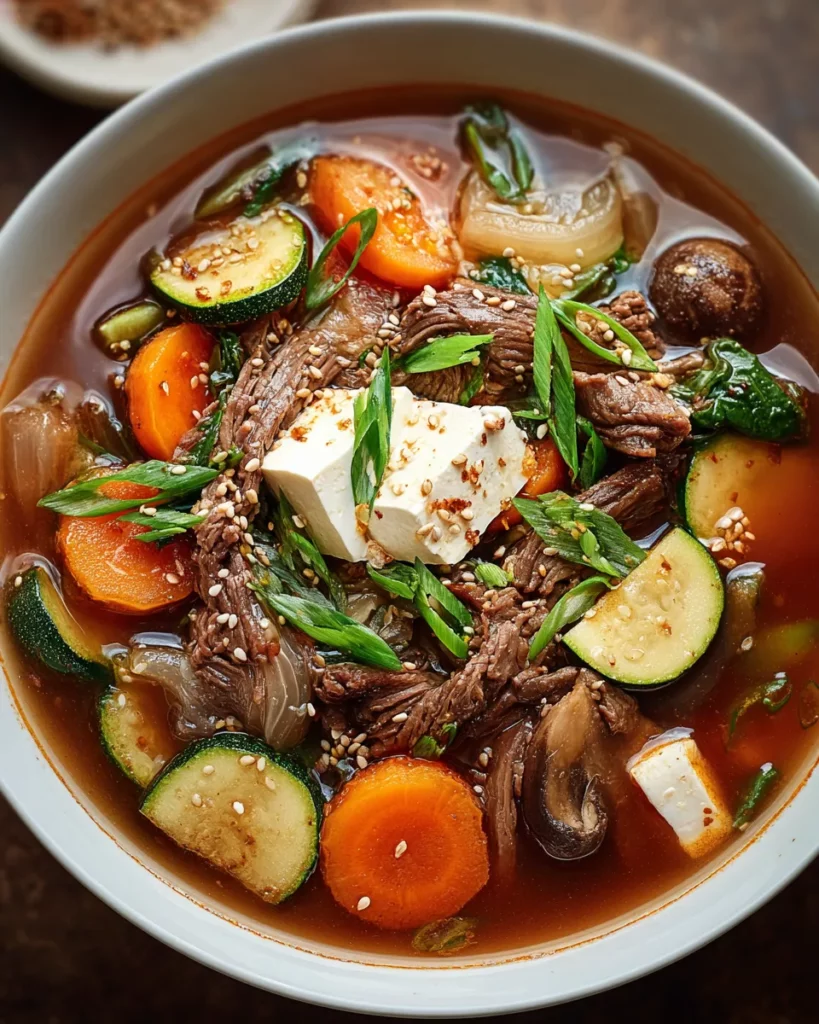

Korean Winter Soup
Description
This Korean winter soup brings warmth and heartiness, combining savory beef broth with tender brisket, fresh vegetables, and a hint of spice for a comforting delight on cold days.
Ingredients
Instructions
-
Begin by heating the beef or chicken broth in a large pot over medium heat. Bring it to a gentle simmer.
-
While the broth is heating, marinate the sliced beef in a bowl with soy sauce, sesame oil, ginger, and black pepper for about 15 minutes.
-
In the simmering broth, add the chopped onion and minced garlic. Let it cook for about 3-4 minutes until the onions soften and become translucent.
-
Add the marinated beef to the pot. Let it cook for approximately 5 minutes, stirring occasionally until the beef starts to brown.
-
Next, incorporate the carrots, zucchini, and mushrooms into the pot. Stir and cook for another 5 minutes until the vegetables begin to soften.
-
Gently add the cubed tofu into the soup, being careful not to break it apart.
-
Season the soup with gochugaru (Korean red pepper flakes), fish sauce (if using), salt, and pepper. Allow it to simmer for an additional 10-15 minutes, letting the flavors meld together.
-
Just before serving, stir in the chopped green onions and let them wilt for a minute.
-
Taste the soup and adjust seasoning if necessary; you can add more soy sauce, salt, or gochugaru based on your preference.
-
Serve hot, garnished with a sprinkle of sesame seeds.
Note
- This soup can be made a day in advance and tastes even better the next day as the flavors deepen.
- Feel free to add other vegetables such as spinach, bok choy, or radish for extra nutrition and flavor.
- This soup is commonly enjoyed during the winter in Korea, making it a perfect comfort food for cold days.
- Gochugaru gives a nice kick but can be adjusted based on your heat tolerance preferences.

