

Crunchy cauliflower florets take center stage in this vibrant Kung Pao Cauliflower, where each piece is coated in a tangy, spicy sauce and tossed with bell peppers and peanuts for a delightful contrast. The bold flavors of garlic, ginger, and hoisin sauce come together in a glossy finish that’s both addictive and satisfying. Whether you’re craving a hearty vegetarian stir-fry or a fresh spin on a classic, this recipe will become a weeknight favorite you’ll revisit again and again.
Key Ingredients
Before diving into the wok, gather these fresh ingredients that bring texture, flavor, and that signature Kung Pao kick to life.
- 1 medium cauliflower, cut into florets: The sturdy base that soaks up sauce while staying crisp-tender.
- 2 tablespoons vegetable oil: Neutral oil that ensures even, golden sauté without burning.
- 1 bell pepper, diced: Adds vibrant sweetness and a pop of color.
- 1 medium onion, diced: Brings savory depth and caramelized sweetness when softened.
- 3 cloves garlic, minced: Infuses the dish with aromatic punch.
- 1 inch ginger, minced: Provides a warm, zesty note to balance the heat.
- 1/2 cup unsalted roasted peanuts: Crunchy element that contrasts the tender vegetables.
- 1/4 cup soy sauce: Salty backbone that deepens umami flavors.
- 2 tablespoons rice vinegar: Bright acidity to cut through richness.
- 2 tablespoons hoisin sauce: Sweet, savory binder that thickens the sauce.
- 1 tablespoon chili paste (adjust to taste): Delivers spicy heat—customizable to your preference.
- 1 tablespoon cornstarch: Thickens the sauce to a glossy, clingy consistency.
- 3 tablespoons water: Adjusts sauce thickness and helps dissolve starch.
- 2 green onions, chopped (for garnish): Fresh bite and a splash of green.
- Sesame seeds (for garnish): Tiny bursts of nuttiness and visual appeal.
- Pinch of salt: Seasonal lift for every ingredient.
- Pinch of black pepper: Subtle warmth that enhances overall flavor.
How To Make Kung Pao Cauliflower
This Kung Pao Cauliflower recipe is all about layering flavors and textures in a single pan. You’ll start by getting those florets beautifully golden, then build complexity with sautéed peppers, onions, garlic, and ginger. Next, a quick whisked sauce brings tang, sweetness, and heat, coating each piece before the final toss with crunchy peanuts. Follow these detailed steps and you’ll have a colorful, restaurant-style dish ready in no time.
1. Begin by preparing the cauliflower: rinse under cold water, then cut into bite-sized florets. Pat dry with a paper towel to remove excess moisture for crispier results.
2. In a large frying pan or wok, heat the vegetable oil over medium-high heat. Once shimmering, add the cauliflower florets, season with a pinch of salt and black pepper, and sauté for 5–7 minutes until golden brown and just tender. Remove the cauliflower to a plate and set aside.
3. Using the same pan, add the diced bell pepper and onion. Sauté for 3–5 minutes until the vegetables begin to soften and develop a light char.
4. Add the minced garlic and ginger to the pan. Cook for 1–2 minutes until fragrant, stirring frequently to avoid burning.
5. Return the sautéed cauliflower to the pan with the peppers and onion. Toss everything together for about a minute so the flavors start to mingle.
6. In a small bowl, combine soy sauce, rice vinegar, hoisin sauce, chili paste, cornstarch, and water. Whisk until the mixture is completely smooth and lump-free.
7. Pour the sauce over the cauliflower and vegetables. Stir constantly for 3–5 minutes, allowing the sauce to thicken and coat each piece evenly.
8. Once the sauce has reached a glossy consistency, stir in the roasted peanuts, ensuring even distribution.
9. Remove the pan from heat and transfer the Kung Pao Cauliflower to a serving dish. Garnish with chopped green onions and a sprinkle of sesame seeds before serving.
Serving Suggestions
This Kung Pao Cauliflower shines on its own, but pairing it with simple sides takes your meal to the next level. Here are some fun serving ideas to suit your mood:
- Serve over steamed white or jasmine rice to soak up every drop of that tangy-spicy sauce.
- Plate alongside cauliflower rice for a low-carb option that doubles down on veggie goodness.
- Pair with a side of stir-fried greens like bok choy or garlic spinach for a balanced crunch.
- Wrap in lettuce cups with extra peanuts and scallions for a fresh, handheld twist.
Tips For Perfect Kung Pao Cauliflower
Nailing this recipe is all about balance—texture, spice, and timing. Here are some friendly pointers to make it foolproof:
Use a generous pinch of salt on the florets before sautéing to draw out moisture and achieve an even crisp.
- For a spicier version, increase the amount of chili paste according to your heat preference.
- You can also add other vegetables like zucchini, carrots, or snap peas for more variety and nutrition.
- If you want a gluten-free option, use tamari instead of soy sauce.
- This dish pairs well with steamed rice or cauliflower rice as a delicious and healthy side.
- Leftovers can be stored in an airtight container in the fridge for up to 3 days.
How To Store It
Proper storage keeps your Kung Pao Cauliflower tasting just as vibrant the next day. Whether you’re meal-prepping or saving leftovers, follow these easy methods:
- Store in a airtight container in the refrigerator for up to 3 days, making sure the dish has cooled to room temperature first.
- For longer storage, freeze cooled portions in freezer-safe bags or containers; thaw overnight in the fridge before reheating.
- Reheat on the stovetop over medium heat, adding a splash of water to loosen the sauce and maintain its glossy texture.
- If using a microwave, cover the dish loosely and heat on medium power for 1–2 minutes, stirring halfway through for even warming.
Frequently Asked Questions
Got questions? Here are quick answers to common Kung Pao Cauliflower curiosities:
- How long does it take to prepare and cook Kung Pao Cauliflower?
From start to finish, it takes about 25–30 minutes. This includes 5–7 minutes to sauté the cauliflower until golden, 3–5 minutes to soften the bell pepper and onion, 1–2 minutes to cook garlic and ginger, and another 3–5 minutes to thicken the sauce and combine everything.
- Can I roast the cauliflower instead of sautéing it in a pan?
Yes. Preheat your oven to 425°F (220°C), toss the cauliflower florets in 2 tablespoons of oil, salt, and pepper, then spread them on a baking sheet. Roast for 20–25 minutes, flipping once halfway through, until golden and tender. Then proceed with the recipe by adding the roasted florets in step 5.
- What can I use instead of peanuts if someone has a nut allergy?
You can substitute roasted peanuts with toasted pumpkin seeds (pepitas) or sunflower seeds for a nut-free crunch. If allergies allow, lightly toasted cashews also work well, offering a similar texture and flavor.
- How do I adjust the spiciness level?
The heat comes from the chili paste. For a milder dish, start with 1 teaspoon of chili paste or omit it entirely and add a pinch of red pepper flakes at the end if needed. For extra heat, increase to 1½–2 tablespoons or stir in fresh chopped chilies along with the garlic and ginger.
- Can I make this recipe gluten-free?
Absolutely. Replace the soy sauce with tamari or a certified gluten-free soy sauce, and use a gluten-free hoisin sauce. Ensure your chili paste doesn’t contain gluten-based additives.
- What’s the best way to store and reheat leftovers?
Store leftovers in an airtight container in the refrigerator for up to 3 days. Reheat gently in a skillet over medium heat, adding a splash of water if the sauce is too thick, or microwave on medium power for 1–2 minutes, stirring halfway.
- Can I prepare any components ahead of time?
Yes. You can chop the cauliflower, bell pepper, onion, garlic, and ginger up to a day in advance and store them in separate airtight containers. Mix the sauce ingredients in advance as well. When you’re ready, follow the cooking steps—this will cut active cooking time down to about 15–20 minutes.
What Makes This Special
This Kung Pao Cauliflower recipe works because it strikes the perfect balance between spicy, sweet, and nutty while keeping things vegetarian-friendly and surprisingly simple. Each bite delivers a satisfying crunch from the peanuts and crisp cauliflower, a bright tang from rice vinegar, and a warm kick from chili paste. Print and save this guide for nights when you crave bold flavors without the fuss—then drop a comment below if you try it or have any questions. Let me know how yours turned out or if you’ve put your own spin on it!
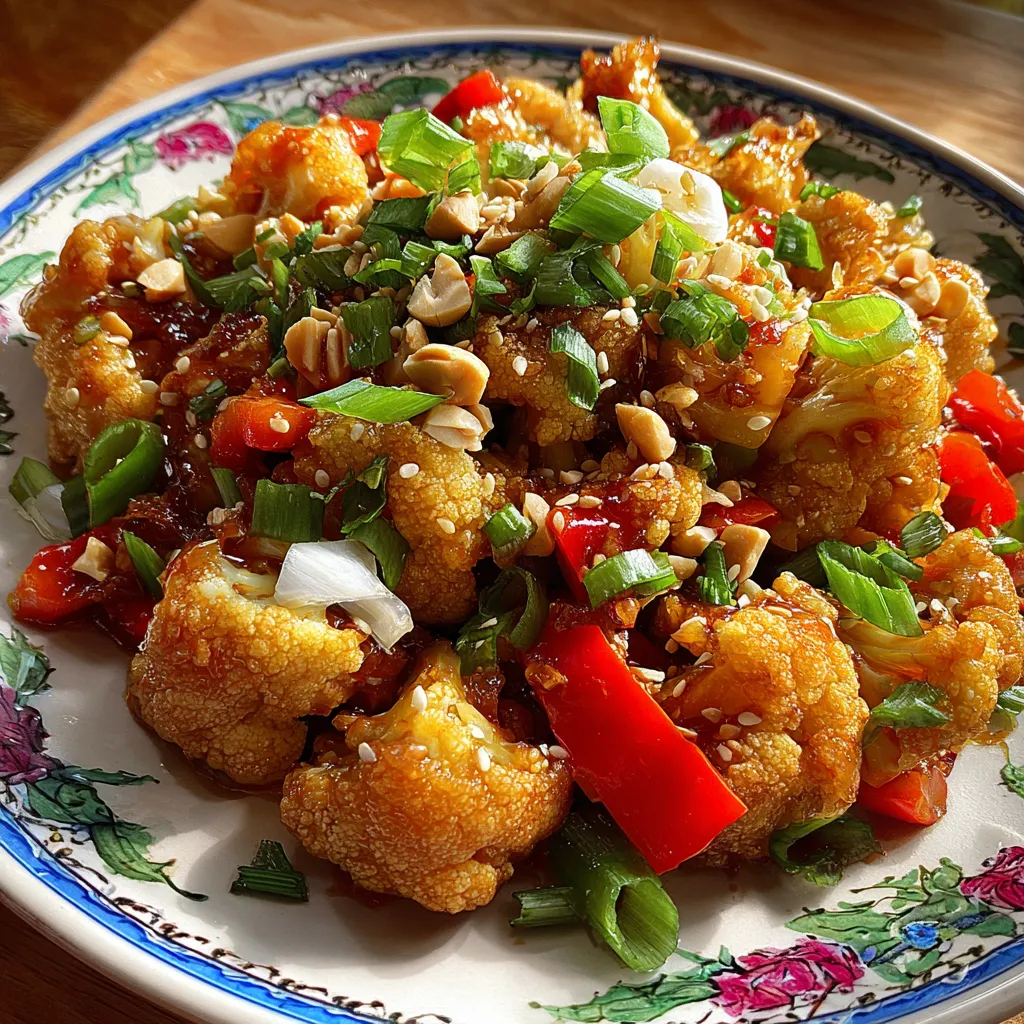

Kung Pao Cauliflower
Description
Golden cauliflower florets sizzle in a hot wok, releasing fragrant ginger and garlic. A glossy, chili-kissed sauce clings to each bite, while roasted peanuts add crunch and bell peppers lend vibrant sweetness.
Ingredients
Instructions
-
Begin by preparing the cauliflower. Rinse it under cold water, then cut it into bite-sized florets. Pat the florets dry with a paper towel.
-
In a large frying pan or wok, heat the vegetable oil over medium-high heat. Once hot, add the cauliflower florets, season with a pinch of salt and black pepper, and sauté for about 5-7 minutes until they are golden brown and slightly tender. Remove the cauliflower from the pan and set it aside.
-
In the same pan, add the diced bell pepper and onion. Sauté for about 3-5 minutes, until the vegetables start to soften.
-
Add the minced garlic and ginger to the pan. Cook for another 1-2 minutes until fragrant, stirring frequently to prevent burning.
-
Return the sautéed cauliflower to the pan with the bell pepper and onion mixture. Toss everything together for a minute to combine.
-
In a small bowl, combine the soy sauce, rice vinegar, hoisin sauce, chili paste, cornstarch, and water. Whisk until smooth and well combined.
-
Pour the sauce over the cauliflower and vegetables in the pan. Stir well to ensure everything is coated evenly. Cook for an additional 3-5 minutes, allowing the sauce to thicken and the flavors to meld together.
-
Once the sauce has thickened, stir in the roasted peanuts, mixing to combine.
-
Remove from heat and transfer the Kung Pao Cauliflower to a serving dish. Garnish with chopped green onions and a sprinkle of sesame seeds before serving.
Note
- For a spicier version, increase the amount of chili paste according to your heat preference.
- You can also add other vegetables like zucchini, carrots, or snap peas for more variety and nutrition.
- If you want a gluten-free option, use tamari instead of soy sauce.
- This dish pairs well with steamed rice or cauliflower rice as a delicious and healthy side.
- Leftovers can be stored in an airtight container in the fridge for up to 3 days.

