

Crunchy low carb pickled celery transforms everyday celery into a tangy, zesty snack that’s perfect for anyone following a keto or low-carb lifestyle. With just a handful of pantry staples—distilled white vinegar, erythritol, mustard seeds, peppercorns, and fresh dill—you’ll have a jarful of refreshing pickles ready in no time. The crisp celery stalks soak up the sweet-and-sour brine, delivering a satisfying snap in every bite. Whether you’re looking for a guilt-free nibble between meals or a bright, crunchy topping for sandwiches and salads, this easy recipe has you covered.
Key Ingredients
Before you get started on this tangy, crunchy treat, gather these simple ingredients:
- 4 celery stalks trimmed and cut into 4-inch pieces: Crisp base that soaks up the tangy vinegar brine.
- 1 cup water: Dilutes the vinegar for balanced acidity.
- 1 cup distilled white vinegar: Provides the clean, sharp pickling flavor.
- 2 tablespoons erythritol: Sweetens without adding carbs, balancing the tanginess.
- 1 tablespoon kosher salt: Enhances flavor and helps preserve crispness.
- 1 teaspoon mustard seeds: Adds a mild, aromatic spice.
- 1 teaspoon black peppercorns: Lends warm, peppery notes.
- 1 bay leaf: Infuses a subtle herbal depth.
- 1 sprig fresh dill: Brightens the brine with fresh, citrusy tones.
How To Make Low Carb Pickled Celery
Pickling celery is straightforward and satisfying. You’ll begin by thoroughly sterilizing a mason jar to keep your pickles safe and crisp. Next, you’ll whisk together a hot brine of vinegar, water, erythritol, and salt until fully dissolved, then layer the celery, mustard seeds, peppercorns, bay leaf, and dill into the jar. Pour the steaming brine over the vegetables, seal the jar tightly, and chill for at least 24 hours. In just a day, you’ll have delightfully crunchy, tangy celery pickles ready to enjoy.
1. Sterilize a quart-sized mason jar and its lid by submerging them in boiling water for 10 minutes to eliminate any bacteria.
2. In a small saucepan, combine 1 cup water, 1 cup distilled white vinegar, 2 tablespoons erythritol, and 1 tablespoon kosher salt; bring to a simmer, stirring until the erythritol and salt fully dissolve.
3. Place the celery pieces, 1 teaspoon mustard seeds, 1 teaspoon black peppercorns, 1 bay leaf, and 1 sprig fresh dill into the sterilized jar, arranging them evenly.
4. Carefully pour the hot brine over the celery and spices, ensuring the pieces are fully submerged for uniform flavor absorption.
5. Seal the jar tightly and allow it to cool to room temperature to prevent excess condensation.
6. Refrigerate the jar for at least 24 hours before serving to let the tangy, sweet, and herbal flavors develop fully.
Serving Suggestions
These Low Carb Pickled Celery stalks are more than just a tangy snack—they’re a versatile addition to your culinary repertoire. Their crisp texture and zesty brine make them ideal for elevating everything from casual lunches to elegant gatherings. Pop them straight from the jar when you’re craving a low-carb nibble, or mix chopped pieces into fresh salads for a burst of flavor. Feeling creative? Use the pickles to brighten up grain bowls, sandwiches, and wraps, or pair them with creamy dips for a satisfying contrast. No matter how you serve them, these pickled stalks are sure to impress.
- Charcuterie companion: Arrange alongside cheeses, cured meats, and olives for a bright contrast that cleanses the palate.
- Salad topper: Chop pickled celery and sprinkle over mixed greens or potato salad to add tangy crunch.
- Sandwich upgrade: Layer whole stalks or slices inside your favorite sandwich or wrap for extra zest and texture.
- Snack straight from the jar: Enjoy them cold and crisp as a stand-alone keto-friendly nibble whenever hunger strikes.
Tips For Perfect Low Carb Pickled Celery
Getting your pickled celery just right is all about balancing flavors and keeping things crisp. Follow these friendly tips to ensure each stalk stays crunchy and perfectly tangy. Whether you want to spice things up or maximize shelf life, these pointers will have you pickling like a pro in no time.
- Uses erythritol for sweetness to keep carbs low.
- Store in refrigerator and consume within 3 weeks.
- For a spicier kick add a pinch of red pepper flakes.
- Celery remains crisp when pickled for a refreshing snack.
How To Store It
When it comes to storing your Low Carb Pickled Celery, proper handling will help maintain its crispness and flavor over time. Keeping your pickles chilled and sealed prevents unwanted softening and ensures they stay tangy and fresh. Follow these storage tips to enjoy every snappy bite for up to three weeks.
- Refrigerate in a sealed jar: Keep your pickles in their sterilized mason jar with a tight lid to preserve moisture and flavor.
- Use clean utensils: Always grab celery with a fork or clean tongs to avoid introducing bacteria.
- Store at consistent temperature: Place the jar on a fridge shelf away from the door to prevent temperature fluctuations.
- Consume within three weeks: For best taste and texture, finish your pickled celery before three weeks have passed.
Frequently Asked Questions
Curious about Low Carb Pickled Celery? Here are answers to the most common questions:
- Q: How long does it take to prepare this Low Carb Pickled Celery recipe?
Total active prep time is about 15 minutes, including chopping the celery, measuring ingredients, and boiling the jar. You’ll need another 10 minutes to dissolve the erythritol and salt in the brine. After assembly, allow the jar to cool to room temperature before refrigerating. The celery must chill for at least 24 hours in the fridge to fully absorb the flavors.
- Q: How long will the pickled celery stay fresh in the refrigerator?
When stored in a tightly sealed, sterilized mason jar in the refrigerator, your pickled celery will remain crisp and flavorful for up to three weeks. Be sure to use a clean utensil each time you remove celery to prevent contamination, and always reseal the jar promptly.
- Q: Can I substitute the erythritol with another sweetener or omit it entirely?
You can substitute erythritol with other low-carb sweeteners such as stevia or monk fruit, adjusting to taste—start with half the amount and add more if needed. Omitting sweetness entirely is an option for a more tart pickle, but this will alter the flavor balance, making the celery significantly more acidic.
- Q: Why does my pickled celery sometimes turn slightly soft, and how can I keep it crisp?
Celery can lose crispness if overcooked during blanching or if exposed to high heat for too long. To maintain crunch, avoid boiling the celery directly—only the brine should simmer. Make sure to submerge the celery quickly in the hot brine, then cool it rapidly by sealing the jar and chilling in the refrigerator.
- Q: How can I make these pickles spicier or add additional flavor profiles?
To increase heat, add 1/4 to 1/2 teaspoon of red pepper flakes or a sliced fresh chili to the jar before pouring the brine. For extra herbal notes, consider adding a garlic clove, a few coriander seeds, or a slice of fresh ginger. Always adjust spices in small increments, taste-test after 24 hours, and add more if needed.
- Q: Is it possible to reuse the brine for another batch of celery or different vegetables?
Yes, you can reuse the cooled brine once for another batch of celery or for quick-pickling carrots, cucumbers, or radishes. Transfer the brine to a clean saucepan, bring it back to a simmer to sterilize, then pour over fresh vegetables in a sterilized jar. Keep in mind that reused brine may be slightly less potent, so freshening it with a pinch of salt or erythritol can help maintain flavor.
- Q: Can I use a different type of vinegar if I don’t have distilled white vinegar?
Distilled white vinegar provides a clean, sharp acidity that highlights the celery’s freshness. If you prefer a different profile, you can use apple cider vinegar for a fruitier tang or rice vinegar for a milder flavor. Ensure the vinegar’s acidity is at least 5% for safe pickling, and expect minor color and taste variations.
What Makes This Special
Low Carb Pickled Celery stands out thanks to its simple, high-impact ingredients and foolproof refrigerator pickling method. The tangy brine infuses each stalk with a satisfying snap and zesty flavor, while aromatic mustard seeds, peppercorns, and fresh dill add depth and brightness. This snack is not only quick to prepare but also perfectly crisp, low in carbs, and brimming with flavor—ideal for salads, sandwiches, or straight-from-the-jar munching. Print and save this recipe for later, and let me know in the comments how your batch turns out or if you have any pickling questions!
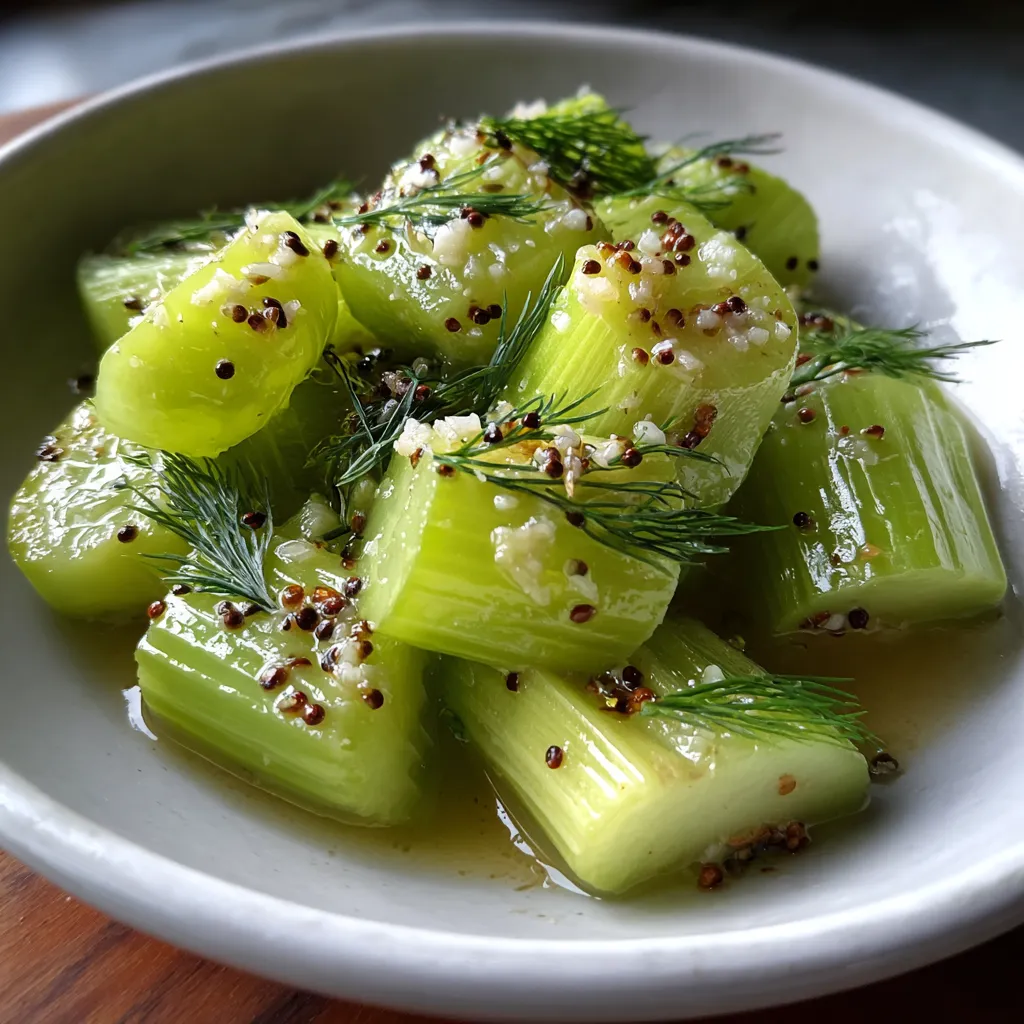

Low Carb Pickled Celery
Description
Tangy brine infuses each celery stalk with a satisfying snap and zesty flavor, while mustard seeds, peppercorns, and dill add aromatic depth. Perfectly crisp and low-carb, these pickles elevate any snack or sandwich.
Ingredients
Instructions
-
Sterilize a quart-sized mason jar and its lid by boiling them in water for 10 minutes.
-
In a small saucepan combine water, vinegar, erythritol, and salt and bring to a simmer, stirring until erythritol and salt dissolve.
-
Place celery pieces, mustard seeds, peppercorns, bay leaf, and dill sprig into the sterilized jar.
-
Carefully pour the hot brine over the celery, ensuring the pieces are fully submerged.
-
Seal the jar tightly and let it cool to room temperature.
-
Refrigerate the jar for at least 24 hours before serving to allow flavors to develop.
Note
- Uses erythritol for sweetness to keep carbs low.
- Store in refrigerator and consume within 3 weeks.
- For a spicier kick add a pinch of red pepper flakes.
- Celery remains crisp when pickled for a refreshing snack.

