

There’s nothing quite like diving into a slice of Mango Mousse Cake when you want a tropical escape at home. This Creamy mango mousse on a crisp graham crust for a tropical escape combines silky mango mousse swirls into a buttery graham base, topped with juicy mango cubes that burst with sweetness. Whether you’re hosting a summer soirée or craving a light dessert, this luscious treat will have everyone smiling—and asking for seconds!
Key Ingredients
Before we get started, let’s gather the essentials that make this Mango Mousse Cake shine:
- 1.5 cups graham cracker crumbs: crumbly base that holds the creamy mousse and adds a subtle crunch.
- 1/4 cup unsalted butter: binds the crumbs into a firm, buttery crust.
- 2 cups heavy whipping cream: whipped to soft peaks for airy, luscious texture.
- 1/2 cup powdered sugar: sweetens the cream and helps stabilize the whipped texture.
- 1 teaspoon vanilla extract: enhances the cream’s flavor with warm, aromatic notes.
- 2 cups mango puree: delivers vibrant tropical sweetness and silky consistency.
- 1/4 cup granulated sugar: balances the tartness of mango puree for perfectly sweet mousse.
- 1 tablespoon gelatin powder: sets the mousse firmly, ensuring clean slices.
- 3 tablespoons water: blooms the gelatin for a smooth, stable mousse.
- 1/2 cup diced mango: fresh cubes for bright pops of mango in every bite.
How To Make Mango Mousse Cake
Ready to embark on this no-bake delight? In just a few steps you'll transform simple ingredients into a show-stopping dessert that tastes like sunshine in every bite. From crafting the perfect graham crust to achieving a silky mousse texture, these instructions will guide you through each essential technique.
1. Preheat oven to 350°F and melt the butter in a small pan. Ensure the butter is fully liquefied over low heat without browning.
2. Mix graham cracker crumbs with melted butter and press firmly into the base of a 9-inch springform pan. Use the back of a spoon to create an even, compact layer.
3. Bake the crust for 8 minutes then allow it to cool completely. This baking step locks in the buttery flavor and prevents sogginess.
4. In a small bowl sprinkle gelatin over water and let it bloom for 5 minutes then warm gently until dissolved. Stir until the gelatin is clear with no granules.
5. Whip the heavy cream with powdered sugar and vanilla until soft peaks form. Be careful not to overbeat—stop when peaks hold but droop slightly.
6. Gently fold mango puree and dissolved gelatin into the whipped cream until fully combined. Use a figure-eight motion to keep the mixture airy.
7. Pour the mango mousse over the cooled crust and smooth the top with a spatula. Aim for an even layer to ensure uniform setting.
8. Scatter diced mango over the mousse then refrigerate for at least 4 hours or until set. Keep the pan level to avoid slanting.
9. Remove the cake from the pan, slice, and serve chilled. Run a hot knife under warm water before each cut for clean slices.
Serving Suggestions
When it comes to enjoying Mango Mousse Cake, presentation and pairings make all the difference. Whether it’s a casual brunch or a special celebration, these ideas will elevate your tropical dessert to the next level.
- Serve on chilled plates to keep each slice refreshingly cool and prevent melting.
- Pair with a glass of sparkling rosé or iced green tea to complement the fruity sweetness.
- Garnish with a dusting of toasted coconut flakes and a sprig of mint for color contrast and extra flavor.
- Drizzle a little mango coulis or lime syrup on the plate for artistic flair and a tangy kick.
Tips For Perfect Mango Mousse Cake
Nailing the perfect Mango Mousse Cake is all about paying attention to detail and playing with tropical flavors. Whether it’s ensuring a sturdy crust or achieving pillow-light mousse, these pointers will help you feel confident in the kitchen and impress your guests every time.
- Use ripe sweet mangoes for the best flavor and natural sweetness.
- Chill the cake thoroughly to ensure the mousse sets firmly.
- Adjust the sugar level in the mousse to suit your taste or the sweetness of the mangoes.
- You can top the cake with toasted coconut flakes or mint leaves for extra garnish.
How To Store It
Storing your Mango Mousse Cake correctly keeps every slice as dreamy as the first. With proper handling, you can prep ahead and enjoy leftovers without losing that luscious texture and vibrant flavor.
- Refrigerate: Keep the cake in its springform pan or transfer to an airtight cake container. Store on the coldest shelf away from the door to maintain a consistent chill.
- Cover well: Wrap the top with plastic wrap to prevent moisture loss and absorption of fridge odors, ensuring the mousse stays silky.
- Slice & freeze: Portion into individual slices, wrap each in plastic, and store in a freezer bag for up to one month. Thaw in the refrigerator overnight.
- Room-temp serving: Before serving leftover slices, let sit at room temperature for 10–15 minutes to soften slightly and make slicing effortless.
Frequently Asked Questions
Here are some quick answers to common questions about making and enjoying this tropical delight:
- Q: How can I tell when the crust is properly baked and cooled before adding the mousse?
A: The crust is done baking when its surface turns lightly golden and it feels firm to the touch without being soggy. After an 8-minute bake at 350°F, remove it from the oven and allow it to cool completely at room temperature for at least 15 to 20 minutes. You should be able to touch the top gently without feeling residual heat or moisture, ensuring the mousse layer won’t become watery.
- Q: What can I substitute for gelatin if I need a vegetarian or vegan alternative?
A: You can replace gelatin powder with agar-agar powder at a 1:1 ratio, but you must adjust the method slightly. Dissolve the agar-agar in the water, bring it to a gentle boil for 2 to 3 minutes while stirring constantly, then let it cool slightly before folding into the whipped cream. Note that agar-agar sets more firmly and faster, so work quickly and pour the mousse over the crust within 5 minutes of mixing.
- Q: Can I use frozen mango puree or fresh mangoes for the puree, and what is best for flavor?
A: Fresh, ripe Alphonso or Ataulfo mangoes yield the sweetest, most aromatic puree. However, you may use thawed frozen mango chunks if fresh aren’t available. Puree them while still slightly chilled to reduce excess liquid, then drain any surplus juice to prevent thinning the mousse. Adjust the granulated sugar to taste, since frozen mangoes can be less sweet than fresh ones.
- Q: My mousse isn’t setting firmly even after refrigerating for 4 hours. What might have gone wrong?
A: A mousse that doesn’t set usually results from under-bloomed or under-dissolved gelatin, overly watery mango puree, or insufficient chilling time. Ensure the gelatin granules fully absorb water for 5 minutes before gently warming until clear, with no granules visible. Strain any excess mango juice from the puree, and refrigerate the assembled cake on a flat shelf away from the door to maintain a constant temperature for at least 6 hours or overnight for best results.
- Q: Can I prepare any components of this cake in advance to save time on the day of serving?
A: Yes, you can bake the crust and store it in an airtight container at room temperature for up to 2 days. You may also puree the mangoes and refrigerate the puree for up to 24 hours in a sealed jar. Whip the cream, however, only just before assembly to maintain volume. Bloom the gelatin immediately before folding into the cream so it sets correctly when chilled.
- Q: What are some tips to prevent the whipped cream from deflating when folding in the mango puree and gelatin?
A: First, whip the cream to soft peaks—still slightly droopy—to ensure flexibility. Allow the dissolved gelatin to cool to room temperature, then stir a few tablespoons of whipped cream into the gelatin to lighten it before gently folding back into the main batch. Use a large spatula and scoop from the bottom in a figure-eight motion to maintain airiness. Fold just until streaks disappear to avoid overmixing.
- Q: How should I store leftover mango mousse cake, and how long will it stay fresh?
A: Store any leftover cake in an airtight cake container or cover the top of the springform pan with plastic wrap, sealing the edges to prevent odors and moisture loss. Keep it in the coldest part of the refrigerator and consume within 3 to 4 days for optimal texture and flavor. Before serving again, allow the cake to sit at room temperature for 10 to 15 minutes for easier slicing.
What Makes This Special
This Mango Mousse Cake is pure sunshine on a plate—combining a buttery graham crust, airy whipped cream, and vibrant mango puree for an unforgettable bite. It works because each layer plays off the next: the crisp base anchors the silky mousse, while diced mangoes add juicy bursts of flavor. It’s the perfect summer dessert to whip up when you need a crowd-pleaser without fuss. Feel free to print this article, save it for later, and drop your thoughts or questions in the comments—your next tropical adventure awaits!
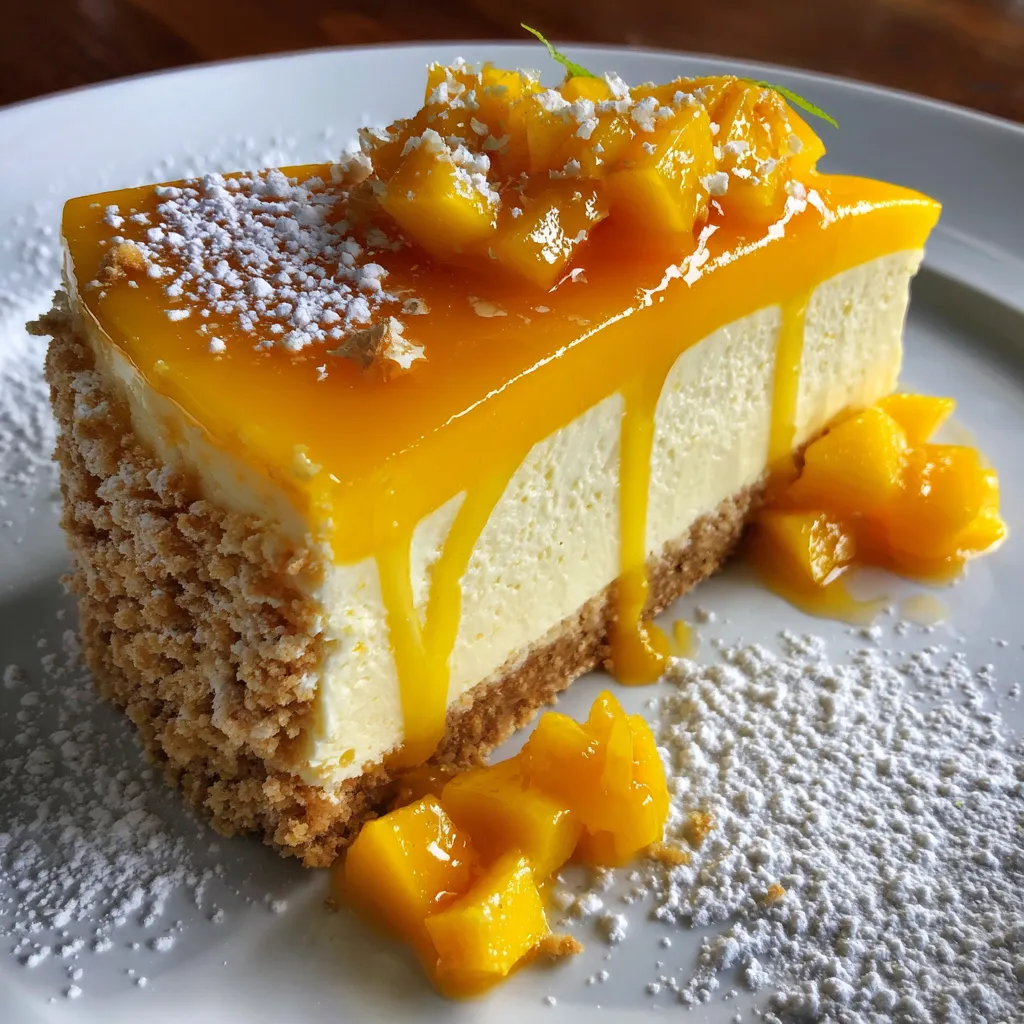

Mango Mousse Cake
Description
Silky mango mousse swirls into a buttery graham base, topped with juicy mango cubes that burst with sweetness and paired with cool, airy cream for a luscious treat.
Ingredients
Instructions
-
Preheat oven to 350°F and melt the butter in a small pan.
-
Mix graham cracker crumbs with melted butter and press firmly into the base of a 9-inch springform pan.
-
Bake the crust for 8 minutes then allow it to cool completely.
-
In a small bowl sprinkle gelatin over water and let it bloom for 5 minutes then warm gently until dissolved.
-
Whip the heavy cream with powdered sugar and vanilla until soft peaks form.
-
Gently fold mango puree and dissolved gelatin into the whipped cream until fully combined.
-
Pour the mango mousse over the cooled crust and smooth the top with a spatula.
-
Scatter diced mango over the mousse then refrigerate for at least 4 hours or until set.
-
Remove the cake from the pan, slice, and serve chilled.
Note
- Use ripe sweet mangoes for the best flavor and natural sweetness.
- Chill the cake thoroughly to ensure the mousse sets firmly.
- Adjust the sugar level in the mousse to suit your taste or the sweetness of the mangoes.
- You can top the cake with toasted coconut flakes or mint leaves for extra garnish.

