

If you’re craving a dinner that’s as effortless as it is irresistible, these One-Pot Teriyaki Noodles are calling your name. This recipe is like a warm hug in noodle form, marrying sweet and savory with just a hint of tang. You’ll love how everything comes together in a single pot or deep skillet, cutting down on dishes and boosting your kitchen karma. With only 15 minutes of prep time, you’ll find yourself free to savor the moment—whether that’s catching up on your favorite TV show or planning tomorrow’s to-do list—while the flavors build into their signature glossy coating.
Beyond its efficiency, this dish is a celebration of vibrant textures. Tender broccoli florets, crisp red bell pepper, and snappy snow peas join earthy mushrooms and sweet onions for a vegetable medley that never quits. As the garlic and ginger–kissed teriyaki-style sauce thickens around each strand of noodle, you’ll be transported to a flavor-packed corner of your own kitchen. The balance of honey, rice vinegar, and sesame oil gives you a sauce that’s silky yet complex, and the cornstarch slurry brings it all together. This savory-sweet harmony makes every bite feel indulgent—without weighing you down—perfect for a busy weeknight or a laid-back lunch that leaves you powered up without post-meal slump.
KEY INGREDIENTS IN ONE-POT TERIYAKI NOODLES
Every ingredient in this recipe plays a starring role, contributing to the symphony of flavors and textures that make these noodles so satisfying. From the base of long, slurpable noodles to the crunchy pops of fresh veggies, here’s what you’ll need and why each component matters.
- Spaghetti or your choice of noodles
Provides the canvas for the sauce to cling to. Whether you go classic spaghetti, chewy udon, or delicate rice noodles, you’ll get that perfect bite every time.
- Vegetable oil
Offers a neutral base to sauté your aromatics and veggies without overpowering the teriyaki flavors. It also helps prevent sticking as you build layers of taste.
- Onion
When thinly sliced and sautéed, it adds a subtle sweetness and depth of flavor that supports the richer notes of the sauce.
- Red bell pepper
Provides a burst of color and natural sweetness. Its crisp texture contrasts beautifully with the soft noodles.
- Broccoli florets
Bring a slightly bitter, earthy tone plus hearty crunch. They also soak up the sauce in the most delightful way.
- Garlic
Infuses the entire dish with a warm, aromatic punch. Minced garlic releases essential oils that form the backbone of savory notes.
- Mushrooms
Add an umami-packed chewiness that enhances the overall richness of the noodles.
- Snow peas
Keep a fresh snap and bright green hue, balancing the deeper flavors with a clean, vegetal lift.
- Soy sauce
Delivers that quintessential salty, umami foundation that makes teriyaki dishes truly shine.
- Honey
Brings natural sweetness and a sticky viscosity that helps the sauce glaze the veggies and noodles.
- Rice vinegar
Injects a mild tanginess to cut through the sweetness and round out the flavor profile.
- Sesame oil
Adds a toasty, nutty aroma, elevating the dish from simple noodles to an aromatic Asian-inspired masterpiece.
- Cornstarch mixture
Acts as the thickening agent, ensuring the sauce clings to every strand and vegetable.
- Green onions
Provide a fresh, slightly sharp garnish that adds both color and flavor at the end.
- Sesame seeds
Offer a subtle crunch and delicate, nutty accent when sprinkled on top.
- Salt and pepper
Essential seasonings to adjust and perfect the balance of sweet, tangy, and savory.
HOW TO MAKE ONE-POT TERIYAKI NOODLES
Let’s dive into the step-by-step magic that transforms everyday ingredients into a bowl of saucy satisfaction. Follow along carefully, and you’ll have a one-pot wonder on your table in just over half an hour.
1. Cook the spaghetti or your choice of noodles according to the package instructions. Once fully al dente, drain the noodles and set them aside to prevent them from absorbing too much moisture before you’re ready to combine everything.
2. In a large pot or deep skillet, heat the vegetable oil over medium heat. You want the pan hot enough to sizzle a drop of water but not so hot that the oil smokes.
3. Add the sliced onion and sauté for about 2 minutes, stirring occasionally until the edges turn translucent and just begin to caramelize. This gentle cooking unlocks its natural sweetness.
4. Toss in the red bell pepper, broccoli florets, minced garlic, and sliced mushrooms. Stir-fry for 3–4 minutes, keeping things moving so the vegetables become tender-crisp without losing their vibrant colors.
5. Stir in the snow peas and continue cooking for an additional 2 minutes to maintain their bright color and satisfying crunch.
6. In a small bowl, whisk together the soy sauce, honey, rice vinegar, sesame oil, and the cornstarch mixture. Ensure there are no lumps so the sauce develops a smooth consistency.
7. Pour the sauce over the sautéed vegetables, immediately stirring to coat everything evenly. Let it simmer for about 2–3 minutes until the sauce has thickened slightly and turned glossy.
8. Add the cooked noodles back into the pot, then gently toss everything together until every strand and veggie is luxuriously coated with that thickened sauce.
9. Serve hot, garnished with sliced green onions and sesame seeds for a final pop of freshness and texture.
SERVING SUGGESTIONS FOR ONE-POT TERIYAKI NOODLES
When these noodles come off the stovetop, you’ve got a versatile base ready to impress. Here are some fun ways to elevate your plating game, dial up the flavor, and tailor the meal to any occasion.
- Family-Style Feast
Dish out the noodles in a large serving bowl for a communal, share-and-pass experience. It’s perfect for casual dinners where everyone can scoop as much or as little as they like.
- Bento Box Lunch
Portion cooled noodles into lunch containers with dividers. Add a few slices of grilled chicken or tofu on the side, and tuck in some pickled vegetables for a convenient, Instagram-worthy midday meal.
- Protein Boost
Top each serving with sliced grilled chicken or pan-seared tofu. The additional protein takes these noodles from a light dinner to a hearty meal that keeps you full and fueled.
- Spicy Kick
Drizzle a swirl of Sriracha or sprinkle in red pepper flakes just before serving. The heat will contrast beautifully with the honey-sweet teriyaki glaze, creating an adventurous twist.
HOW TO STORE ONE-POT TERIYAKI NOODLES
Leftovers can be just as delightful as the first serving—if you store them correctly. Proper storage ensures that the noodles don’t clump, the vegetables stay crisp, and the sauce maintains its luscious texture. Below are some key tips to keep your teriyaki noodles as fresh as possible for days to come.
- Refrigerate in Airtight Containers
Transfer cooled noodles into a sealable container, squeezing out excess air. They’ll keep reliably for up to 3–4 days. When you’re ready to reheat, sprinkle a few drops of water and warm gently to prevent drying out.
- Freeze in Portions
For longer storage, freeze individual portions in freezer-safe bags or containers. Lay bags flat to save space. Thaw overnight in the fridge before reheating, then microwave or reheat on the stovetop with a splash of water.
- Store Sauce Separately
If you anticipate leftovers, you can reserve the sauce on its own. Combine noodles and veggies, then ladle sauce into a smaller container. When reheating, pour the sauce over and toss to re-glaze.
- Refresh with Fresh Garnishes
Keep sliced green onions and sesame seeds separate until serving. Adding them at the last minute revives the dish’s crunch and color, making leftover noodles feel freshly made.
CONCLUSION
From start to finish, these One-Pot Teriyaki Noodles balance speed, flavor, and minimal cleanup in a way that even the busiest home cooks can appreciate. We’ve walked through every step—from boiling your favorite noodles to whisking together that sweet-savory sauce, to the final toss that leaves every bite perfectly coated and ready to enjoy. You can print this article and save it for later, slotting it into your personal recipe binder or tucking it into a kitchen album, so you always have a go-to quick dinner plan. Don’t forget that you can also find a FAQ below where common questions about substitutions, dietary adjustments, and reheating tips are answered in detail.
I’d love to hear how these noodles turned out for you. If you tried adding spicy chili oil or swapping in rice noodles, share your thoughts! Have questions about ingredient swaps, cooking times, or troubleshooting? Drop a comment and let me know. Your feedback not only helps me refine the recipe, but also guides fellow home cooks who are eager to whip up their own bowl of teriyaki goodness.
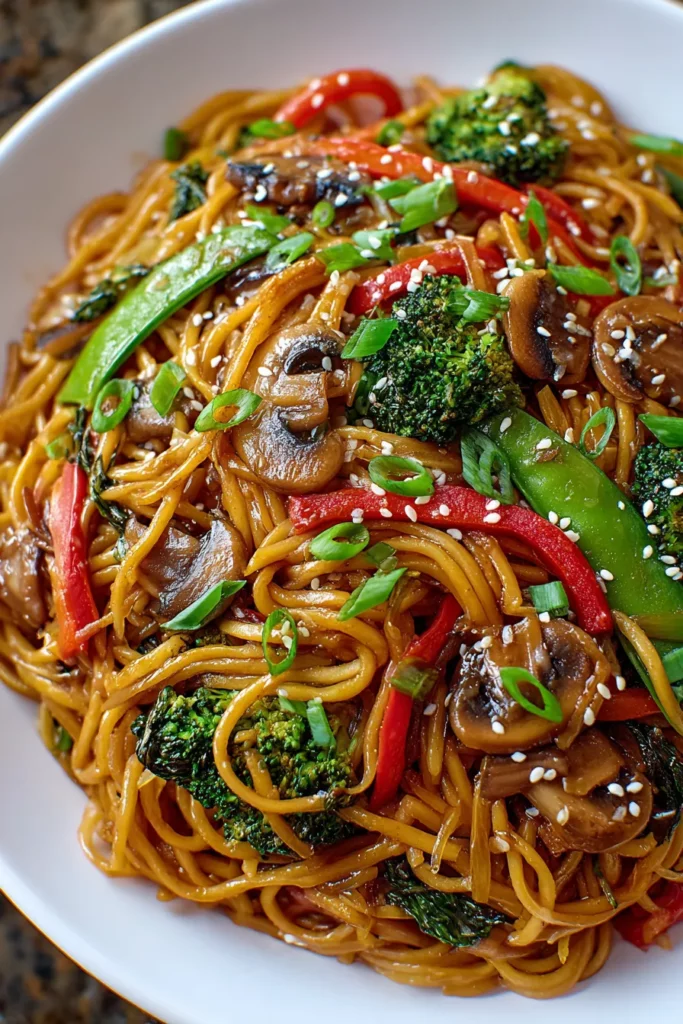

One-Pot Teriyaki Noodles
Description
Bursting with vibrant veggies and coated in a sweet, savory teriyaki sauce, these one-pot noodles are a quick and satisfying meal for busy weeknights.
Ingredients
Instructions
-
Cook the spaghetti or your choice of noodles according to the package instructions. Drain and set aside.
-
In a large pot or deep skillet, heat vegetable oil over medium heat.
-
Add the sliced onion and sauté for about 2 minutes until translucent.
-
Add the red bell pepper, broccoli florets, minced garlic, and sliced mushrooms. Stir-fry for 3-4 minutes, until vegetables are tender-crisp.
-
Stir in the snow peas and cook for an additional 2 minutes.
-
In a small bowl, whisk together soy sauce, honey, rice vinegar, sesame oil, and the cornstarch mixture.
-
Pour the sauce over the sautéed vegetables and stir well to coat everything evenly in the sauce. Allow it to simmer for about 2-3 minutes until the sauce thickens slightly.
-
Add the cooked noodles to the pot, and gently toss everything together until the noodles are evenly coated with the sauce and mixed with the vegetables.
-
Serve hot, garnished with sliced green onions and sesame seeds.
Note
- You can substitute spaghetti with rice noodles or udon noodles for a different texture.
- Add your choice of protein, such as grilled chicken or tofu, for a more filling meal.
- For a spicier kick, add a pinch of red pepper flakes or Sriracha sauce.
- Make it gluten-free by using gluten-free noodles and tamari instead of soy sauce.

