

These Peanut Chili Oil Noodles pack a perfect punch of spicy heat and creamy sweetness, smothering each strand with a glossy, tongue-tingling sauce that’s impossible to resist. Fresh garlic and grated ginger add a lively zing, while sliced green onions and sesame seeds deliver a satisfying crunch. This beginner-friendly, vegan noodle dish comes together in just about 20 minutes, making it the ultimate quick noodle recipe for busy weeknight dinners. Grab your chopsticks and get ready to indulge in a bowl of pure comfort with an Asian-inspired twist!
Key Ingredients
Before diving in, let’s gather the simple, flavor-packed ingredients that make these noodles shine:
- 200 grams dried wheat noodles: Provides the hearty base that holds up to the rich, spicy peanut-chili sauce.
- 2 tablespoons smooth peanut butter: Adds creamy, nutty depth and helps emulsify the sauce.
- 2 tablespoons chili oil: Infuses fiery heat and vibrant color into every bite.
- 1 tablespoon soy sauce: Brings savory umami and balances the spice with a touch of saltiness.
- 1 teaspoon sugar: Rounds out the flavor profile with a hint of sweetness.
- 1 teaspoon rice vinegar: Offers bright acidity to lift and brighten the sauce.
- 1 clove garlic, minced: Delivers aromatic sharpness and savory complexity.
- 1 teaspoon ginger, grated: Lends a zesty, warm spiciness that complements the chili oil.
- 1 tablespoon sesame oil: Contributes a toasty, fragrant finish and silky mouthfeel.
- 1 green onion, sliced: Provides fresh, crisp contrast and a pop of color.
- 1 tablespoon sesame seeds: Adds nutty crunch and visual appeal as a garnish.
- 50 milliliters reserved noodle cooking water: Thins and binds the sauce for an even, glossy coating.
How To Make Peanut Chili Oil Noodles
Whipping up these noodles is a breeze—just cook the strands until perfectly tender, whip up a silky peanut-chili sauce, and toss everything together for a delightfully slurpable dish. Follow these steps, and you’ll have a vibrant, restaurant-worthy bowl in no time.
1. Bring a large pot of water to a rolling boil over high heat. Add the noodles and cook according to package instructions until al dente, stirring occasionally to prevent sticking.
2. Before draining, reserve 50 milliliters of the hot cooking water, then drain the noodles in a colander and set aside.
3. In a large mixing bowl, whisk together peanut butter, chili oil, soy sauce, sugar, rice vinegar, minced garlic, grated ginger, and sesame oil until a smooth sauce forms. Add the reserved cooking water slowly, whisking constantly to reach a silky, pourable consistency.
4. Immediately add the hot noodles to the bowl and toss thoroughly, ensuring each strand is evenly coated with the luscious sauce.
5. Divide the coated noodles between serving bowls, then top with the sliced green onion and sesame seeds for freshness and crunch.
6. Serve the noodles immediately while still warm, so the sauce remains glossy and clings beautifully.
Serving Suggestions
These noodles taste fantastic on their own, but pairing them thoughtfully can elevate your meal from great to unforgettable. Here are a few ideas to round out your dinner:
- Serve alongside a crisp cucumber salad dressed with rice vinegar and a pinch of sugar for a cool, refreshing contrast.
- Top with grilled chicken strips or pan-fried tofu to add satisfying protein and balance the spice.
- Garnish with a drizzle of extra chili oil and a sprinkle of fresh cilantro for an herbaceous, spicy finish.
- Pair with a side of lightly steamed broccoli florets or snap peas to introduce bright color and crunch to your bowl.
Tips For Perfect Peanut Chili Oil Noodles
Mastering this recipe is all about balancing heat, creaminess, and texture. Here are some friendly pointers to get it just right:
- Reserved noodle water helps thin and bind the sauce for even coating.
- Adjust the amount of chili oil to suit your preferred spice level.
- Substitute tahini for peanut butter for a nut-free variation.
- Best enjoyed fresh; leftovers can be refrigerated but may firm up.
How To Store It
If you have any leftovers (though it’s hard to stop at one bowl!), here’s how to keep them tasting their best:
- Refrigerate in an airtight container for up to 2 days—you’ll notice the sauce firms up a bit as it chills.
- Reheat in a skillet over low heat, adding a splash of water or oil to loosen the sauce and restore that fresh, glossy texture.
- Microwave briefly in short intervals, stirring halfway and adding a teaspoon of water if needed to revive the creaminess.
Frequently Asked Questions
Here are answers to some of the most common questions about these Peanut Chili Oil Noodles:
- How long does it take to prepare and cook these Peanut Chili Oil Noodles?
It takes about 20 to 25 minutes from start to finish. That includes 8–10 minutes to bring water to a boil and cook the noodles al dente, a few minutes to whisk together the sauce ingredients, and another few minutes to toss and garnish before serving.
- Why is it important to reserve noodle cooking water, and how much should I use?
The reserved cooking water contains starch that helps thin and emulsify the sauce so it clings evenly to each noodle. Reserve about 50 milliliters (roughly 3–4 tablespoons) before draining. Add it gradually as you whisk the sauce until you reach a smooth, pourable consistency.
- My sauce turned out too thick or too thin. How can I fix the consistency?
If the sauce is too thick, whisk in more reserved noodle water, a tablespoon at a time, until it’s silky and coats the noodles. If it’s too thin, add a bit more peanut butter or reduce additional water. Adjust slowly and taste as you go to maintain balance.
- How can I adjust the spice level if the noodles are too hot or not spicy enough?
To reduce heat, start with just one tablespoon of chili oil and add more after tossing the noodles, tasting until you reach your desired kick. To increase heat, stir in extra chili oil or a pinch of chili flakes. You can also include a dash of freshly chopped chili pepper for added freshness.
- What substitutions or swaps can I make for dietary restrictions?
For a nut-free version, replace peanut butter with tahini or sunflower seed butter. To make it gluten-free, use rice or buckwheat noodles labeled gluten-free and swap in tamari or coconut aminos for soy sauce. You can use agave or honey in place of sugar for a natural sweetener.
- Can I add proteins or vegetables to make this a more substantial meal?
Absolutely. Grilled chicken strips, sautéed shrimp, or pan-fried tofu all pair nicely. For vegetables, toss in blanched broccoli florets, julienned carrots, snap peas, or baby bok choy just before serving to keep them crisp-tender and colorful.
- How should I store and reheat leftovers?
Store any leftovers in an airtight container in the refrigerator for up to 2 days. To reheat, gently warm in a skillet over low heat, adding a splash of water or oil to loosen the sauce. You can also microwave briefly, stirring halfway, and add a teaspoon of water if needed to revive the creaminess.
- Why did my sauce split or become grainy, and how can I prevent it?
A split or grainy sauce often happens when ingredients are too cold or added too quickly. To prevent this, ensure all ingredients are at room temperature and whisk the peanut butter and oil slowly together before adding liquids. Incorporate the cooking water gradually while whisking vigorously for a smooth emulsion.
What Makes This Special
What really sets these Peanut Chili Oil Noodles apart is their perfect harmony of spicy, sweet, and savory flavors all in one bite. The silky sauce clings beautifully to each noodle thanks to that genius trick of reserved cooking water, while fresh garlic, ginger, and sesame create layers of complexity. It’s so easy and fun to make that you’ll want to print this recipe and stick it on your fridge for instant access. Give it a try, and let me know how it turns out or if you have any questions—I’m here to help you slurp in style!
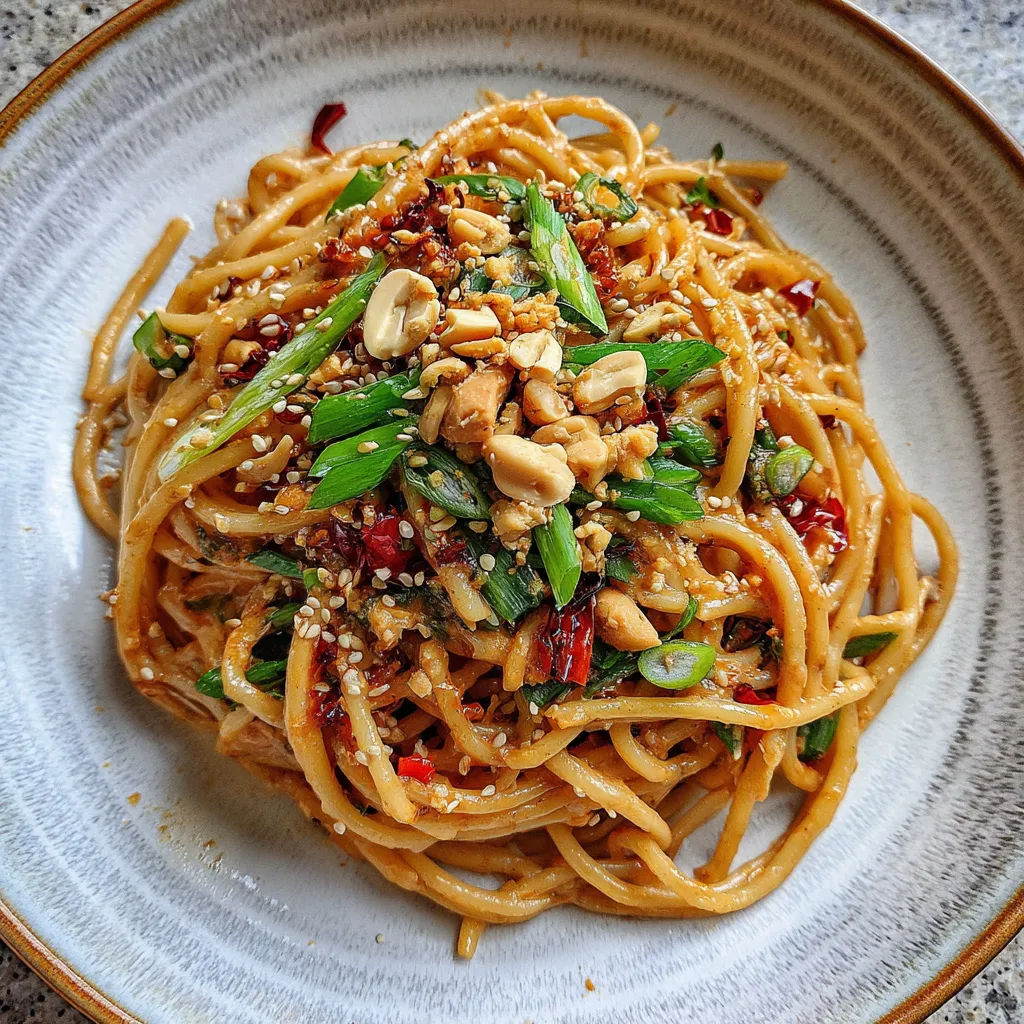

Peanut Chili Oil Noodles
Description
Silky peanut butter and fiery chili oil merge into a glossy, tongue-tingling sauce that warms each noodle. Fresh garlic, ginger, and sesame dance in every bite, topped with scallions and sesame seeds for crunch.
Ingredients
Instructions
-
Bring a large pot of water to a boil and cook the noodles according to package instructions until al dente.
-
Reserve 50 milliliters of the hot cooking water then drain the noodles.
-
In a large bowl whisk together peanut butter, chili oil, soy sauce, sugar, rice vinegar, garlic, ginger and sesame oil until a smooth sauce forms, adding reserved water slowly to reach desired consistency.
-
Add the hot noodles to the bowl and toss thoroughly to coat each strand with the sauce.
-
Divide noodles between serving bowls and top with sliced green onion and sesame seeds.
-
Serve immediately while still warm.
Note
- Reserved noodle water helps thin and bind the sauce for even coating.
- Adjust the amount of chili oil to suit your preferred spice level.
- Substitute tahini for peanut butter for a nut-free variation.
- Best enjoyed fresh; leftovers can be refrigerated but may firm up.

