

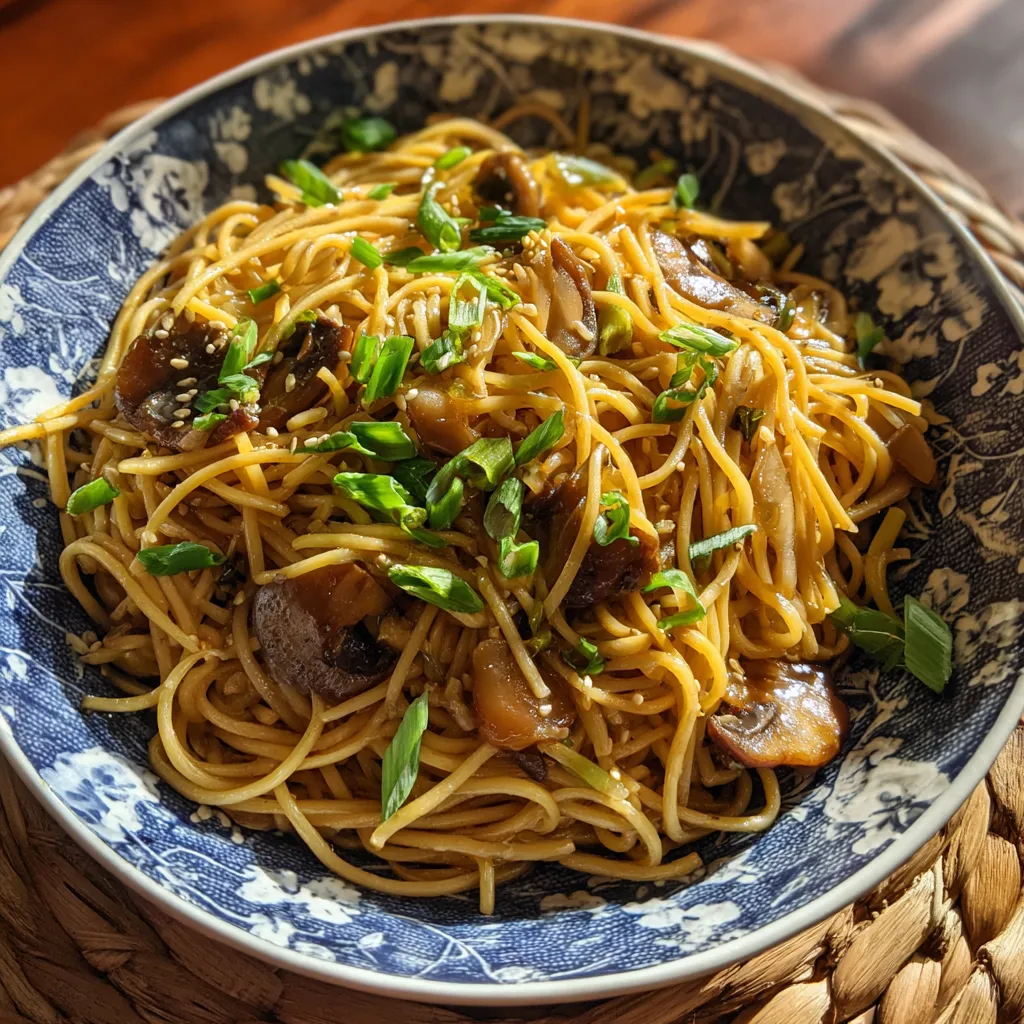
Twirl glossy, sauce-kissed lo mein noodles bursting with garlicky aroma in just minutes, a simple harmony of soy, sesame, and tender strands that make Plain Lo Mein Noodles a go-to for any busy night. These lo mein strands glisten in a mix of soy and sesame as garlic sizzles in oil, each bite carrying a whisper of green onion freshness. Ready in under 20 minutes, this beginner-friendly dish proves that quick, flavorful meals can be effortless and utterly satisfying.
Key Ingredients
Gather your kitchen staples to whip up these Plain Lo Mein Noodles. Each ingredient plays a key role in creating that glossy, flavorful finish.
- 8 oz lo mein noodles: The soft, chewy base that soaks up every drop of soy and sesame for maximum slurp appeal.
- 2 tbsp vegetable oil: A neutral-tasting oil that helps sauté garlic quickly without burning.
- 2 cloves garlic, minced: Adds a punch of savory flavor and fragrant warmth to the noodles.
- 2 tbsp soy sauce: Brings salty, umami depth and that signature dark hue to the dish.
- 1 tsp sesame oil: Provides a nutty aroma and final flourish of authentic Asian flavor.
- 1/4 tsp salt: Fine-tunes the overall seasoning, balancing the soy sauce.
- 1/4 tsp black pepper: Offers a gentle heat and peppery kick.
- 2 stalks green onions, chopped: Delivers a fresh, oniony crunch and vibrant color at the finish.
How To Make Plain Lo Mein Noodles
Let’s dive into how to cook these Plain Lo Mein Noodles step by step. You’ll boil the noodles to al dente perfection, then stir-fry with aromatic garlic and flavorful sauces. In just a handful of steps, you’ll learn how to achieve perfectly coated, glossy noodles that carry every ounce of soy, sesame, and green onion goodness. Follow these instructions closely, and get ready to twirl your way to a satisfying bowl of noodles.
1. Bring a large pot of water to a rolling boil and cook the lo mein noodles according to package instructions until al dente, ensuring they’re slightly firm to the bite.
2. Drain the noodles in a colander and rinse under cold water to stop cooking; this removes excess starch and prevents clumping. Set aside to drain fully.
3. Heat the vegetable oil in a large skillet or wok over medium-high heat. Add the minced garlic and sauté until fragrant, about 30 seconds—avoid browning to keep it sweet and aromatic.
4. Add the cooked noodles, soy sauce, sesame oil, salt, and pepper to the hot skillet. Toss constantly with tongs or a spatula so every strand is evenly coated in the sauce.
5. Stir in the chopped green onions and cook for an additional minute, letting their mild bite infuse into the noodles while retaining crunch.
6. Transfer the noodles to a serving dish, pile them high, and serve immediately for optimal texture and flavor.
Serving Suggestions
Plain Lo Mein Noodles are a versatile canvas for a variety of pairings and presentations. Whether as a stand-alone main or a delightful side, these ideas will take your meal from humble to memorable.
- Serve alongside crispy spring rolls and a small bowl of sweet chili sauce for a complete appetizer experience.
- Top with grilled chicken or seared shrimp to turn it into a hearty protein-packed entrée.
- Garnish with a drizzle of chili oil and a sprinkle of toasted sesame seeds for extra heat and crunch.
- Pair with a side of quick-pickled cucumbers or steamed broccoli to add freshness and balance.
Tips For Perfect Plain Lo Mein Noodles
Mastering Plain Lo Mein Noodles is all about timing, heat, and ingredient quality. With these friendly pointers, you’ll elevate your weekday stir-fry game effortlessly. Keep your noodles al dente, your wok piping hot, and your garnishes ready—then watch how a few small tweaks make a world of difference.
- For a gluten-free option, use rice noodles instead of traditional egg-based lo mein noodles.
- Adjust the amount of soy sauce to suit your preferred level of saltiness—start with less and add more to taste.
- For added flavor and texture, toss in steamed vegetables or cooked proteins right before the final minute of cooking.
- Lo mein is best enjoyed fresh, as the noodles can become soggy if left to sit too long.
How To Store It
If you happen to have leftovers, proper storage will help maintain as much of that fresh-from-the-wok appeal as possible. Follow these simple methods to keep your lo mein firm and flavorful for your next quick meal.
- Store in an airtight container in the refrigerator for up to two days to preserve texture and flavor.
- When packing, let the noodles cool slightly so condensation doesn’t make them soggy inside the container.
- To reheat, warm a drizzle of oil in a skillet over medium-high heat, add the noodles, and toss until heated through; a splash of water or soy sauce can refresh the moisture.
- Avoid freezing if possible—thawed stir-fried noodles can become overly soft and lose their signature bite.
Frequently Asked Questions
Here are quick answers to some common questions about Plain Lo Mein Noodles:
- Q: How long does it take to prepare and cook this plain lo mein noodles?
A: It takes about 15 to 20 minutes total, including 8 to 10 minutes to boil and rinse the noodles until al dente, plus 5 to 7 minutes to sauté the garlic, toss in sauces, and finish with green onions.
- Q: Can I substitute the lo mein noodles if I need a gluten-free option?
A: Yes, for a gluten-free option you can replace the traditional wheat-based lo mein noodles with rice noodles. Cook them according to package instructions until al dente, rinse under cold water, then follow the same stir-fry steps.
- Q: Why is it important to rinse the noodles under cold water after cooking?
A: Rinsing under cold water stops the cooking process, prevents the noodles from becoming overcooked and mushy, and removes excess starch, which helps them stay separate and less sticky during the stir-fry.
- Q: How can I prevent the noodles from becoming soggy in this recipe?
A: To keep the noodles firm, cook them just until al dente, rinse thoroughly, and drain well. Use a hot skillet or wok so the noodles heat quickly and absorb sauces without sitting and steaming, which can lead to a softer texture.
- Q: What proteins and vegetables work best if I want to add them for extra flavor and texture?
A: You can toss in bite-sized steamed or quickly sautéed vegetables such as broccoli florets, carrot strips, snow peas, or bell peppers. For proteins, cooked chicken slices, shrimp, tofu cubes, or thinly sliced beef work well. Add them to the skillet before or with the noodles to heat through.
- Q: How should I store and reheat leftovers to maintain the best texture?
A: Store leftovers in an airtight container in the refrigerator for up to two days. To reheat, warm a drizzle of oil in a skillet over medium-high heat, add the noodles, and toss until heated through; you can add a splash of soy sauce or water if they seem dry.
- Q: Can I adjust the flavor if I prefer less salt or a different taste profile?
A: You can reduce the amount of soy sauce or switch to a low-sodium version to control saltiness. Swapping sesame oil for toasted sesame seeds, adding a splash of rice vinegar, or mixing in chili paste can also tailor the dish to your personal taste.
What Makes This Special
What makes Plain Lo Mein Noodles stand out is its effortless balance of everyday pantry items—lo mein noodles, garlic, soy, and sesame—all coming together in a mere 20 minutes. The glossy coating, subtle green onion crunch, and customizable flair mean you can whip it up on any weeknight without breaking a sweat. It’s playful, flexible, and endlessly tweakable—just how home cooking should be. Feel free to print this recipe, stash it in your binder, and drop a comment or question if you give it a whirl or need a hand. Enjoy your noodles!

Plain Lo Mein Noodles
Description
These lo mein strands glisten in a mix of soy and sesame as garlic sizzles in oil. Each tender bite carries a whisper of green onion, offering a quick, flavorful stir-fry side or light main any night.
Ingredients
Instructions
-
Bring a large pot of water to a boil and cook the lo mein noodles according to package instructions until al dente.
-
Drain the noodles and rinse under cold water to stop cooking, then set aside.
-
Heat the vegetable oil in a large skillet or wok over medium-high heat and sauté the garlic until fragrant, about 30 seconds.
-
Add the cooked noodles, soy sauce, sesame oil, salt, and pepper to the skillet and toss to combine.
-
Stir in the green onions and cook for an additional minute, ensuring the noodles are evenly coated.
-
Transfer to a serving dish and serve immediately.
Note
- For a gluten-free option, use rice noodles instead of traditional egg-based lo mein noodles.
- Adjust the amount of soy sauce to suit your preferred level of saltiness.
- For added flavor and texture, toss in steamed vegetables or cooked proteins.
- Lo mein is best enjoyed fresh, as the noodles can become soggy if left to sit.

