

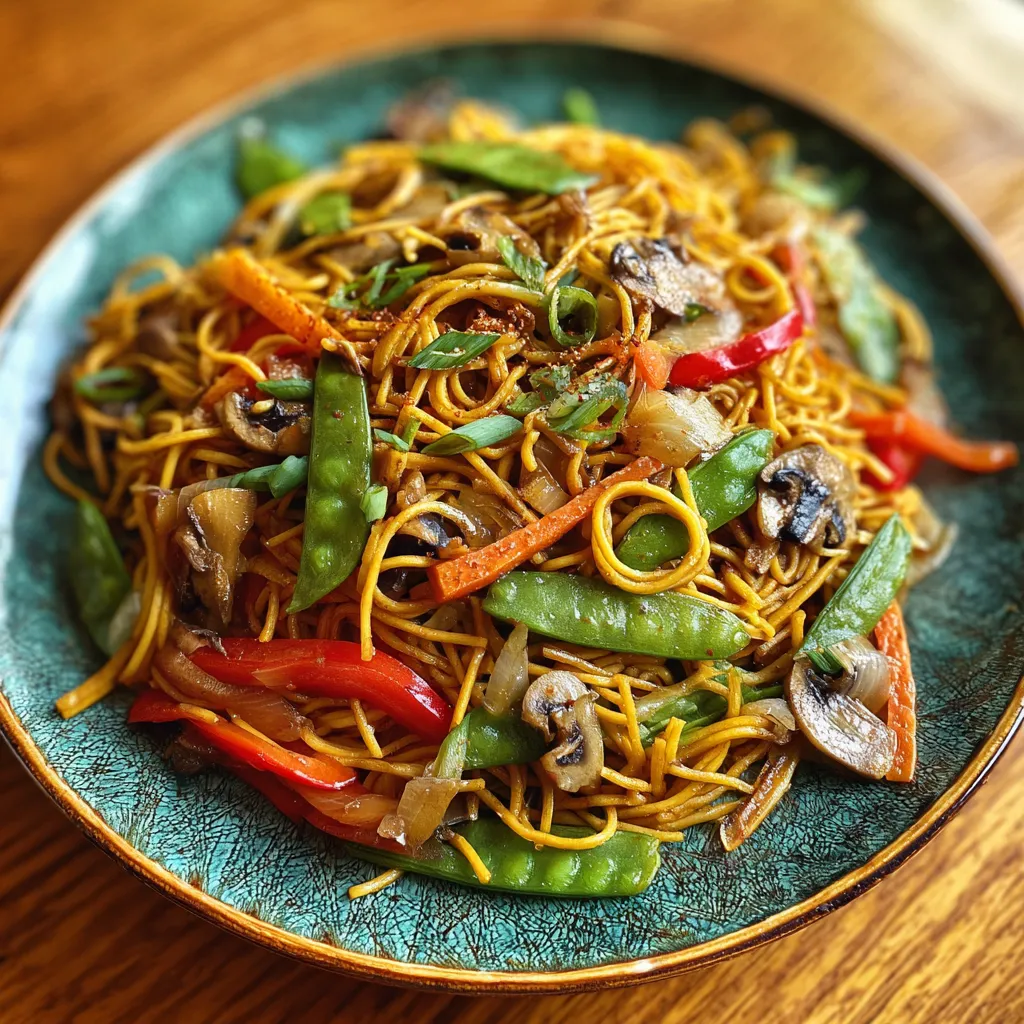
Savory Chinese Stir-Fried Lo Mein brings together tender lo mein strands coated in a savory blend of soy, oyster, and sesame oils, twirling around crisp-tender carrots, peppers, mushrooms, and snow peas. This quick-dinner delight delivers vibrant color and fragrant garlic and ginger in every bite, perfect for an intermediate home cook looking for an easy yet impressive meal. Ready in minutes, it’s the ultimate comfort food with a gourmet twist that’ll have everyone gathering around the table. Let’s dive in and learn to create this sizzling wok favorite at home!
Key Ingredients
Get ready to gather all the simple yet flavorful building blocks for this Savory Chinese Stir-Fried Lo Mein:
- 8 ounces lo mein noodles: Tender lo mein strands that soak up every drop of the savory sauce.
- 2 tablespoons vegetable oil: High-heat cooking oil that prevents sticking and ensures a crisp-tender stir-fry.
- 2 cloves garlic, minced: Aromatic punch that infuses the dish with classic Chinese flavor.
- 1 tablespoon fresh ginger, minced: Zesty warmth that brightens and balances the savory sauce.
- 1 small carrot, julienned: Colorful crunch for texture and a hint of natural sweetness.
- 1/2 cup red bell pepper, thinly sliced: Vibrant sweetness and color contrast in every bite.
- 1/2 cup onion, thinly sliced: Sweet base that caramelizes slightly while stir-frying.
- 1/2 cup mushrooms, sliced: Earthy richness that deepens the overall flavor profile.
- 1/2 cup snow peas: Crisp, fresh snap that complements the tender noodles.
- 1/4 cup low-sodium soy sauce: Salty umami backbone of the glossy sauce.
- 2 tablespoons oyster sauce: Rich, slightly sweet umami that gives the dish depth.
- 1 tablespoon sesame oil: Nutty aroma and finishing oil for extra flavor.
- 2 tablespoons chicken broth: Liquid base that helps bring the sauce together.
- 1 teaspoon sugar: Balances saltiness with a touch of sweet harmony.
- 1/4 teaspoon crushed red pepper flakes: Gentle heat to wake up the palate.
- 2 green onions, sliced: Fresh garnish that adds a pop of color and mild onion flavor.
How To Make Savory Chinese Stir-Fried Lo Mein
Stir-frying is all about speed, high heat, and quick movements to keep textures lively. Here’s how to transform those simple ingredients into a restaurant-worthy meal right in your own kitchen. Follow each step closely and use bold techniques to get that perfect mix of tender noodles and crisp veggies.
1. Cook the lo mein noodles according to package instructions in a large pot of boiling, salted water until just al dente. Drain thoroughly, then toss with 1 teaspoon of vegetable oil to prevent sticking and set aside.
2. Heat the remaining vegetable oil in a wok or large skillet over high heat until it starts to shimmer, ensuring your ingredients will sizzle on contact.
3. Add the garlic and ginger to the hot pan and stir-fry for about 30 seconds, moving constantly until fragrant but not browned.
4. Toss in the carrot, bell pepper, onion, mushrooms, and snow peas, and stir-fry for 3 to 4 minutes, stirring continuously so the vegetables become crisp-tender without losing their color.
5. In a small bowl, whisk together soy sauce, oyster sauce, sesame oil, chicken broth, sugar, and crushed red pepper flakes until well combined, creating a glossy, balanced sauce.
6. Return the noodles to the wok and pour the sauce mixture over them. Toss continuously with tongs or a spatula to coat every strand and heat through for about 2 minutes.
7. Remove the wok from heat and stir in the sliced green onions, giving one final toss to distribute the fresh onion flavor.
8. Transfer the stir-fried lo mein to a serving platter and serve immediately while it’s hot and inviting.
Serving Suggestions
Once your Savory Chinese Stir-Fried Lo Mein is ready, here are some fun ways to present and enjoy it:
- Serve in heated shallow bowls to keep every bite warm and steamy from start to finish.
- Garnish with a sprinkle of toasted sesame seeds and extra green onion for a pop of color and crunch.
- Offer a side of chili oil or Sriracha so guests can customize the heat to their liking.
- Pair with steamed dumplings or a simple cucumber salad to round out a satisfying Asian-inspired meal.
Tips For Perfect Savory Chinese Stir-Fried Lo Mein
Nailing stir-fry means mastering a few key tricks and understanding how each ingredient behaves. Follow these insider tips to ensure your lo mein turns out just right every time:
- Use a well-seasoned wok or nonstick skillet and high heat for the best stir-fry texture.
- Do not overcook the noodles or vegetables; they should remain slightly firm.
- Substitute or add cooked chicken, shrimp, or tofu for extra protein.
- Adjust soy sauce and oyster sauce to taste if a saltier or sweeter profile is desired.
How To Store It
Leftover lo mein can be just as delicious the next day if stored properly. Follow these suggestions to maintain its fresh flavor and texture:
- Refrigerate in an airtight container once cooled completely to room temperature, storing for up to 2 days.
- Portion before storing if you plan to grab individual servings for quick lunches or dinners throughout the week.
- Freeze for longer storage by transferring cooled lo mein into freezer-safe bags, removing as much air as possible, and sealing tightly.
- Thaw overnight in the fridge before reheating gently in a skillet with a splash of broth or oil to revive the texture.
Frequently Asked Questions
Here are quick answers to common questions about making and enjoying this dish:
- How can I prevent the lo mein noodles from clumping together after cooking?
After cooking the lo mein noodles until just al dente, drain them thoroughly and immediately toss with about 1 teaspoon of vegetable oil. This light coating keeps them separated and prevents sticking when you add them back into the hot wok.
- What’s the best way to achieve crisp-tender vegetables in this stir-fry?
Use high heat and cut all vegetables into uniform, thin slices or julienne strips so they cook evenly. Add denser vegetables like carrots first, then quickly follow with peppers, onions, mushrooms, and snow peas, stir-frying each batch for just 3–4 minutes total to maintain a slight bite.
- Can I substitute or add protein to this recipe, and how should I prepare it?
Yes. For chicken or shrimp, season lightly with salt and pepper, then stir-fry separately over high heat until just cooked through, about 2–3 minutes per side, and set aside. For tofu, press and cube extra-firm tofu, toss in a little cornstarch, then pan-fry until golden. Return your chosen protein to the wok when you add the sauce and noodles to heat through.
- My household is sensitive to sodium. How can I adjust the sauce without losing flavor?
Reduce the low-sodium soy sauce to 3 tablespoons and use a light oyster sauce if possible. Boost flavor by adding a splash of rice vinegar or a pinch of garlic powder. You can also increase the fresh ginger and toss in a few drops of chili oil for complexity without extra salt.
- What can I use if I don’t have oyster sauce on hand?
Substitute with hoisin sauce mixed with a teaspoon of soy sauce to balance sweetness and saltiness. Alternatively, blend equal parts soy sauce and mushroom broth for an umami boost, then add a pinch of sugar to mimic oyster sauce’s slight sweetness.
- How should I store leftovers, and what’s the best way to reheat them?
Cool leftovers quickly and transfer to an airtight container, storing in the fridge for up to 2 days. To reheat, warm a tablespoon of oil in a skillet over medium-high heat, add the noodles and vegetables, and stir-fry for 2–3 minutes until heated through, adding a splash of chicken broth or water if needed to loosen the sauce.
- How can I adjust the heat level to suit different tastes?
The recipe calls for 1/4 teaspoon crushed red pepper flakes for mild heat. For a spicier dish, increase to 1/2 teaspoon or stir in a drizzle of Sriracha. To keep it mild, omit the red pepper flakes and finish with just a light crack of black pepper instead.
What Makes This Special
Nothing beats the satisfying rhythm of tossing perfectly al dente noodles with crisp, vibrant veggies and that glossy, umami-packed sauce—this Savory Chinese Stir-Fried Lo Mein has it all. The combination of soy, oyster, and sesame oils delivers layers of flavor while garlic and ginger keep things lively. Whether you’re sharing this at a cozy weeknight dinner or printing out the recipe to save for your next stir-fry craving, you’ll find it’s a crowd-pleaser every time. Let me know how it went, share your tweaks, or drop any questions below!

Savory Chinese Stir-Fried Lo Mein
Description
Tender lo mein strands coated in a savory blend of soy, oyster, and sesame oils mingle with crisp-tender carrots, peppers, mushrooms, and snow peas in a colorful, fragrant stir-fry ready in minutes.
Ingredients
Instructions
-
Cook the lo mein noodles according to package instructions until just al dente, then drain and toss with 1 teaspoon of vegetable oil to prevent sticking.
-
Heat the remaining vegetable oil in a wok or large skillet over high heat until shimmering.
-
Add garlic and ginger and stir-fry for about 30 seconds until fragrant.
-
Add carrot, bell pepper, onion, mushrooms, and snow peas and stir-fry for 3 to 4 minutes until vegetables are crisp-tender.
-
Stir together soy sauce, oyster sauce, sesame oil, chicken broth, sugar, and crushed red pepper flakes in a small bowl.
-
Return the noodles to the wok and pour the sauce mixture over them, tossing continuously to coat evenly and heat through, about 2 minutes.
-
Remove from heat and add the sliced green onions, tossing once more to combine.
-
Transfer to a serving platter and serve immediately.
Note
- Use a well-seasoned wok or nonstick skillet and high heat for the best stir-fry texture.
- Do not overcook the noodles or vegetables; they should remain slightly firm.
- Substitute or add cooked chicken, shrimp, or tofu for extra protein.
- Adjust soy sauce and oyster sauce to taste if a saltier or sweeter profile is desired.

