

Savor the vibrant flavors of Korea in every bite of these spicy gochujang beef noodles! This dish brings together tender strips of beef sirloin or ribeye, perfectly coated in a bold gochujang-based marinade, then stir-fried with crisp vegetables and chewy ramen noodles. Each forkful bursts with that signature sweet-heat from the Korean chili paste, balanced by savory soy and nutty sesame notes. It’s a dish that feels both comforting and exciting—exactly what you need for a midweek pick-me-up or an impressive weekend dinner for friends.
These spicy Korean gochujang beef noodles are a delightful blend of tender beef, fresh veggies, and a savory sauce that packs a punch. Perfect for a quick weeknight dinner, this recipe takes around 30 minutes to prepare, 15 minutes to cook, and gives you about 15 minutes of marinade rest time to let those flavors meld. Despite its “Intermediate” difficulty level, the steps are approachable for any home cook ready to experiment with homemade Asian cuisine. Get ready to dive into a bowlful of bold colors, tantalizing textures, and truly unforgettable taste!
KEY INGREDIENTS IN SPICY KOREAN GOCHUJANG BEEF NOODLES
Before we dive into the cooking process, let’s break down the star players that make this recipe so irresistible. Each ingredient has a special role, working in harmony to create layers of flavor, texture, and color.
- Beef sirloin or ribeye
This thinly sliced cut offers a tender, juicy bite that soaks up the gochujang marinade beautifully. Its natural marbling ensures each piece is rich and flavorful.
- Ramen noodles
Whether you opt for dried or fresh, these springy noodles provide the perfect canvas for the savory sauce and tender beef, adding a comforting, chewy texture.
- Gochujang
Korea’s signature chili paste brings a deep, complex heat balanced by subtle sweetness. It’s the backbone of the sauce, giving the dish its characteristic kick.
- Soy sauce
A splash of soy sauce contributes umami depth and a gentle saltiness, brightening the flavors and tying everything together.
- Sesame oil
Just a drizzle adds a toasty aroma and smooth, nutty finish that elevates the overall richness of the noodles.
- Vegetable oil
Used for stir-frying, this neutral oil keeps the beef and vegetables from sticking while allowing them to brown beautifully.
- Garlic
Minced garlic infuses the oil with pungent, aromatic flavor, creating a fragrant base that complements the spicy gochujang.
- Ginger
Fresh grated ginger adds a zesty, slightly peppery note that cuts through the richness and brightens the dish.
- Onion
Thinly sliced onion softens as it cooks, releasing natural sweetness and helping to build a flavorful foundation.
- Red bell pepper
These vibrant strips offer a mild sweetness and a pop of color, creating a pleasing contrast against the rich beef.
- Carrot
Julienned carrot adds subtle sweetness and crunch, while its bright hue gives the dish visual appeal.
- Green onions
Chopped and sprinkled on top, they lend fresh, sharp notes and a burst of green that completes the presentation.
- Sesame seeds
A final sprinkle provides delightful crunch and reinforces that toasty sesame flavor.
- Salt and pepper
Simple seasonings to taste, ensuring every element is perfectly balanced.
HOW TO MAKE SPICY KOREAN GOCHUJANG BEEF NOODLES
Here’s where the magic happens: turning simple ingredients into a fiery, flavor-packed noodle bowl. Follow these step-by-step instructions to nail each technique, from boiling noodles to stir-frying beef and veggies until everything comes together in saucy harmony.
1. Cook the ramen noodles according to package instructions. Bring a large pot of water to a rolling boil, add the noodles, and stir gently to prevent sticking. Cook until they’re al dente, then drain thoroughly and set aside to keep them springy.
2. In a medium bowl, whisk together gochujang, soy sauce, and sesame oil until you have a smooth, glossy marinade. Toss the thinly sliced beef in this mixture, ensuring each piece is well coated. Let it marinate for at least 15 minutes to infuse those bold Korean flavors.
3. Heat vegetable oil in a large pan or wok over medium-high heat. When the oil shimmers, add the minced garlic and grated ginger. Stir continuously for about 1 minute, cooking until the aromatics are fragrant but not browned.
4. Add the sliced onion to the pan. Sauté for roughly 3 minutes, stirring occasionally, until the onion turns translucent and develops a hint of golden sweetness.
5. Increase the heat to high and add the marinated beef. Stir-fry vigorously for 4–5 minutes, using a tongs or spatula to break apart slices and ensure even browning. Cook until the beef is just done.
6. Stir in the red bell pepper and julienned carrot. Continue to cook for 2–3 minutes until the vegetables are just tender, retaining a bit of their crunch and vibrant color.
7. Add the cooked noodles to the pan. Gently toss everything together, ensuring each strand is thoroughly coated with the flavorful sauce and beef mixture. Use tongs to lift and fold for even distribution.
8. Serve immediately, garnished with chopped green onions and a sprinkling of sesame seeds for that final layer of texture and flavor.
SERVING SUGGESTIONS FOR SPICY KOREAN GOCHUJANG BEEF NOODLES
When you’ve got a steaming bowl of gochujang beef noodles in front of you, the way you serve it can make all the difference in presentation and taste experience. Think about textures, colors, and complementary flavors to take this dish to the next level.
- Fresh crunch: Offer a side of quick-pickled cucumbers or daikon radish. Their crisp, tangy bite cuts through the richness and adds a refreshing counterpoint to the spicy beef.
- Cool contrast: Serve with a small bowl of cold cucumber salad dressed in rice vinegar and sesame oil. The chilled crunch helps tame the heat and provides a pleasant temperature contrast.
- Classic accompaniments: Pair your noodles with kimchi or seasoned seaweed sheets. Their umami-packed flavors and zesty spice enhance the Korean vibe and round out the meal.
- Garnish bar: Set out bowls of cilantro, lime wedges, extra green onions, and chili flakes. Let everyone customize their bowl with bright, fresh accents that make each mouthful pop.
HOW TO STORE SPICY KOREAN GOCHUJANG BEEF NOODLES
Keeping your gochujang beef noodles tasting fresh is all about the right storage methods. With a few simple steps, you can enjoy this dish again later without losing that bold flavor and satisfying texture you worked so hard to create.
- Refrigerate in an airtight container: Cool the noodles to room temperature before transferring to a sealed container. Store in the coldest part of your fridge for up to two days, ensuring the flavors remain vibrant and the noodles stay springy.
- Reheat gently: To warm leftovers, sprinkle a few drops of water over the noodles, then microwave on medium power or stir-fry over low heat. The added moisture helps revive the sauce coating and prevents the dish from drying out.
- Freeze for long-term: If you want to keep your noodles longer, portion them into freezer-safe bags, pressing out excess air. They’ll last up to one month. Thaw overnight in the fridge before reheating gently to preserve texture.
- Layering trick: When storing, place a thin sheet of parchment paper between noodle layers or between noodles and beef. This prevents sticking and keeps each forkful separate when you reheat.
CONCLUSION
Thank you for journeying through the vibrant world of spicy Korean gochujang beef noodles with me! We’ve walked through every step—from gathering key ingredients to mastering the art of stir-frying beef and veggies, and even brainstormed serving and storage ideas to elevate your experience. Whether you’re making this recipe for a busy weeknight dinner, a cozy weekend lunch, or prepping ahead for easy reheating, it’s designed to deliver maximum flavor with approachable techniques. Feel free to print this article and save it in your recipe collection, so you can revisit it anytime the craving for bold, savory noodles strikes.
I hope this guide empowers you to get adventurous in the kitchen and add your own twists—maybe more veggies, a splash of lime, or a handful of fresh herbs. If you try this recipe, please leave a comment below to share your experience or any questions you might have. Your feedback not only helps fellow home cooks but also inspires me to keep refining and sharing new ideas. I can’t wait to hear how your gochujang beef noodles turn out and help troubleshoot any steps if needed. Happy cooking!
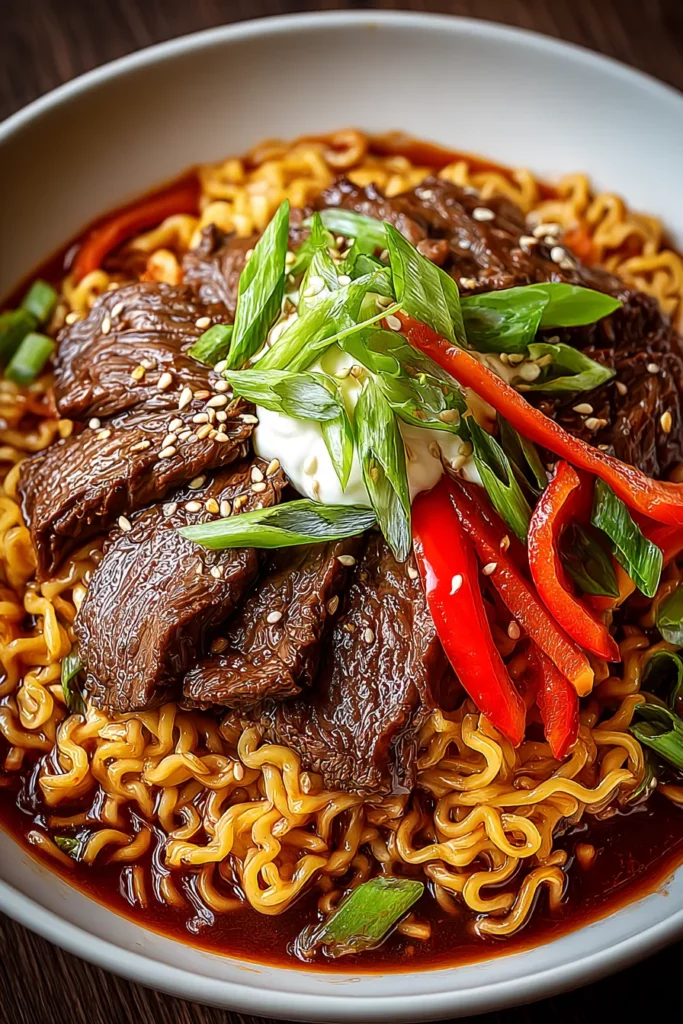

Spicy Korean Gochujang Beef Noodles
Description
These spicy Korean gochujang beef noodles are a delightful blend of tender beef, fresh veggies, and a savory sauce that packs a punch. Perfect for a quick weeknight dinner!
Ingredients
Instructions
-
Cook the ramen noodles according to package instructions. Drain and set aside.
-
In a medium bowl, whisk together gochujang, soy sauce, and sesame oil. Add the sliced beef to the mixture and marinate for at least 15 minutes.
-
Heat vegetable oil in a large pan or wok over medium-high heat. Add the minced garlic and grated ginger, stirring until fragrant, about 1 minute.
-
Add the onion to the pan, cooking until it turns translucent and slightly golden, roughly 3 minutes.
-
Increase the heat and add the marinated beef, stirring frequently until it's browned and cooked through, about 4-5 minutes.
-
Stir in the red bell pepper and carrot, cooking until just tender, about 2-3 minutes.
-
Add the cooked noodles to the pan, tossing everything together to coat the noodles evenly with the sauce and beef mixture.
-
Serve garnished with chopped green onions and sesame seeds.
Note
- Gochujang can vary in spiciness, so adjust the quantity according to your taste preferences.
- For a vegetarian version, substitute the beef with tofu or mushrooms.
- Add additional vegetables like broccoli or snap peas for extra nutrition.
- This dish can be served hot or cold, making it versatile for any occasion.
- Leftovers can be stored in the fridge for up to two days, and they taste even better as the flavors meld.

