

There’s a certain magic in the way Thai Chicken Coconut Curry brings together vibrant colors, bold spices, and creamy coconut milk into one unforgettable dish. Each time I stir a pot of this curry on my stovetop, I’m greeted by the gentle hum of flavors marrying together, promising a comforting meal that feels both exotic and homey. The tender pieces of chicken soak up the red curry paste and coconut milk, creating a luscious sauce that coats every ingredient, from crisp bell peppers to hearty broccoli florets. It’s a dish that whispers of tropical breezes and markets filled with fragrant herbs, yet it’s perfectly achievable in my own kitchen on a busy weeknight.
What I love most about this curry is how adaptable it is. Whether you’re a complete kitchen novice or an adventurous home cook, you’ll find joy in customizing the spice level, swapping proteins, or adding your favorite vegetables. The sweet, slightly nutty flavor of coconut milk is balanced beautifully by the tang of lime juice and the savory depth of fish sauce. Each bite offers a little surprise—a pop of fresh basil here, a hint of brown sugar there. And as the vibrant reds and greens swirl in the creamy sauce, you know you’re on your way to a dinner that’s as visually stunning as it is mouthwatering.
KEY INGREDIENTS IN THAI CHICKEN COCONUT CURRY
To make this delightful curry, you’ll want to gather a balance of proteins, aromatics, vegetables, and seasonings that come together in perfect harmony. Each ingredient plays a crucial role, layering flavors and textures to create a dish that’s rich without feeling heavy, fragrant without being overpowering. Here’s what you’ll need:
- Chicken breasts
The star protein of the dish, offering tender, juicy bites that soak up the curry’s creamy sauce.
- Vegetable oil
A neutral cooking oil that helps to sauté the aromatics and develop the flavor base without overpowering the dish.
- Onion
Provides a sweet, savory foundation when finely chopped and cooked until translucent.
- Garlic
Infuses the curry with its characteristic pungent warmth when minced and lightly cooked.
- Ginger
Adds a bright, zesty kick that complements the sweetness of coconut milk, grated to release its essential oils.
- Red curry paste
A concentrated blend of chilies, lemongrass, and spices that brings heat, depth, and vibrant color to the curry.
- Coconut milk
Delivers creamy richness and a slightly sweet undertone that balances the spiciness of the curry paste.
- Red bell pepper
Adds crisp texture and natural sweetness, along with a pop of vivid red hue.
- Yellow bell pepper
Introduces bright color and a crunchy bite that contrasts beautifully with the tender chicken.
- Broccoli florets
A green, nutritious vegetable that offers freshness and a satisfying bite.
- Fish sauce
Infuses the dish with savory umami notes, deepening the overall flavor profile.
- Brown sugar
Balances the heat and acidity with a subtle caramel sweetness.
- Lime juice
Provides bright, tangy acidity that lifts all the other flavors.
- Fresh basil leaves
Added at the end to give a fragrant, sweet-herb finish.
- Fresh cilantro
Offers a burst of citrusy, herbaceous freshness when stirred in just before serving.
- Salt and pepper
Season to taste, enhancing all the flavors without overshadowing them.
- Cooked jasmine rice
The perfect bed for soaking up every last drop of the silky curry sauce.
HOW TO MAKE THAI CHICKEN COCONUT CURRY
Creating this curry is straightforward and immensely rewarding. With a handful of simple techniques—sautéing, simmering, and stirring in fresh herbs—you’ll transform basic ingredients into a dish worthy of any dinner table. Follow these steps and watch the flavors develop:
1. Heat the vegetable oil in a large skillet over medium heat. Add the onion and sauté until it becomes translucent, about 5 minutes, ensuring it doesn’t brown too much.
2. Stir in the garlic and ginger, and cook for an additional 1–2 minutes until you detect that signature fragrant aroma filling your kitchen.
3. Add the red curry paste to the skillet, and cook for 1 minute, stirring constantly to toast the spices and deepen their flavors.
4. Pour in the coconut milk and bring the mixture to a gentle simmer, stirring to combine with the curry paste.
5. Add the chicken pieces to the skillet, and cook for 5–7 minutes, or until the chicken is thoroughly cooked and tender.
6. Add the red and yellow bell peppers, and broccoli to the skillet, and stir to combine, allowing the vegetables to soften slightly.
7. Stir in the fish sauce, brown sugar, and lime juice. Let the mixture simmer for an additional 5 minutes to meld the sweet, salty, and tangy notes.
8. Remove the skillet from heat and stir in the chopped basil and cilantro for a burst of fresh herb flavor.
9. Season with salt and pepper to taste, adjusting as needed to balance heat and seasoning.
10. Serve the curry hot over cooked jasmine rice, making sure each bowl gets a generous ladle of that creamy, colorful sauce.
SERVING SUGGESTIONS FOR THAI CHICKEN COCONUT CURRY
When it comes to serving this dish, presentation and accompaniments can elevate the experience from great to unforgettable. You’ll want to set the scene for a relaxed meal that feels both cozy and special, whether it’s a casual weeknight dinner or a gathering with friends. Warm bowls, vibrant garnishes, and thoughtfully chosen sides all come together to highlight the curry’s star qualities.
- Layered plating: Spoon a mound of fluffy jasmine rice in the center of a shallow bowl, then ladle the curry around it in a ring. This arrangement showcases the vibrant reds and greens, making every serving look like a work of art.
- Coconut crisp: Toast some shredded coconut in a dry skillet until golden brown, then sprinkle over the top for a crunchy texture contrast and an extra hint of tropical flair.
- Herb finale: Keep a small bowl of extra chopped basil and cilantro on the table so guests can add more fresh herbs to their taste, boosting aroma and color with every bite.
- Citrus boost: Serve with lime wedges on the side, encouraging diners to squeeze fresh juice over their curry just before eating, adding that last bright note to each spoonful.
HOW TO STORE THAI CHICKEN COCONUT CURRY
Planning ahead can make your week go smoothly, and this curry is a dream when it comes to meal prep and storage. You’ll want to preserve both flavor and texture, ensuring every reheated portion tastes as vibrant as when it was first made. Proper cooling, packaging, and reheating techniques will help maintain the curry’s creaminess and the vegetables’ bite.
- Refrigeration: Allow the curry to cool to room temperature, then transfer it into an airtight container. Store in the refrigerator for up to 3–4 days, making sure to use within that window for the best taste and safety.
- Freezing: For longer storage, portion the cooled curry into freezer-safe containers or heavy-duty resealable bags, leaving a little headspace for expansion. Freeze for up to 2 months. Thaw overnight in the fridge before reheating.
- Reheating: Gently warm on the stovetop over medium-low heat, stirring occasionally and adding a splash of coconut milk or water if it appears too thick. This prevents the coconut milk from separating and keeps the sauce smooth.
- Separate rice storage: Store leftover jasmine rice in its own container to avoid moisture from the curry making it soggy. Reheat rice with a sprinkle of water in the microwave or steam briefly on the stovetop for fluffy grains.
CONCLUSION
This Thai Chicken Coconut Curry has taken you on a culinary journey—starting with vibrant aromatics, building a luxurious coconut-infused sauce, and finishing with fresh herbs that tie every flavor together. You’ve learned how each ingredient, from the humble onion to the fragrant basil, contributes its own layer of taste and texture. The step-by-step instructions have shown you how sautéing, simmering, and simple seasoning choices can transform basic pantry staples into something truly special. Whether you’re looking for a comforting weeknight meal or a dish to impress friends, this recipe stands out for its balance of sweet, spicy, and tangy notes, all wrapped in a creamy coconut hug.
Feel free to print this article and save it in your recipe collection—it’s the kind of dish you’ll return to time and again, whether for a quick solo dinner or a celebratory feast. You’ll also find a helpful FAQ section below, where common questions about substitutions, spice adjustments, and ingredient swaps are answered. If you give this curry a try, let me know how it turns out! I’d love to hear your thoughts, any creative tweaks you’ve made, or tips for perfecting the texture and flavor balance. Your feedback and questions are always welcome, and I’m here to help you make this Thai Chicken Coconut Curry shine in your kitchen. Enjoy every colorful, creamy spoonful!
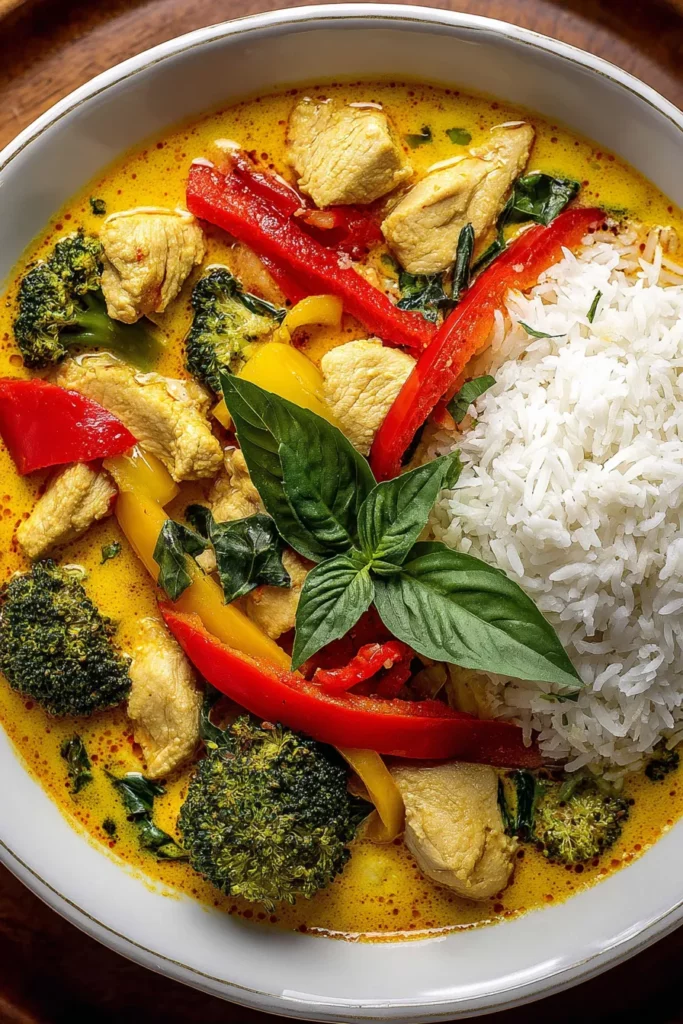

Thai Chicken Coconut Curry
Description
This Thai Chicken Coconut Curry tantalizes with a perfect blend of spicy red curry paste, creamy coconut milk, and fresh vegetables. It's a delightful dish served over jasmine rice for a comforting meal that warms the soul.
Ingredients
Instructions
-
Heat the vegetable oil in a large skillet over medium heat. Add the onion and sauté until it becomes translucent, about 5 minutes.
-
Stir in the garlic and ginger, and cook for an additional 1-2 minutes until fragrant.
-
Add the red curry paste to the skillet, and cook for 1 minute, stirring constantly.
-
Pour in the coconut milk and bring the mixture to a simmer.
-
Add the chicken pieces to the skillet, and cook for 5-7 minutes, or until the chicken is thoroughly cooked.
-
Add the red and yellow bell peppers, and broccoli to the skillet, and stir to combine.
-
Stir in the fish sauce, brown sugar, and lime juice. Let the mixture simmer for an additional 5 minutes.
-
Remove the skillet from heat and stir in the chopped basil and cilantro.
-
Season with salt and pepper to taste.
-
Serve the curry hot over cooked jasmine rice.
Note
- Red curry paste can be adjusted to taste based on how spicy you prefer your curry.
- Substitute chicken with tofu or shrimp for a vegetarian or seafood version.
- Fresh lime juice can be added at the end to enhance the flavor.
- This dish is easily adaptable to include your favorite vegetables or preferred protein.

