

Savor the vibrant dance of flavors and colors in this Thai Peanut Sweet Potato Buddha Bowl—a bowl that feels like a warm hug on a busy weeknight or a celebratory feast on a leisurely weekend. Picture tender, caramelized sweet potato cubes nestled atop a bed of fluffy quinoa, while a medley of sautéed veggies brings in bright pops of red bell pepper, shredded carrots, edamame, and fresh spinach. And then there’s that silky, golden Thai peanut sauce, tangy with lime juice, kissed by sesame oil, and just the right hint of sriracha heat—everything comes together in perfect harmony. This is more than just a sweet potato recipe; it’s a journey to Thailand’s bustling street-food stalls and your own cozy kitchen at the same time.
I still remember the first time I mixed spoonfuls of creamy peanut sauce into my bowl; the flavors popped brighter than fireworks. It was a rainy Sunday afternoon, and I was craving something hearty, healthy, and bursting with life. The result was this vibrant quinoa bowl—colorful, protein-packed, vegetarian, and completely soul-satisfying. Whether you’re looking for a nourishing lunch, a light dinner, or a fun meal prep idea, this Buddha bowl has got you covered. And it hits around 450 calories per serving, so you can dig in guilt-free. Trust me, once you taste that blend of sweet, savory, tangy, and spicy, this bowl will become your go-to recipe for a healthy dinner that doesn’t skimp on flavor or fun.
KEY INGREDIENTS IN THAI PEANUT SWEET POTATO BUDDHA BOWL
Every component in this bowl plays its part, from the hearty sweet potatoes to the luscious peanut sauce. Here’s a closer look at the key players that bring balance, texture, and vibrant color to your plate:
- Sweet potatoes
Their natural sweetness and creamy texture create a comforting base when roasted to golden perfection, offering both flavor and heartiness.
- Olive oil
A versatile fat for roasting and sautéing that helps ingredients brown beautifully and carry flavors evenly.
- Salt and pepper
Simple seasonings that enhance the natural taste of vegetables and grains, ensuring every bite is perfectly balanced.
- Quinoa
This protein-packed grain cooks up fluffy and nutty, making it an ideal, gluten-free foundation for any Buddha bowl.
- Vegetable broth or water
Liquid that gently cooks the quinoa, infusing it with either a savory depth (if broth) or letting its pure nutty flavor shine (with water).
- Red bell pepper
Bright and crisp, these thin slices add a juicy crunch and a pop of vivid color to each mouthful.
- Shredded carrots
They contribute a subtle sweetness and playful texture, plus a sunny orange hue that lightens the bowl.
- Edamame
Shelled green soybeans bring an extra dose of plant-based protein and a satisfying bite.
- Fresh spinach
Tender leaves wilt quickly, offering a boost of iron, vitamins, and a vibrant green contrast.
- Roasted peanuts
Chopped for a final crunchy garnish that echoes the peanut sauce’s flavor, adding both texture and richness.
- Green onions
Thinly sliced for a fresh, oniony zing that cuts through the creaminess of the peanut sauce.
- Creamy peanut butter
The heart of the Thai peanut sauce, lending its rich, nutty foundation.
- Soy sauce
Provides essential umami depth, balancing the sauce with salty savoriness.
- Lime juice
Brightens the sauce with tangy citrus notes, lifting all the ingredients.
- Honey or maple syrup
Sweetens the sauce naturally, harmonizing with the peanut butter and balancing salt and acid.
- Rice vinegar
Adds a mild acidity that rounds out the sauce’s flavor profile.
- Sesame oil
A few drops infuse the sauce with a toasty, aromatic nuttiness.
- Sriracha
Optional for those who crave a spicy kick—just enough to tingle the taste buds.
- Water
Used to adjust the sauce’s consistency, making it pourable yet still luscious.
HOW TO MAKE THAI PEANUT SWEET POTATO BUDDHA BOWL
Ready to roll up your sleeves and get cooking? This recipe guides you through roasting, simmering, sautéing, and whisking, transforming simple pantry staples into a spectacular, nutrient-packed bowl. Follow each step for perfectly cooked sweet potatoes, fluffy quinoa, vibrant veggies, and that irresistibly creamy Thai peanut sauce.
1. Preheat your oven to 400°F (200°C). On a baking sheet, toss the diced sweet potatoes with olive oil, then season generously with salt and pepper. Arrange the cubes in a single layer so they roast evenly, and bake for 25–30 minutes until they’re tender and lightly caramelized at the edges.
2. While the sweet potatoes roast, rinse the quinoa under cold water to remove any bitter coating. In a medium saucepan, combine the quinoa and vegetable broth (or water). Bring the mixture to a boil, then reduce the heat to low, cover with a tight-fitting lid, and simmer for about 15 minutes. Remove the lid and fluff the quinoa with a fork to reveal its signature, fluffy texture.
3. Heat another tablespoon of olive oil in a large skillet over medium heat. Add the thinly sliced red bell pepper and sauté for 3–4 minutes, stirring occasionally, until the pepper softens and its edges begin to glisten.
4. Stir in the shredded carrots and edamame, cooking for an additional 2–3 minutes until everything is heated through. Finally, add the fresh spinach leaves, stirring just until they wilt—this should take under a minute to preserve their vibrant color and nutrients.
5. For the sauce, grab a small bowl and whisk together creamy peanut butter, soy sauce, lime juice, honey or maple syrup, rice vinegar, sesame oil, and sriracha (if you’re using it). Drizzle in water a tablespoon at a time until you reach a smooth, pourable consistency that gracefully coats your vegetables and grains.
6. To assemble, divide the fluffy quinoa evenly among your serving bowls. Top each portion with a generous handful of roasted sweet potatoes, followed by the sautéed vegetable mix.
7. Drizzle the creamy Thai peanut sauce over the top, letting it pool in and around the colorful ingredients. Finally, garnish each bowl with chopped roasted peanuts and a scattering of sliced green onions for crunch and freshness.
SERVING SUGGESTIONS FOR THAI PEANUT SWEET POTATO BUDDHA BOWL
Presenting this Buddha bowl is all about celebrating its vibrant colors and contrasting textures. Whether you’re hosting friends, packing a lunch, or simply enjoying a cozy night in, thoughtful serving touches make every bite even more memorable. Below are a few creative ways to elevate your presentation and dining experience:
- Serve it in a large, shallow ceramic bowl so all the colors—orange, red, green—are on full display. The broad surface lets you artfully arrange each component like a rainbow, making every spoonful delightful.
- Turn these bowls into a meal-prep superstar by layering quinoa and veggies in airtight containers. Store the sauce separately in little jars, then shake gently and pour when you’re ready to eat for fresh flavors that won’t get soggy.
- For extra protein and texture, offer crispy tofu or grilled chicken on the side. A quick pan-fry with cornstarch gives tofu that irresistible crunch, pairing beautifully with the creamy peanut sauce.
- Brighten up the table with a small bowl of lime wedges and a sprinkle of fresh cilantro. A final squeeze of citrus awakens the flavors and adds a zesty finish that’s truly authentic.
HOW TO STORE THAI PEANUT SWEET POTATO BUDDHA BOWL
Storing a Buddha bowl properly ensures you can enjoy its goodness throughout the week without sacrificing flavor or texture. The goal is to keep ingredients fresh and prevent them from merging into an indistinguishable mush. Whether you’re prepping lunches or saving leftovers, simple tips go a long way:
- Refrigerate in layers: Use airtight containers and keep the peanut sauce in a separate small jar. Store roasted sweet potatoes and sautéed veggies atop the quinoa, then add sauce and garnishes just before eating to preserve crunch.
- Freeze for longer storage: Portion the quinoa and sweet potatoes into freezer-safe containers. When you’re ready to enjoy, thaw overnight in the fridge and reheat gently in the microwave or on the stovetop, then stir in fresh veggies and sauce.
- Maintain garnishes separately: Store chopped peanuts and green onions in a tiny container or resealable bag to prevent moisture from softening them. Add just before serving for that signature crunch.
- Reheat with care: When warming up leftover bowls, cover them loosely and heat on medium power in the microwave or on the stovetop. Then swirl in extra lime juice or a splash of water to revive the bright flavors and creamy sauce.
CONCLUSION
After exploring each layer of this Thai Peanut Sweet Potato Buddha Bowl—from the roasted sweetness of the potatoes to the nutty richness of the sauce—you’re all set to create a dish that’s as nourishing as it is dazzling. This recipe encapsulates the best of a vegetarian meal and a healthy dinner, bringing together complex Thai peanut sauce, protein-packed quinoa, and a rainbow of veggies in every bite. It’s beginner-friendly, perfect for lunch or dinner, and flexible enough to adapt with extra proteins, alternative vegetables, or a dash more sriracha if you like to crank up the heat. You’ll find that the preparation takes about 15 minutes, cooking around 40 minutes, and leaves you with a vibrant bowl that clocks in at roughly 450 calories—ideal for a balanced, plant-forward lifestyle.
Feel free to print this article and save it in your recipe binder for easy reference any time you’re craving a flavor-packed quinoa bowl. You can also bookmark it on your device, and if you scroll down you’ll find a FAQ section to help troubleshoot any questions about substitutions, storage, or flavor variations. As you whip up this bowl, I’d love to hear how it turns out: Did the sweet potatoes caramelize perfectly? Did the sauce hit just the right balance of sweet, salty, and tangy? Drop your comments, questions, or feedback below—I’m always here to help you tweak the seasonings, customize the veggies, or chat about your favorite Buddha bowl hacks. Happy cooking, and may your kitchen be filled with color, warmth, and delicious aromas!
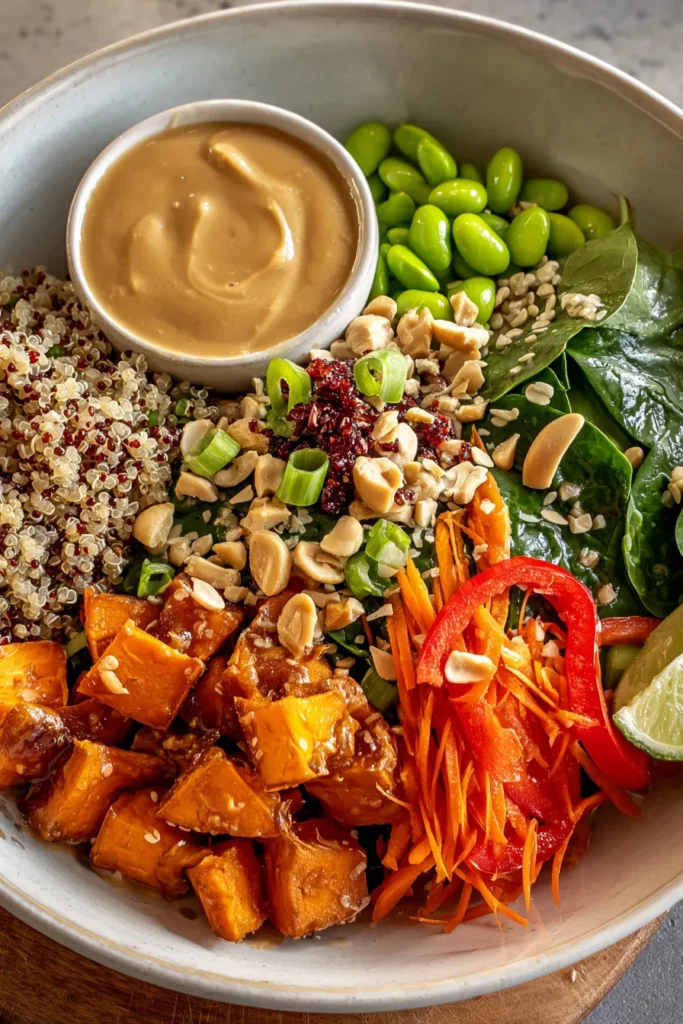

Thai Peanut Sweet Potato Buddha Bowl
Description
This colorful bowl features roasted sweet potatoes, protein-packed quinoa, and a creamy Thai peanut sauce that ties it all together beautifully.
Ingredients
Instructions
-
Preheat oven to 400°F (200°C). Toss the diced sweet potatoes with 1 tablespoon olive oil, and season with salt and pepper. Spread evenly on a baking sheet and roast for 25-30 minutes, or until tender.
-
While the sweet potatoes are roasting, rinse the quinoa under cold water. In a medium saucepan, combine quinoa and vegetable broth or water. Bring to a boil, then reduce heat to low, cover, and simmer for about 15 minutes, or until liquid is absorbed and quinoa is fluffy.
-
In a large skillet, heat 1 tablespoon of olive oil over medium heat. Add red bell pepper and sauté for about 3-4 minutes until slightly softened.
-
Stir in shredded carrots and edamame, and cook for an additional 2-3 minutes. Add the fresh spinach and cook until just wilted.
-
Prepare the Thai peanut sauce by combining peanut butter, soy sauce, lime juice, honey or maple syrup, rice vinegar, sesame oil, and sriracha in a small bowl. Whisk until smooth. Add water a little at a time until you reach your desired consistency.
-
Assemble the bowls by dividing quinoa evenly among serving bowls. Top with roasted sweet potatoes, sautéed vegetables, and spinach.
-
Drizzle with the Thai peanut sauce. Garnish with chopped peanuts and sliced green onions.
Note
- You can add other vegetables like broccoli, zucchini, or cauliflower for variety.
- For a protein boost, consider adding tofu or grilled chicken.
- This dish is versatile; feel free to adjust the peanut sauce's sweetness or spiciness to your preference.
- The sauce can be stored in the fridge for up to a week.
- For a gluten-free version, ensure your soy sauce is gluten-free.

