

When it comes to bringing a cozy, hearty, and flavorful dish to your dinner table, Wild Rice Pilaf stands out as a true winner. I still remember the first time I prepared this nutty grain medley—it was a chilly autumn evening, leaves crunching underfoot, and I craved something both comforting and festive. The brief moment I lifted the lid off the pot and caught that earthy scent mingling with fragrant herbs, I knew I had discovered a new staple for family gatherings. Each bite delivers a delightful chew from the wild rice, complemented by the subtle sweetness of dried cranberries and the satisfying crunch of toasted nuts. It’s one of those recipes that feels like a warm hug after a long day in the kitchen.
Since then, I’ve made Wild Rice Pilaf countless times, tweaking the herbs here or swapping almonds for pecans there, but the heart of the dish remains the same—a harmonious balance of textures and flavors that can shine as a vegetarian main or a stunning side dish. When friends come over, I often pair it with roasted seasonal veggies or a simple roasted chicken, and they always ask for seconds. Its rustic appeal and beautiful presentation make it perfect for holiday dinners or weeknight meals alike. Trust me, once you master this recipe, it’ll become your go-to anytime you want to impress without slaving away over complicated techniques.
KEY INGREDIENTS IN WILD RICE PILAF
Before we head into the cooking process, let's take a closer look at the star ingredients that make this Wild Rice Pilaf so irresistible. Each component plays a vital role, contributing unique flavors, textures, and aromas to create a dish that’s greater than the sum of its parts.
- Wild Rice
A semi-aquatic grass with a distinctive chewy texture and deep, nutty flavor. It forms the hearty base of the pilaf and bursts open to reveal tender interiors that soak up all the savory notes.
- Vegetable Broth or Water
The liquid foundation for cooking the wild rice. Using vegetable broth adds extra depth of flavor, while water keeps it simple and lets the rice’s natural taste shine.
- Olive Oil or Butter
Provides richness and helps sauté the aromatics. Olive oil lends a fruity undertone, whereas butter brings a savory creaminess that coats every grain.
- Onion
Finely chopped to create a sweet, aromatic base. As it softens, it releases layers of flavor that mingle with the rice during cooking.
- Garlic
Minced cloves infuse the pilaf with a warm, pungent kick that complements the nuttiness of the rice and the sweetness of the fruit.
- Carrot
Diced pieces add a pop of orange color and natural sweetness. They soften gently, balancing the earthiness of the grains.
- Celery
Offers a subtle, refreshing crunch and an herbaceous bite. It rounds out the vegetable medley in the pan.
- Dried Thyme
A fragrant herb that brings a mild, lemony-earthy note. It elevates the overall aroma without overpowering other flavors.
- Dried Rosemary
Brings pine-like, woody undertones that pair beautifully with the nutty rice. Use sparingly for an elegant herbal touch.
- Salt
Enhances and harmonizes all the flavors in the pilaf. Adjust according to taste to strike the perfect balance.
- Black Pepper
Freshly cracked for a subtle heat and spicy undertone. It adds complexity to every bite.
- Slivered Almonds or Pecans
Toasted until golden, they contribute a satisfying crunch and rich, toasty flavor that contrasts the soft rice.
- Dried Cranberries or Raisins
Provide bursts of chewy sweetness that play off the savory herbs and nuts, making each forkful exciting.
- Fresh Parsley
Chopped and sprinkled at the end, it lends a bright, green finish that lifts the dish with fresh, grassy notes.
HOW TO MAKE WILD RICE PILAF
Now that we know what goes into this flavorful dish, let’s walk through each step of the cooking process. These instructions will guide you from raw grains to a beautifully seasoned pilaf that’s perfect for sharing.
1. Rinse the wild rice under cold water in a fine-mesh strainer until the water runs clear. This crucial step removes excess starch and prevents the grains from becoming gummy.
2. In a medium saucepan, combine the rinsed wild rice and vegetable broth or water. Place over medium-high heat and bring to a rolling boil, ensuring the liquid is fully active before reducing the heat.
3. Once boiling, reduce the heat to low, cover with a tight-fitting lid, and simmer gently for 40–50 minutes, or until the grains burst open and become tender. Remove from heat and let it sit, covered, for an additional 10 minutes, allowing steam to finish the cooking.
4. While the rice is cooking, heat the olive oil or butter in a large skillet over medium heat. Add the chopped onion and sauté for 3–4 minutes, stirring occasionally, until the onion turns translucent.
5. Add the minced garlic, diced carrot, and diced celery to the skillet. Continue to sauté for another 5–7 minutes, or until the vegetables are tender and aromatic.
6. Stir in the dried thyme, dried rosemary, salt, and black pepper. Mix thoroughly to ensure the herbs and seasonings coat the vegetables evenly.
7. Once the wild rice is finished cooking, use a fork to fluff it gently. Transfer the rice into the skillet with the sautéed vegetables and stir until everything is evenly combined.
8. Add the toasted slivered almonds or pecans and dried cranberries or raisins to the pilaf. Mix carefully to fold in the nuts and fruit without crushing them.
9. Taste the pilaf and adjust the seasoning if needed. Remove the skillet from heat and let the mixture cool slightly, allowing the flavors to meld.
10. Garnish with fresh chopped parsley just before serving to introduce a burst of color and fresh herbaceous brightness.
SERVING SUGGESTIONS FOR WILD RICE PILAF
This Wild Rice Pilaf is incredibly versatile, and once it’s ready, you’ll find endless ways to serve it up beautifully. Whether you’re putting together a weeknight meal or hosting a festive gathering, here are some of my favorite presentations and pairings to elevate your dining experience.
- Serve as a Classic Side alongside roasted chicken or turkey. Simply spoon generous mounds of pilaf next to your protein and garnish with extra parsley for a restaurant-worthy plate.
- Turn it into a Vegetarian Main by scooping the pilaf into deep bowls and topping with creamy avocado slices or a dollop of herbed yogurt. A sprinkle of toasted nuts on top adds an extra layer of crunch.
- Make it a Holiday Showstopper by filling hollowed-out roasted squash or acorn pumpkins with the warm pilaf. The edible “bowl” doubles as festive décor and flavor.
- Pack leftovers into Meal-Prep Bowls, layering with steamed greens, grilled vegetables, or lean proteins. It reheats beautifully, so you’ll have a healthy, flavorful lunch ready to go.
HOW TO STORE WILD RICE PILAF
Proper storage is key to maintaining the fresh flavors and delightful textures of this pilaf. Follow these tips to keep it tasting just as good as the day you made it—whether you’re saving a bit for tomorrow’s dinner or stashing portions for later.
- Cool Completely Before Storing
Allow the pilaf to reach room temperature before transferring into airtight containers. This prevents condensation that can make grains soggy. Once sealed, keep in the refrigerator for up to 3 days.
- Freeze in Portion-Sized Packs
Divide the cooled pilaf into freezer-safe bags or containers, removing as much air as possible to avoid freezer burn. Label with the date and freeze for up to 2 months.
- Thaw Gently
When ready to enjoy, move a portion from freezer to refrigerator and let it thaw overnight. This slow transition preserves moisture and texture.
- Reheat with Moisture
Warm leftovers on the stovetop or in the microwave with a splash of broth or water, covered to trap steam. This technique refreshes the grains and revives the original fluffy texture.
CONCLUSION
I hope you’ve enjoyed diving into the world of Wild Rice Pilaf as much as I’ve enjoyed sharing it with you! From the chewy, nutty grains to the vibrant burst of sweet cranberries and the satisfying crunch of toasted nuts, this recipe embodies the perfect balance of flavors and textures. You’ve seen how simple ingredients—wild rice, aromatic vegetables, savory herbs, and a handful of pantry staples—can come together to create a dish that works wonders as a cozy weeknight side, an impressive holiday centerpiece, or a nourishing vegetarian main. Don’t forget that the total cooking time, from start to finish, is about an hour, plus a brief rest to let the flavors bloom. Feel free to customize with your favorite seasonal vegetables or herbs, and remember you can easily adjust the herbs and nuts to suit your taste.
Feel free to print this article and save it for future dinner plans, and don’t miss the FAQ section below for answers to common questions about wild rice cooking times, substitutions, and more. If you give this Wild Rice Pilaf a try, I’d love to hear how it turned out! Leave a comment, share your feedback, or drop any questions you have about the recipe. Whether you need tips on toasting nuts or want advice on pairing wines, I’m here to help. Your thoughts and experiences bring this recipe to life, so don’t hesitate to reach out—I can’t wait to hear from you!
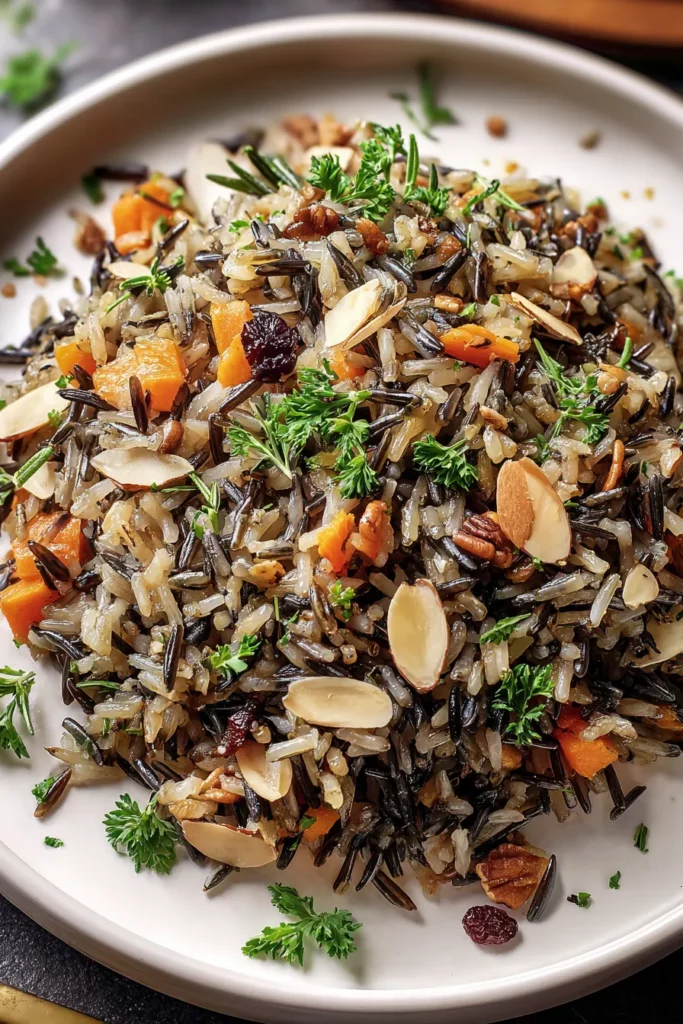

Wild Rice Pilaf
Description
This wild rice pilaf is a delightful mix of nutty rice, sautéed veggies, and crunchy nuts, all harmoniously seasoned with herbs. It's both hearty and satisfying!
Ingredients
Instructions
-
Rinse the wild rice under cold water in a fine-mesh strainer until the water runs clear. This helps remove excess starch.
-
In a medium saucepan, combine the rinsed wild rice and vegetable broth or water. Bring to a boil over medium-high heat.
-
Once boiling, reduce the heat to low, cover, and simmer for about 40-50 minutes, or until the rice is tender and most of the grains have burst open. Remove from heat and let it sit covered for an additional 10 minutes.
-
While the rice is cooking, heat the olive oil or butter in a large skillet over medium heat. Add the chopped onion and sauté for about 3-4 minutes, until translucent.
-
Add the minced garlic, diced carrot, and diced celery to the skillet. Continue to sauté for an additional 5-7 minutes until the vegetables are tender.
-
Stir in the dried thyme, dried rosemary, salt, and black pepper. Mix well to combine.
-
Once the wild rice is finished cooking, fluff it with a fork and add it to the skillet with the sautéed vegetables. Stir until everything is evenly combined.
-
Add the toasted slivered almonds or pecans and dried cranberries or raisins to the pilaf. Mix gently to incorporate.
-
Taste and adjust seasoning as necessary. Remove from heat and let it cool slightly.
-
Garnish the pilaf with fresh chopped parsley before serving warm.
Note
- Wild rice is not actually rice but a semi-aquatic grass, giving it a unique texture and flavor.
- This dish pairs wonderfully with roasted meats or as a hearty vegetarian main dish.
- You can customize the pilaf by adding seasonal vegetables or herbs of your choice.
- Cooking times may vary depending on the brand of wild rice, so check for doneness as you approach the suggested time.
- Leftovers can be stored in the refrigerator for up to 3 days and reheated easily.

