

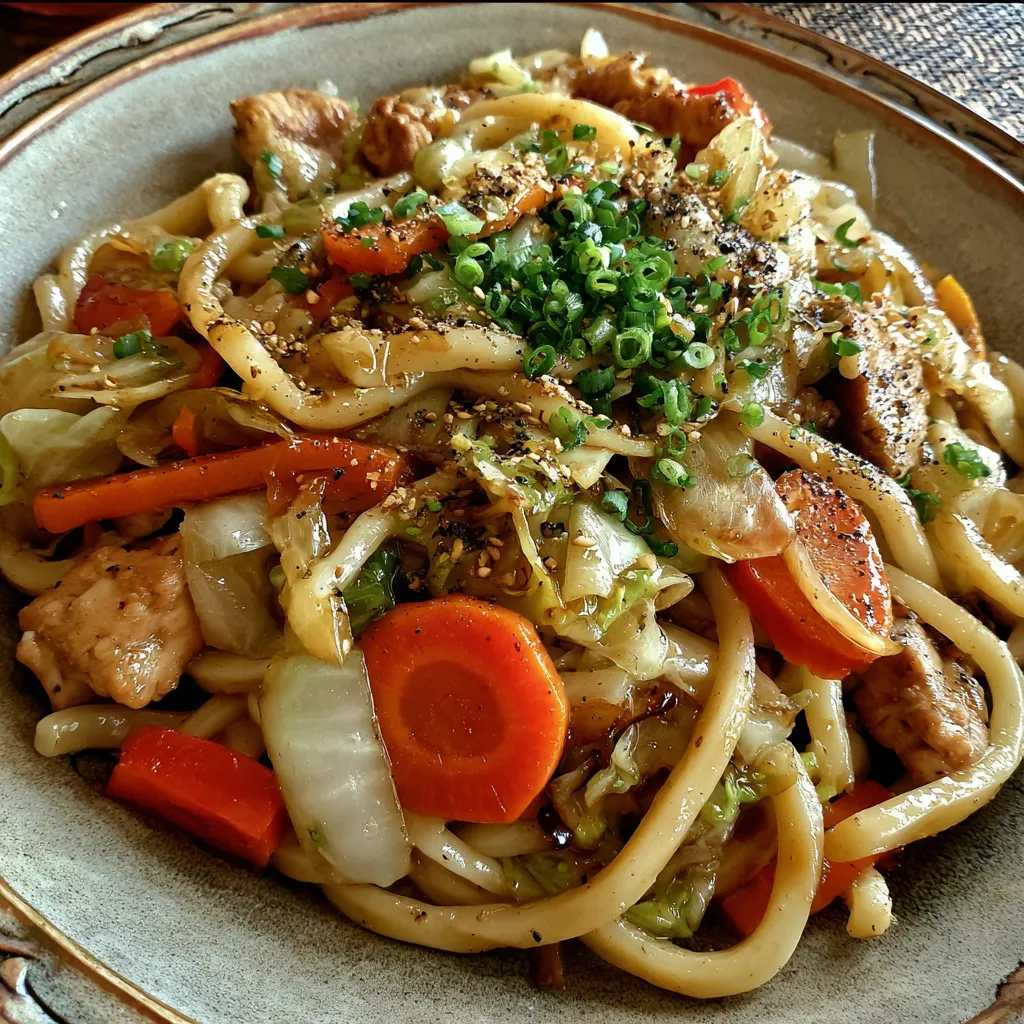
Yaki Udon Noodle is a mouthwatering fusion of chewy udon, tender chicken, and crisp vegetables all tossed in a savory soy-ginger sauce. This satisfying one-pan meal comes together quickly, making it the perfect weeknight dinner when time is tight but you crave big flavors. With a balance of sweet mirin, nutty sesame oil, and fresh green onions, every bite feels like a cozy trip to your favorite Japanese tavern—right in your own kitchen. Grab your wok, and let’s dive into this irresistible stir-fry!
Key Ingredients
To whip up this flavorful Yaki Udon Noodle, you only need pantry staples and fresh produce. Here’s what makes this dish shine:
- 8 ounce udon noodles: Chewy thick noodles that provide the hearty base for this stir-fry.
- 2 tablespoon vegetable oil: Neutral oil for stir-frying ingredients until golden and flavorful.
- 2 cloves garlic minced: Aromatic element that adds a punch of savory garlicky goodness.
- 2 teaspoon grated ginger: Zesty warmth and brightness to balance the soy-ginger glaze.
- 1 small onion thinly sliced: Slight sweetness and crunch as the foundation for the veggies.
- 1 carrot thinly sliced: Colorful crunch that brings a touch of natural sweetness.
- 1 bell pepper thinly sliced: Vibrant color and crisp texture for a fresh bite.
- 2 cups cabbage shredded: Tender-crisp cabbage adds bulk and subtle sweetness.
- 4 ounce chicken breast cut into strips: Lean protein that soaks up the savory sauce.
- 2 tablespoon soy sauce: Salty backbone that ties all the flavors together.
- 1 tablespoon sake: Mild acidity and umami depth in the sauce.
- 1 tablespoon mirin: Sweet rice wine that gives a glossy, sweet finish.
- 1/2 teaspoon sugar: Balances the salty elements with a hint of sweetness.
- 2 stalks green onion chopped: Fresh garnish that adds a pop of color and mild onion flavor.
- 1/2 tablespoon sesame oil: Nutty finish that elevates the overall aroma.
How To Make Yaki Udon Noodle
Getting this Yaki Udon Noodle just right is all about layering flavors and timing each step. You’ll start by cooking the udon to perfect chewiness, then build a fragrant base with garlic and ginger, sear the chicken to juicy perfection, and toss in colorful vegetables for crunch. Finally, a glossy soy-mirin sauce ties everything together, with sesame oil and green onions adding the finishing flourish.
1. Bring a large pot of water to a rolling boil. Add the udon noodles and cook according to package instructions (usually 2–3 minutes). Once al dente, drain and rinse under cold water, then set aside.
2. Heat the vegetable oil in a spacious skillet or wok over medium-high heat until it shimmers, ensuring even searing.
3. Add the minced garlic and grated ginger. Stir-fry for about 30 seconds until fragrant, watching carefully so they don’t burn.
4. Add the chicken strips and cook for 4–5 minutes, stirring occasionally, until each piece is nicely browned and cooked through.
5. Toss in the sliced onion, carrot, bell pepper, and shredded cabbage. Continue stir-frying for 3–4 minutes until the vegetables become tender-crisp.
6. Push all ingredients to one side of the pan, creating space for the noodles. Add the udon to the empty side and let it warm through.
7. Pour the soy sauce, sake, mirin, and sugar evenly over the noodles. Toss everything together so each strand is coated in the flavorful sauce.
8. Drizzle the sesame oil over the mixture, give it one final toss, then promptly remove the pan from heat to preserve the bright flavors.
9. Divide the hot yaki udon into bowls and garnish with chopped green onions for a fresh, colorful finish.
Serving Suggestions
When it’s time to serve your Yaki Udon Noodle, a few small touches can make it feel truly special. These four ideas will help you elevate presentation and customize each bowl for friends, family, or a cozy date night at home. From playful toppings to complementary sides, you’ll turn a simple stir-fry into a memorable feast with minimal effort.
- Garnish with toasted sesame seeds: Sprinkle a pinch over each bowl for extra nuttiness and a hint of crunch.
- Add chili oil or chili flakes: Offer guests a spicy kick with a drizzle or sprinkle, letting them adjust the heat to taste.
- Serve with pickled ginger: Provide a small side of tangy pickles to cleanse the palate between savory bites.
- Offer a citrus wedge: A squeeze of lime or yuzu adds bright acidity that balances the rich soy-ginger glaze.
Tips For Perfect Yaki Udon Noodle
Achieving restaurant-quality Yaki Udon Noodle at home is easier than you think. A few simple tweaks will ensure your noodles stay chewy, your veggies crisp, and your sauce perfectly balanced. Whether you’re making this for meal prep or entertaining friends, these friendly pointers will keep you on track.
- Use fresh or frozen udon noodles for best texture.
- Substitute tofu or shrimp for chicken to make it vegetarian or seafood.
- Adjust soy sauce and sugar to taste for desired saltiness.
- Add sesame seeds or chili flakes for extra flavor and heat.
How To Store It
Leftover Yaki Udon Noodle holds up wonderfully, making it a go-to for quick lunches or next-day dinners. Proper storage helps maintain that satisfying chew of the udon and the crisp-tender bite of the vegetables. Follow these methods to keep your stir-fry tasting just like the day you made it.
- In the refrigerator: Transfer cooled leftovers into an airtight container and store for up to 3 days.
- Layer with parchment paper: Place sheets between noodle layers to prevent sticking and sogginess.
- Reheat in a skillet: Warm a teaspoon of oil over medium heat, add the udon, and toss until heated through to revive its texture.
- Freezing for later: Portion into freezer-safe bags, remove excess air, and freeze for up to one month. Thaw overnight in the fridge before reheating.
Frequently Asked Questions
Here are some common questions about making Yaki Udon Noodle:
- Q: How do I prevent the udon noodles from sticking together?
After cooking, rinse the udon under cold running water to stop the cooking process and remove excess starch. Drain thoroughly and toss with a small drizzle of vegetable oil before stir-frying to keep the strands separate.
- Q: Can I substitute other proteins for chicken?
Yes, you can swap chicken strips with firm tofu cubes, shrimp, thinly sliced beef, pork, or even tempeh. Adjust the cooking time accordingly: pan-fry tofu until golden, cook shrimp until opaque, and sauté beef or pork until just done.
- Q: How can I adjust the sauce to suit my taste preferences?
To increase saltiness, add extra soy sauce in 1 teaspoon increments. For more sweetness, up the sugar or mirin slightly. If you prefer a richer depth, a splash more sake or a teaspoon of oyster sauce can enhance umami.
- Q: What’s the best way to prep the vegetables for even cooking?
Slice the onion, carrot, and bell pepper into uniform thin strips and shred the cabbage finely. This ensures they cook quickly and evenly, maintaining a tender-crisp texture when stir-frying over medium-high heat.
- Q: How can I make this recipe vegetarian or vegan?
Replace the chicken with firm tofu or tempeh, skip the sake or use vegan rice vinegar as a substitute, and ensure your soy sauce is vegan-friendly. You can also swap mirin with a bit of maple syrup and rice vinegar for sweetness.
- Q: How should I store and reheat leftover yaki udon?
Place leftovers in an airtight container and refrigerate for up to three days. To reheat, warm a little oil or water in a skillet over medium heat, add the udon, and toss until heated through to preserve its texture.
What Makes This Special
This Yaki Udon Noodle has it all: chewy udon, lean chicken, vibrant veggies, and a sweet-savory sauce that clings to every strand—creating layers of texture and flavor in under 30 minutes. Its adaptability means you can swap proteins, adjust seasonings, and dial up the spice to suit any palate. Perfect for busy weeknights or impromptu gatherings, it’s comfort food with an exciting twist. Feel free to print this article and save it for your recipe stash, and let me know in the comments if you give it a go or have any questions—your feedback always makes my day!

Yaki Udon Noodle
Description
Chewy udon noodles stir-fried until lightly charred, mingling with savory chicken, crisp bell pepper, and shredded cabbage, all coated in a fragrant soy-mirin glaze and finished with toasted sesame oil and green onions.
Ingredients
Instructions
-
Bring a pot of water to a boil and cook udon noodles according to package instructions then drain and set aside.
-
Heat vegetable oil in a large skillet or wok over medium-high heat.
-
Add minced garlic and grated ginger and stir-fry until fragrant about 30 seconds.
-
Add chicken strips and cook until browned and cooked through.
-
Add sliced onion carrot bell pepper and shredded cabbage and stir-fry until vegetables are tender-crisp.
-
Push ingredients to one side of the pan and add udon noodles.
-
Pour soy sauce sake mirin and sugar over noodles and toss everything together to coat evenly.
-
Drizzle sesame oil over the noodles toss once more and remove from heat.
-
Divide yaki udon into bowls and top with chopped green onion before serving.
Note
- Use fresh or frozen udon noodles for best texture
- Substitute tofu or shrimp for chicken to make it vegetarian or seafood
- Adjust soy sauce and sugar to taste for desired saltiness
- Add sesame seeds or chili flakes for extra flavor and heat

