

Get ready to elevate weeknight dinner or wow your guests with Golden Herb-Crusted Baked Salmon Wellington, where flaky puff pastry encases tender salmon and a creamy spinach-cheese filling, topped with a zesty, herb-studded crust that crackles with every bite. This elegant yet approachable dish brings restaurant flair to your home kitchen, blending fresh herbs, tangy mustards, and luscious Parmesan. Whether you’re hosting a special occasion or simply craving a gourmet twist, this recipe will have everyone asking for seconds.
Key Ingredients
Here are the main ingredients that make this Golden Herb-Crusted Baked Salmon Wellington truly shine:
- 4 salmon fillets, skinless, center-cut, about 170 g each (total ~680 g): The star protein that stays moist inside flaky pastry.
- 1 sheet high-quality puff pastry (about 25 x 30 cm), thawed but still cold: Provides buttery layers that crisp up beautifully around the filling.
- 1 tbsp olive oil: Helps sauté shallots and garlic to build rich flavor.
- 2 tbsp unsalted butter: Adds richness when cooking aromatics and wilting spinach.
- 2 medium shallots, finely minced: Offer a mild, sweet onion base for the creamy filling.
- 3 cloves garlic, finely minced: Infuses a sharp, savory kick into the spinach mixture.
- 250 g fresh baby spinach leaves, rinsed and dried: Brings vibrant color and earthy flavor to the cheese filling.
- 115 g cream cheese, softened: Creates a smooth, tangy base to bind the spinach filling.
- 2 tbsp Dijon mustard: Adds a bright, piquant edge that complements the salmon.
- 1 tbsp whole grain mustard (optional, for extra texture): Provides crunch and rustic mustard flavor in the filling.
- 2 tbsp fresh lemon juice: Brightens the filling with zesty acidity.
- 1 tsp lemon zest, finely grated: Intensifies citrus notes throughout the dish.
- 3 tbsp grated Parmesan cheese: Lends nutty depth and helps bind the filling.
- 1 tsp salt, or to taste: Seasons the filling and salmon evenly.
- ½ tsp freshly ground black pepper: Adds a subtle heat and depth of flavor.
- ¼ tsp freshly grated nutmeg (optional, but recommended): Offers a warm, aromatic accent to the spinach mixture.
- ½ cup panko breadcrumbs (or dry white breadcrumbs): Forms a crisp base for the herb-studded crust.
- 3 tbsp fresh parsley, finely chopped: Delivers bright, herbaceous notes.
- 2 tbsp fresh dill, finely chopped: Imparts a delicate, slightly sweet flavor.
- 1 tbsp fresh chives, finely chopped: Adds mild oniony undertones.
- 1 tbsp fresh thyme leaves, finely chopped: Brings earthy warmth to the crust.
- 1 tsp lemon zest, finely grated: Lends zing to balance the buttery crumbs.
- 2 tbsp grated Parmesan cheese: Enhances the crust with a nutty richness.
- 3 tbsp unsalted butter, melted: Binds the crumbs and promotes golden browning.
- ¼ tsp salt: Seasoning to bring out all herb-crust flavors.
- ¼ tsp freshly ground black pepper: Provides a touch of heat and complexity.
- 1 egg: Creates an egg wash to give the pastry its golden sheen.
- 1 tbsp milk or cream: Thins the egg wash for smooth pastry glazing.
- 1 tbsp Dijon mustard (for brushing the salmon): Ensures the herb crust sticks beautifully.
- 1 tsp flaky sea salt, for sprinkling: Adds crunchy, savory finish on top.
- Freshly ground black pepper, to taste: Final seasoning boost.
- Extra herbs or microgreens, for garnish (optional): Offers a fresh, vibrant garnish.
- Lemon wedges, for serving: Provide a bright citrus finish at the table.
How To Make Golden Herb-Crusted Baked Salmon Wellington
Bringing together a flaky puff pastry shell, tender salmon fillets, creamy spinach-cheese filling, and a crisp golden-herb crust, this Wellington requires a bit of prep but rewards you with an impressive centerpiece. From seasoning the salmon and sautéing the spinach mixture to crafting the herby breadcrumb topping and mastering the pastry wrap, each step builds layers of flavor and texture. Follow these detailed instructions to ensure your golden crust puffs perfectly and your salmon stays juicy.
1. Prepare the salmon: Pat the salmon fillets dry with paper towels, run your fingers along the flesh to check for pin bones and remove any with tweezers, then season both sides lightly with salt and pepper and chill in the refrigerator while you prepare the filling and crust.
2. Make the spinach and cheese filling: Heat a large skillet over medium heat with olive oil and butter, then sauté minced shallots for 2 to 3 minutes until translucent. Add garlic and cook 30 seconds, stirring constantly. Toss in spinach in batches, wilting until bright green, then season with salt, pepper, and nutmeg. Drain in a colander, pressing firmly to remove liquid, chop roughly, and combine with cream cheese, both mustards, lemon juice, zest, and Parmesan. Mix until smooth, adjust seasoning, and chill for 15 minutes.
3. Prepare the golden herb crust: Combine panko, parsley, dill, chives, thyme, lemon zest, Parmesan, salt, and pepper in a bowl. Drizzle in melted butter and toss until crumbs are evenly moistened and clump loosely, then set aside.
4. Prepare the puff pastry: Lightly flour your work surface, roll the chilled pastry into a 30 x 35 cm rectangle, maintaining even thickness and trimming edges if needed. Transfer to parchment paper, reserving scraps for decoration.
5. Portion and plan the assembly: Decide whether to make one large log or 4 individual parcels. For individual Wellingtons, cut the pastry into four equal rectangles.
6. Preheat the oven: Set to 200°C (conventional) or 190°C (fan) and line a baking sheet with parchment.
7. Assemble the Wellington (large log version): On parchment, spread spinach filling down a central strip, then lay salmon fillets on top. Brush with Dijon mustard, press on an even 0.5–1 cm herb crust, brush pastry borders with egg wash, fold and seal the long sides over the log, tuck the ends, and invert seam-side down on the sheet.
8. Assemble individual Wellingtons (if using): On each pastry rectangle, spoon filling, top with a fillet, brush with mustard, coat with herb crumbs, brush edges with egg wash, then fold and seal into parcels, placing each seam-side down.
9. Decorate and glaze: Cut pastry scraps into decorative shapes, brush with egg wash, arrange decorations, score a pattern with a sharp knife, and sprinkle with flaky sea salt and pepper.
10. Venting and chilling: Slice 2 to 4 small vents on top to release steam, then chill the Wellington(s) for 15–20 minutes to help the pastry hold its shape and puff.
11. Bake: Place on the middle rack and bake one large Wellington for 30–35 minutes (or individual parcels for 20–25 minutes) until the pastry is golden and the internal salmon temperature reaches 50–52°C. If the crust browns too fast, tent loosely with foil.
12. Rest and garnish: Let rest on the baking sheet for 8–10 minutes to redistribute juices, then transfer to a platter, garnish with extra herbs or microgreens, and arrange lemon wedges.
13. Serve: Slice the large Wellington into 3–4 cm pieces or serve individual parcels as is, squeeze fresh lemon juice over each portion, and pair with roasted potatoes, green beans, arugula salad, or a light wine cream sauce.
Serving Suggestions
Once your Golden Herb-Crusted Baked Salmon Wellington emerges from the oven with its crust crackling and aroma filling the kitchen, it’s time to think about the perfect accompaniments. Whether you’re aiming for a cozy family meal or an elegant dinner party, these serving ideas will complement the layers of flaky pastry, tender salmon, and creamy spinach filling beautifully. Balance textures, add pops of color, and let fresh citrus and herbs tie everything together for a memorable plate.
- Roasted baby potatoes tossed with olive oil, garlic, and rosemary for a crispy, aromatic side that soaks up any juices.
- Sautéed green beans in butter and slivered almonds for a vibrant, crunchy contrast to the tender fish.
- Simple arugula salad dressed with lemon vinaigrette and shaved Parmesan to provide a peppery, refreshing balance.
- Drizzle of white wine cream sauce made with shallots, wine, and cream to add a luxurious, silky finish.
Tips For Perfect Golden Herb-Crusted Baked Salmon Wellington
Mastering this Golden Herb-Crusted Baked Salmon Wellington means paying attention to a few simple tricks that take it from great to unforgettable. From assembling ahead of time to fine-tuning moisture levels in the spinach filling, these friendly tips will help you achieve a crisp pastry, a juicy salmon center, and an herb crust that’s golden and crunchy. Keep these insights handy the next time you’re ready to impress.
- Make-ahead tip: Assemble the Wellington up to the egg-wash step, cover loosely, and refrigerate for up to 6 hours; egg wash and bake just before serving.
- For extra flavor, lightly sear the salmon fillets in a hot pan with a little oil for 1 minute per side before assembling; cool completely before wrapping.
- If your spinach mixture seems wet, spread it on a plate and chill uncovered for a few minutes to dry slightly before using.
- For a richer crust, replace half the panko with finely ground toasted nuts such as almonds or hazelnuts.
- To keep the bottom crisp, preheat the baking sheet in the oven, then slide the parchment with the Wellington directly onto the hot tray.
- A dry white wine like Sauvignon Blanc or Chardonnay pairs beautifully with this dish.
- Leftovers reheat best in a 170°C oven for about 10 to 15 minutes; avoid microwaving, which softens the pastry.
How To Store It
Whether you have leftover slices or a full Wellington, storing it correctly ensures every bite stays as satisfying as the first. From refrigeration to freezing, these methods will help you maintain that signature crunch and avoid soggy pastry. Keep these tips in mind for enjoying your golden-crusted masterpiece later without sacrificing flavor or texture.
- Store in the refrigerator: Wrap cooled, sliced Wellington tightly in plastic wrap or place in an airtight container for up to 2 days.
- Freeze individual portions: Wrap slices or parcels in foil, then place in freezer bags; freeze for up to 1 month and thaw overnight in the refrigerator.
- Keep pastry crisp: Reheat on a baking sheet in a preheated 170°C oven for 10–15 minutes, rather than microwaving, to restore the crust’s crunch.
- Separate components: If you expect leftovers, store the salmon and pastry separately; wrap pastry in foil and salmon in airtight containers to slow moisture migration.
Frequently Asked Questions
Got questions about your Wellington? Here are a few quick answers to help you nail it every time:
- How do I ensure my spinach and cheese filling doesn’t make the pastry soggy?
After sautéing the shallots, garlic, and spinach, transfer the mixture to a fine sieve or colander and press firmly with the back of a spoon to remove as much liquid as possible. Then spread the warm but not hot spinach on a cutting board, chop roughly, and mix with the cream cheese, mustards, lemon juice, zest, and Parmesan. Chilling the filling for 15 minutes before assembly firms it up and further reduces moisture.
- Can I sear the salmon fillets before wrapping, and how would that affect cooking?
Yes. Lightly searing the salmon fillets in a hot pan with a bit of oil for about 1 minute per side adds extra flavor and helps set the surface so the filling adheres better. Allow the fillets to cool completely before assembling to prevent premature pastry softening or steaming when baked.
- What are the best methods for assembling a single large Wellington versus individual parcels?
For a large Wellington, roll the pastry into a single rectangle, spread the spinach filling down the center, arrange the fillets end to end, brush with Dijon mustard, press on the herb crust, then fold long sides over and seal the seams, tucking ends under. For individual parcels, cut the pastry into four rectangles, spoon filling on each, top with a fillet, brush with mustard, coat with crumbs, fold into parcels, seal all edges, and place seam-side down on the baking sheet.
- How do I make sure the golden herb crust sticks properly and achieves even browning?
After combining panko with chopped parsley, dill, chives, thyme, lemon zest, Parmesan, salt, and pepper, drizzle in melted butter and toss until the crumbs are evenly moistened. Press a 0.5–1 cm layer firmly onto the Dijon-brushed salmon. During baking, the butter in the crumbs melts, helps browning, and crisps the crust. If needed, tent with foil toward the end to prevent over-browning.
- What internal temperature should I aim for, and how do I rest the Wellington for the best results?
For medium salmon, remove the Wellington when an instant-read thermometer reads 50 – 52 °C at the thickest part; it will rise slightly while resting. Let it rest 8 – 10 minutes on the baking sheet or a platter before slicing. Resting redistributes juices, preventing them from running out and ensuring clean slices.
- Can I assemble the Wellington ahead of time, and how should I store it before baking?
Yes. Assemble up to the egg-wash and decorative step, then loosely cover with plastic wrap and refrigerate for up to 6 hours. When ready to bake, brush with the remaining egg wash, score, vent, and sprinkle with flaky sea salt before chilling briefly again for 15 – 20 minutes, then bake as directed.
- What wine and side dishes pair best with Golden Herb-Crusted Salmon Wellington?
A crisp white wine such as Sauvignon Blanc or a lightly oaked Chardonnay complements the creamy filling and herb crust. Serve with roasted baby potatoes, sautéed green beans, or a simple arugula salad. For extra richness, offer a light white wine cream sauce on the side.
- How can I reheat leftovers without losing pastry crispness?
Preheat your oven to 170 °C. Place leftover slices on a baking sheet and warm for 10 – 15 minutes until heated through and the pastry is crisp again. Avoid microwaving, as it softens the crust and makes the filling soggy.
What Makes This Special
Between the butter-flaked layers of pastry, the tangy Dijon kiss, and that herb-crusted crunch, this Golden Herb-Crusted Baked Salmon Wellington is a celebration of textures and flavors in every slice. Its balance of creamy spinach-cheese, succulent salmon, and zesty herbs means it never fails to impress even the most discerning palates. Print this article, save it for your next special occasion, and let your oven do the talking. Tried it? Drop a comment below with your results, questions, or secret tweaks—feedback is always welcome when good food brings us together.
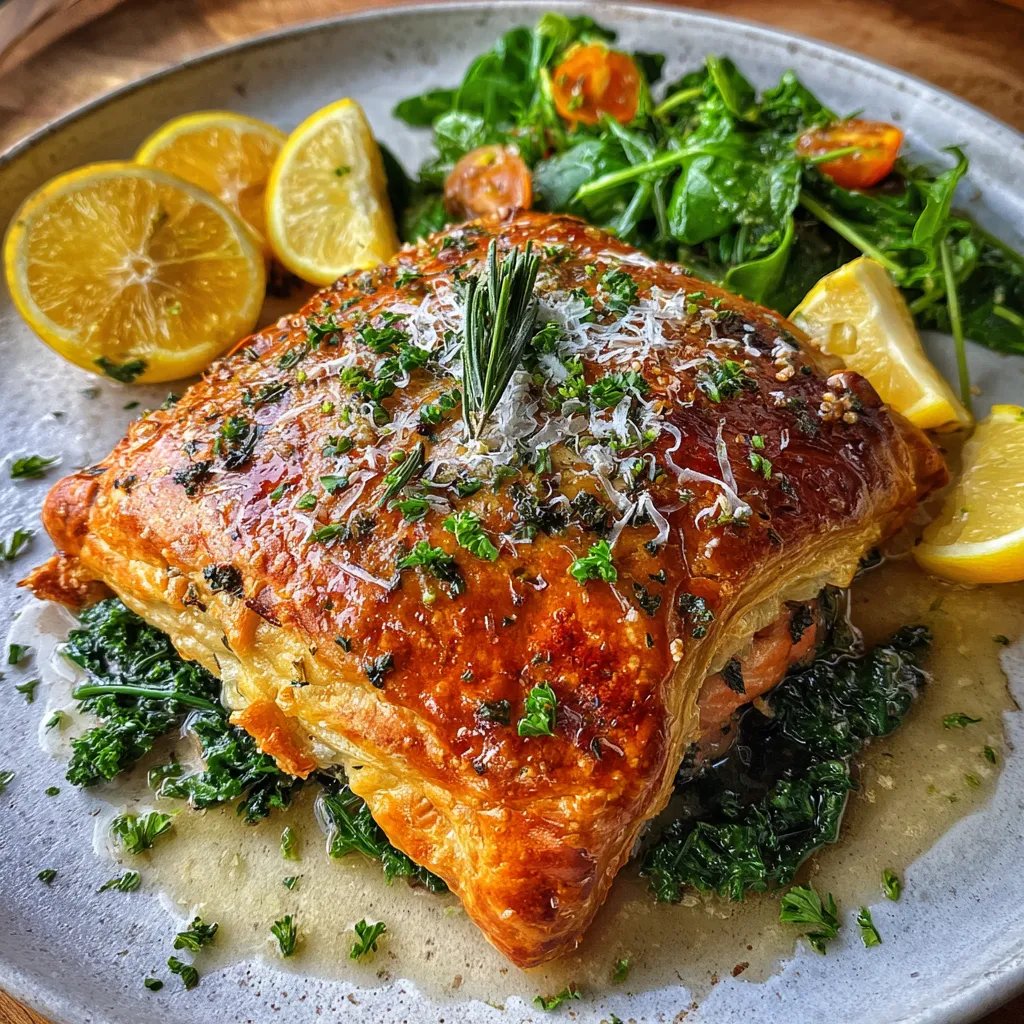

Golden Herb-Crusted Baked Salmon Wellington
Description
Pillowy pastry cradles succulent salmon and creamy spinach filling, topped with a golden, herb-studded crust. Crisp textures give way to tender fish and bursts of lemony freshness in each mouthful.
Ingredients
Instructions
-
Prepare the salmon:
-
- Pat the salmon fillets dry with paper towels.
-
- Check for pin bones by running your fingers along the flesh; remove any with tweezers.
-
- Season both sides lightly with salt and pepper.
-
- Set aside in the refrigerator while you prepare the filling and crust.
-
Make the spinach and cheese filling:
-
- Heat a large skillet over medium heat and add the olive oil and butter.
-
- Once the butter is melted and foamy, add the minced shallots.
-
- Sauté for 2 to 3 minutes, until the shallots are softened and translucent but not browned.
-
- Add the minced garlic and cook for 30 seconds, stirring constantly.
-
- Add the spinach in batches, stirring as it wilts. Continue until all spinach is just wilted and bright green.
-
- Season lightly with a pinch of salt, pepper, and the grated nutmeg.
-
- Transfer the spinach mixture to a colander or fine sieve. Press firmly with the back of a spoon to squeeze out as much liquid as possible. Excess moisture will make the pastry soggy, so press thoroughly.
-
- When the spinach is warm but not hot, chop it roughly on a cutting board.
-
- In a medium bowl, combine the chopped spinach, cream cheese, 2 tbsp Dijon mustard, 1 tbsp whole grain mustard (if using), lemon juice, lemon zest, and Parmesan cheese.
-
- Mix until smooth and evenly combined. Taste and adjust seasoning with additional salt or pepper if needed.
-
- Chill the filling in the refrigerator for 15 minutes to firm up slightly.
-
Prepare the golden herb crust:
-
- In a small bowl, combine the panko breadcrumbs, parsley, dill, chives, thyme, lemon zest, Parmesan cheese, salt, and pepper.
-
- Drizzle in the melted butter and mix thoroughly with a fork until the crumbs are evenly moistened and form a loose, clumpy texture.
-
- Set aside at room temperature.
-
Prepare the puff pastry:
-
- Lightly flour a clean work surface.
-
- Place the chilled puff pastry sheet on the floured surface.
-
- Using a rolling pin, gently roll it out into a rectangle large enough to fully wrap your salmon fillets as one log, roughly 30 x 35 cm, maintaining an even thickness.
-
- Trim uneven edges if needed, reserving scraps for decoration (optional).
-
- Transfer the rolled pastry to a sheet of parchment paper for easier handling.
-
Portion and plan the assembly:
-
- Depending on the size of your salmon fillets and your preference, you can:
-
- Make one large Wellington: place fillets end to end in a line down the center.
-
- Make individual Wellingtons: cut the pastry into 4 equal rectangles, one for each fillet.
-
- For a dramatic centerpiece, use the one-large-log method. For easier serving, make individual parcels.
-
Preheat the oven:
-
- Preheat your oven to 200°C (conventional) or 190°C (fan).
-
- Line a baking sheet with parchment paper if not already using the parchment beneath your pastry.
-
Assemble the Wellington (large log version):
-
- With the pastry on the parchment, visualize a vertical strip down the center where the salmon will sit, leaving at least 4 to 5 cm border on each long side.
-
- Spread a generous layer of the chilled spinach filling down this central strip, forming a “bed” about the same length and width as the combined salmon fillets.
-
- Place the seasoned salmon fillets on top of the spinach mixture, fitting them snugly together if using multiple fillets, like forming one continuous piece.
-
- Brush the top and sides of the salmon lightly with 1 tbsp Dijon mustard.
-
- Gently press a thick, even layer of the herb crumb mixture over the top of the salmon, pressing so it adheres. Aim for about 0.5 to 1 cm thickness.
-
- Beat the egg with the milk or cream in a small bowl to make an egg wash.
-
- Brush the exposed pastry borders lightly with egg wash.
-
- Fold one long side of the pastry up and over the salmon and filling, then fold the opposite side over to overlap slightly and enclose the log fully.
-
- Pinch and seal the seam firmly along the length. If the pastry feels loose, trim any excess and press to seal so it is snug against the salmon.
-
- Fold and tuck the short ends under the log, sealing well so the filling cannot leak.
-
- Carefully invert the whole Wellington so the seam is on the bottom. Use the parchment to help flip if needed.
-
- Transfer the Wellington (with parchment) onto the prepared baking sheet.
-
Assemble individual Wellingtons (if using):
-
- Place a spoonful of spinach filling in the center of each pastry rectangle, shaped roughly to match the size of each salmon fillet.
-
- Lay one salmon fillet on top of each mound of filling.
-
- Brush the tops of the salmon with Dijon mustard.
-
- Press an even layer of the herb crumb mixture onto each fillet.
-
- Brush the pastry edges with egg wash.
-
- Fold the pastry over the salmon like a parcel, bringing long sides together and overlapping slightly. Seal firmly, then fold and seal the short ends.
-
- Place each parcel seam-side down on the parchment-lined baking sheet, leaving space between them.
-
Decorate and glaze:
-
- If you saved pastry scraps, roll them out and cut small leaves, braids, or other decorative shapes.
-
- Lightly brush the top of the Wellington(s) with egg wash.
-
- Arrange the pastry decorations on top, then brush them with egg wash as well.
-
- Use the tip of a sharp knife to gently score a decorative pattern on the pastry (such as diagonal slashes, crosshatch, or waves), being careful not to cut all the way through.
-
- Sprinkle lightly with flaky sea salt and a bit of freshly ground black pepper.
-
Venting and chilling:
-
- With a sharp knife, cut 2 to 4 small slits on top of the Wellington(s) to allow steam to escape during baking. This helps keep the pastry crisp.
-
- Place the prepared Wellington(s) in the refrigerator for 15 to 20 minutes. Chilling helps the pastry puff better and hold its shape.
-
Bake:
-
- Place the baking sheet on the middle rack of the preheated oven.
-
- For one large Wellington, bake for about 30 to 35 minutes, or until the pastry is deeply golden and puffed, and the salmon is just cooked through.
-
- For individual Wellingtons, start checking after 20 to 25 minutes.
-
- If you have a food thermometer, aim for an internal temperature of about 50 to 52°C at the thickest part of the salmon for medium, as it will continue to cook slightly once removed from the oven.
-
- If the pastry is browning too quickly on top before the salmon is done, tent loosely with a piece of foil.
-
Rest and garnish:
-
- Remove the Wellington(s) from the oven and let rest for 8 to 10 minutes. This allows juices to redistribute and makes slicing cleaner.
-
- Transfer carefully to a serving platter using a wide spatula or by sliding the parchment off the tray and then onto the platter.
-
- Garnish with extra chopped fresh herbs or microgreens, and arrange lemon wedges around the platter.
-
Serve:
-
- For a large Wellington, use a sharp serrated knife to cut thick slices, about 3 to 4 cm each.
-
- Serve with a squeeze of fresh lemon juice over each portion.
-
- Suggested accompaniments include roasted baby potatoes, sautéed green beans, a simple arugula salad, or a light white wine cream sauce on the side if desired.
Note
- Make-ahead tip: Assemble the Wellington up to the egg-wash step, cover loosely, and refrigerate for up to 6 hours; egg wash and bake just before serving.
- For extra flavor, lightly sear the salmon fillets in a hot pan with a little oil for 1 minute per side before assembling; cool completely before wrapping.
- If your spinach mixture seems wet, spread it on a plate and chill uncovered for a few minutes to dry slightly before using.
- For a richer crust, replace half the panko with finely ground toasted nuts such as almonds or hazelnuts.
- To keep the bottom crisp, preheat the baking sheet in the oven, then slide the parchment with the Wellington directly onto the hot tray.
- A dry white wine like Sauvignon Blanc or Chardonnay pairs beautifully with this dish.
- Leftovers reheat best in a 170°C oven for about 10 to 15 minutes; avoid microwaving, which softens the pastry.

