

There’s something endlessly comforting about a pot of slow-simmered Bolognese sauce bubbling away on the stove, its rich flavors melding into a harmonious melody. Every strand of spaghetti cradles that luscious, meaty goodness, turning an ordinary meal into a moment worth savoring. This classic Pasta Bolognese recipe transports you straight to the heart of Italy, where family dinners stretch long into the evening and animated conversations flow as freely as the red wine. With each bite, you’ll taste the depth created by slowly reduced tomatoes, the warmth of aromatic herbs, and the gentle bite of perfectly cooked beef and pork. It’s a dish that invites everyone around the table to pause, to share stories, and to bask in the sheer joy of good food prepared with care.
I still remember the first time I made Bolognese for my entire family. The kitchen windows fogged with steam, and the hum of conversation drowned out the ticking clock—nobody wanted to rush dinner. As the sauce simmered, I’d sneak tastes with a wooden spoon, adjusting salt and herbs until it felt just right. By the time I piled pasta onto everyone’s plates, the room was alive with laughter and satisfied sighs. That’s the true magic of this recipe: it’s more than a dinner—it’s a warm embrace on a chilly night, a bridge between generations, and a reminder that the simplest ingredients, treated with love and patience, become something extraordinary.
KEY INGREDIENTS IN PASTA BOLOGNESE CLASSIC ITALIAN
Every great Bolognese starts with quality ingredients that each play a starring role in building layers of flavor. From the aromatic vegetables to the perfectly balanced herbs and meat, these components work together over slow cooking to create that signature hearty sauce you crave.
- Olive oil
A fruity, extra-virgin oil used to gently sauté vegetables. It adds a subtle richness and helps prevent the garlic and onion from burning.
- Onion
Provides a sweet, aromatic base when finely chopped and cooked until translucent. It’s the first layer of flavor in a classic soffritto.
- Garlic
Delivers a warm, pungent note when minced and lightly sautéed. It infuses the sauce with depth and savory complexity.
- Carrot
Adds natural sweetness and subtle earthiness once finely diced. It balances the acidity of tomatoes and enriches the texture.
- Celery
Contributes a mild, vegetal bite to the soffritto mixture. Its slight crunch softens as it simmers, blending seamlessly with the carrot and onion.
- Ground beef
Brings robust, meaty flavor and hearty texture. When browned thoroughly, it creates a savory foundation for the sauce.
- Ground pork
Offers a slightly sweeter, fattier element that makes the sauce richer and more velvety on the palate.
- Red wine
Adds acidity and depth, deglazing the pan and lifting flavorful bits off the bottom. It reduces to concentrate its fruity, tannic notes.
- Tomato paste
Provides an intense, concentrated tomato flavor and helps thicken the sauce. It envelops the meat for a uniform, savory coat.
- Canned diced tomatoes
Supply juicy, tangy tomato chunks that release liquid and texture as they simmer gently. They form the body of the sauce.
- Beef stock
Enhances the meaty flavor and maintains saucy consistency during the long simmer. It deepens the overall taste.
- Dried oregano
Adds a warm, slightly bitter herbal note. Its earthy tones evoke classic Italian seasoning.
- Dried basil
Offers a sweet, aromatic hint of fresh basil when it rehydrates. It brightens the sauce with a familiar Italian fragrance.
- Salt and freshly ground black pepper
Essential for seasoning. Salt elevates each ingredient’s natural taste, and pepper provides a subtle spicy warmth.
- Spaghetti or pasta of your choice
The vehicle for the sauce. Long strands like spaghetti or tagliatelle cling beautifully to the Bolognese, ensuring every bite is coated.
- Parmesan cheese
Freshly grated for serving, it lends a nutty, salty finish that melts into the hot sauce, rounding out flavors.
- Basil leaves
Used as a bright, peppery garnish. Fresh basil adds vibrancy and a burst of color to the finished dish.
HOW TO MAKE PASTA BOLOGNESE CLASSIC ITALIAN
Let’s dive into the step-by-step process of creating this timeless Bolognese sauce. Each instruction is designed to guide you through building layers of flavor, coaxing the best out of every ingredient, and ending with an irresistible, comforting meal.
1. Heat the olive oil in a large skillet over medium heat. Add the chopped onion and minced garlic, then sauté until the onion becomes translucent and fragrant, about 3–4 minutes.
2. Add the carrot and celery to the skillet and continue to cook, stirring occasionally, until the vegetables soften—around 5–6 minutes.
3. Increase the heat to high, add the ground beef and ground pork to the skillet, and cook until the meat is browned and there are no pink spots remaining, breaking it up with a spoon for even cooking.
4. Pour in the red wine, allowing it to simmer and reduce for about 5 minutes. Scrape the bottom of the pan to release any tasty browned bits.
5. Stir in the tomato paste, ensuring it coats the meat mixture evenly and deepens in color—a sign that the paste is well-integrated.
6. Add the canned diced tomatoes and beef stock to the skillet. Use a wooden spoon to gently crush some of the tomato chunks, creating a balanced texture of sauce and tender tomato pieces.
7. Season the sauce with dried oregano, dried basil, salt, and freshly ground black pepper to taste. Stir well to distribute the herbs throughout the sauce.
8. Reduce the heat to low, cover, and let the sauce simmer gently for at least 1 hour, stirring occasionally. The longer you let it cook, the more complex and flavorful it becomes.
9. When the sauce is nearly done, cook the pasta in a large pot of boiling salted water according to the package instructions until al dente.
10. Drain the pasta, then immediately add it directly to the sauce. Toss gently to combine and allow the pasta to absorb the sauce’s rich flavor for a couple of minutes.
11. Serve the Pasta Bolognese hot, garnished with freshly grated Parmesan cheese and basil leaves for that final touch of authenticity.
SERVING SUGGESTIONS FOR PASTA BOLOGNESE CLASSIC ITALIAN
This hearty Bolognese is best enjoyed with a few thoughtful accompaniments to elevate your dining experience. Whether you’re hosting a casual weeknight dinner or a cozy gathering, these ideas will ensure your guests feel the full embrace of Italian comfort food.
- Rustic family-style platter
Pile the sauced pasta into a large, shallow serving dish. Let everyone help themselves, passing bowls of grated Parmesan and fresh basil at the table. This communal approach invites warm conversation and relaxed, leisurely bites.
- Crispy garlic bread
Slice a baguette, brush each piece with garlic-infused butter, and toast until golden brown. The crunchy texture contrasts beautifully with the velvety sauce, and the infused garlic flavors mirror the sauce’s aromatic base.
- Simple green salad
Toss mixed baby greens with a light lemon vinaigrette—olive oil, lemon juice, Dijon mustard, salt, and pepper. The bright, zesty salad cleanses the palate and offers a refreshing counterpoint to the rich Bolognese.
- Wine pairing
Serve alongside a Chianti or any medium-bodied Italian red wine. The wine’s acidity cuts through the sauce’s richness, while its fruity notes complement the tomatoes and meat, turning each bite into a perfectly balanced sip-and-chew experience.
HOW TO STORE PASTA BOLOGNESE CLASSIC ITALIAN
Once you’ve savored your first helping of this classic Bolognese, you’ll be delighted by how well it keeps. Proper storage ensures you can relish those deep, comforting flavors again and again, whether you’re planning leftovers for lunch or prepping meals in advance for busy days.
- Refrigerator storage
Transfer cooled Bolognese to an airtight container and store in the fridge for up to 3 days. Make sure it’s sealed tightly to preserve moisture and prevent any other flavors from creeping in.
- Freezer meal prep
Portion the sauce into freezer-safe bags or containers, leaving a bit of space for expansion. Label with the date and freeze for up to 3 months. Thaw overnight in the fridge before reheating on the stove over low heat, adding a splash of beef stock if it’s too thick.
- One-pot reheating
Gently reheat refrigerated or thawed sauce in a skillet over low to medium heat, stirring occasionally. This method ensures even warming and revives the sauce’s texture without drying it out.
- Pasta and sauce separate
If you have leftover pasta, store it separately from the sauce in its own container. When ready to eat, toss the pasta with freshly reheated sauce on the stovetop. The sauce will cling more effectively to reheated pasta, ensuring each bite remains luscious.
CONCLUSION
By now, you have everything you need to recreate a truly authentic Pasta Bolognese Classic Italian right in your own kitchen. From gathering high-quality ingredients to mastering the slow-simmering technique, this guide has walked you through each step with conversational charm and detailed tips. Whether you’re aiming for a hearty family dinner or a romantic date-night meal, this versatile sauce adapts to your needs: serve it over spaghetti, tagliatelle, or even a bed of silky polenta. Remember the little touches—freshly grated Parmesan, a scattering of bright basil, a crisp salad on the side—that transform a good meal into an unforgettable one.
Feel free to print this article and save it for future cooking sessions; you’ll find it becomes a cherished part of your recipe collection. Below you’ll also discover a handy FAQ section to troubleshoot any questions that pop up while cooking. And if you try this recipe, please come back and share your experience in the comments. Did you swap pork for turkey? Add that pinch of nutmeg? How did your family react? Your feedback, questions, and cooking tales help build a vibrant community of home cooks striving for delicious, satisfying meals. Happy cooking, and buon appetito!
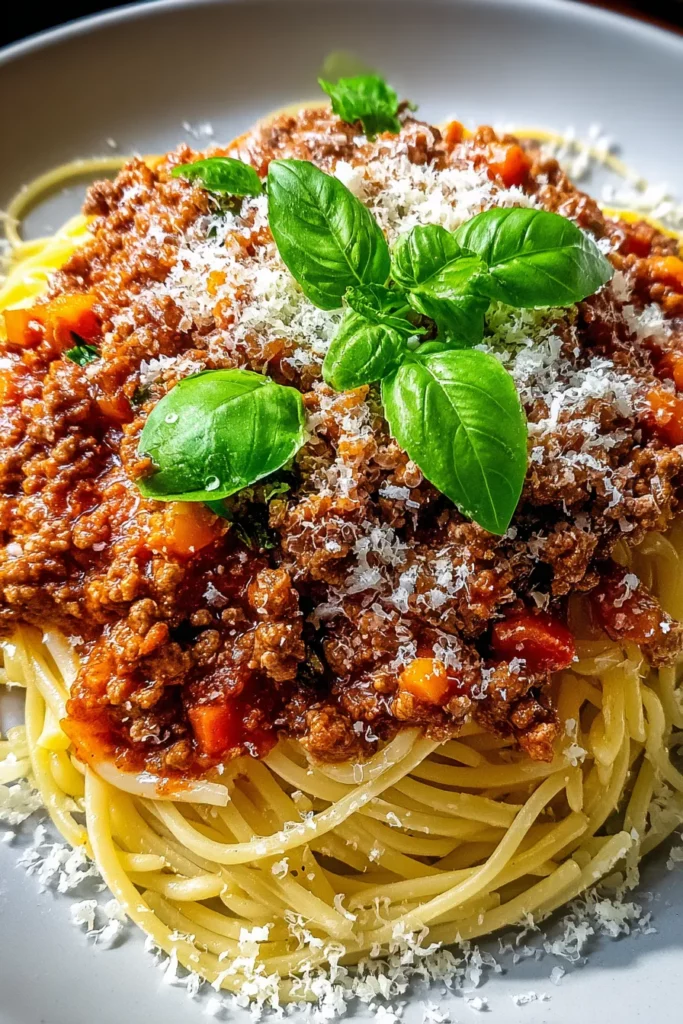

Pasta Bolognese Classic Italian
Description
Experience the rich, hearty taste of traditional Italian Bolognese sauce paired with your favorite pasta. It's a comforting dish that brings family together!
Ingredients
Instructions
-
Heat the olive oil in a large skillet over medium heat. Add the chopped onion and minced garlic, sautéing until the onion becomes translucent.
-
Add the carrot and celery to the skillet and continue to cook, stirring occasionally, until the vegetables soften.
-
Increase the heat to high, add the ground beef and pork to the skillet. Cook the meat until it is browned and there are no pink spots remaining.
-
Pour in the red wine, allowing it to simmer and reduce for about 5 minutes.
-
Stir in the tomato paste, ensuring it coats the meat mixture evenly.
-
Add the canned diced tomatoes and beef stock to the skillet. Crush the tomatoes slightly with a wooden spoon.
-
Season the sauce with dried oregano, dried basil, salt, and pepper.
-
Reduce the heat to low, cover, and let the sauce simmer gently for at least 1 hour, stirring occasionally. The longer you let it simmer, the more flavorful it becomes.
-
Once the sauce is nearly done, cook the pasta in a large pot of boiling salted water according to the package instructions.
-
Drain the pasta and add it directly to the sauce. Toss gently to combine and let it absorb the flavors for a couple of minutes.
-
Serve the Pasta Bolognese hot, garnished with freshly grated Parmesan cheese and basil leaves.
Note
- For a richer flavor, try adding a pinch of nutmeg to the sauce while simmering.
- You can substitute ground turkey or chicken if you prefer a leaner version.
- For a deeper taste, some cooks recommend adding a bit of milk or cream at the end of the cooking process to balance the acidity of the tomatoes.
- This Bolognese sauce can be stored in the fridge for up to 3 days or frozen for up to 3 months.
- Pair with a nice bottle of Chianti or any Italian red wine for a complete dining experience.

